Glutathione vs Vitamin C for Skin Brightening: Which One Should You Take
Both glutathione and vitamin C show up constantly in conversations about brighter, more even-looking skin, but they work in completely different ways and have very different levels of evidence behind them. Deciding between glutathione vs vitamin C for skin brightening isn’t really an either-or question, it’s more about understanding what each one actually does before deciding whether you need one, the other, or both.
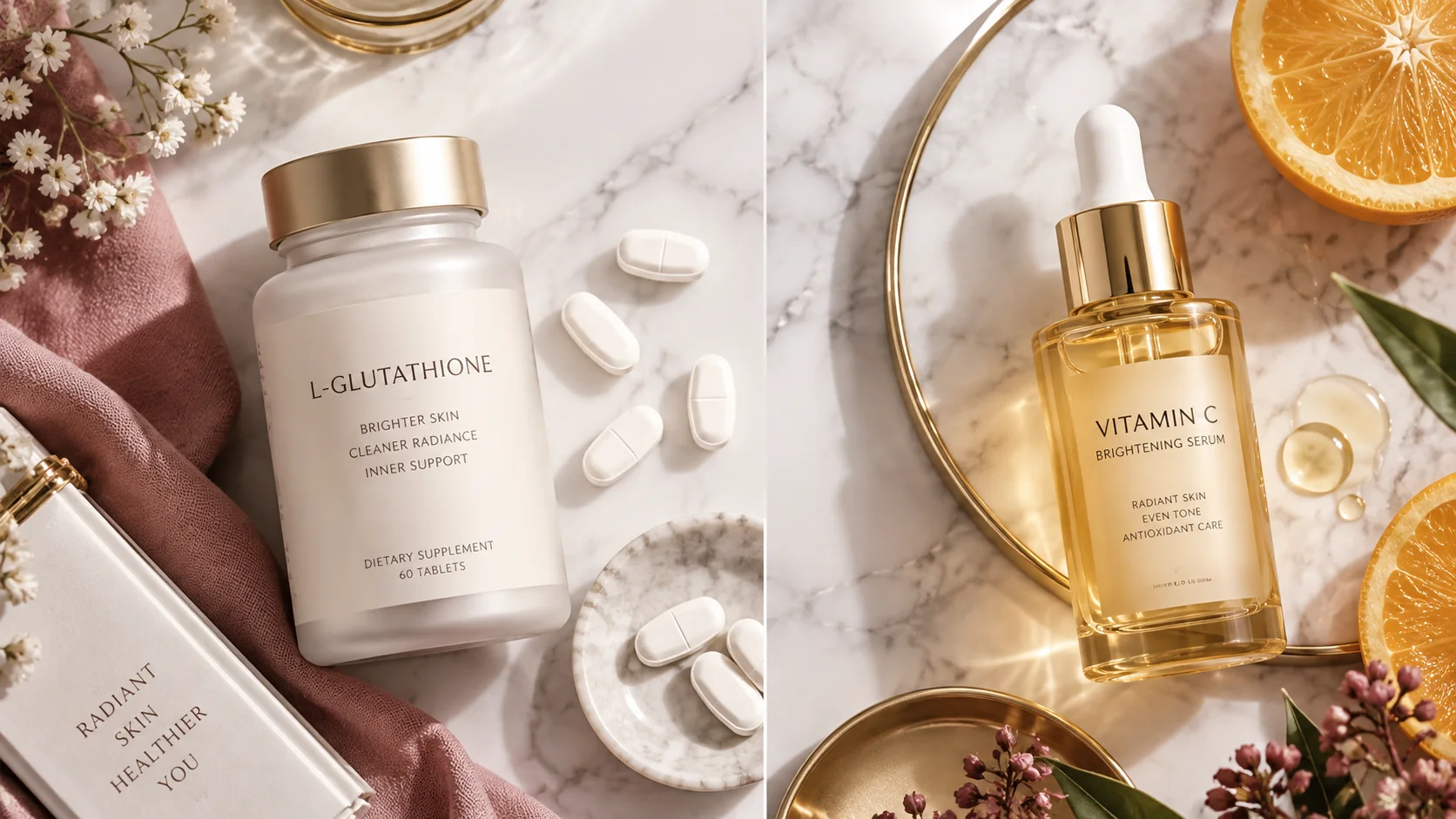
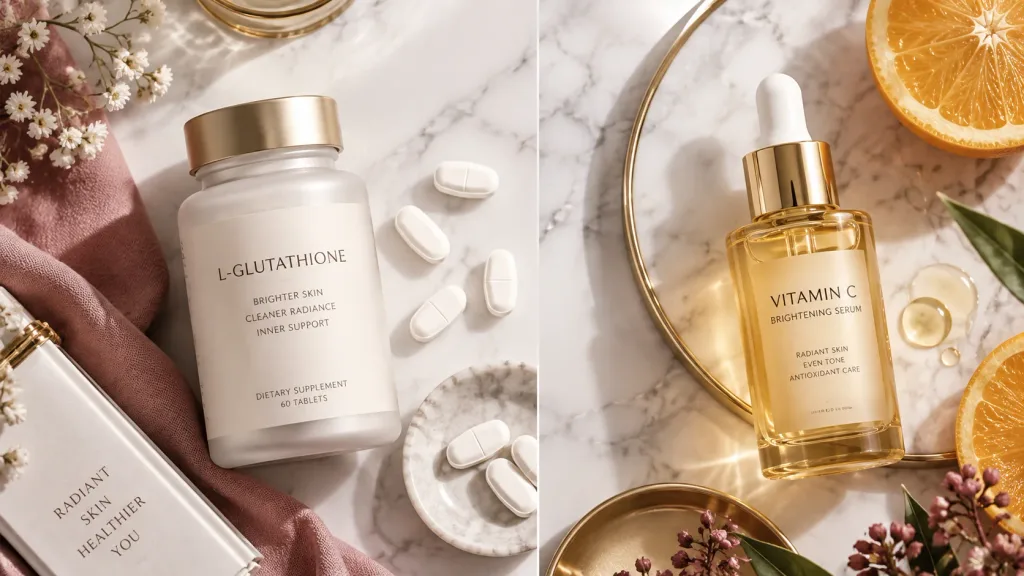
Glutathione is typically taken orally as a tablet, working from within the body. Vitamin C for skin brightening is most commonly used as a topical serum, working directly on the skin’s surface. That distinction is the starting point for the whole glutathione vs vitamin C for skin brightening question, and it matters more than most comparisons let on.
Glutathione vs Vitamin C for Skin Brightening: What Each One Actually Is
Glutathione is a naturally occurring antioxidant, sometimes taken as an oral tablet to support the body’s defence against oxidative stress. Some research suggests it may influence melanin production with consistent, long-term use, potentially supporting a brighter, more even skin tone, though the evidence remains mixed and results are far from guaranteed. It’s an internal, whole-body approach rather than something applied directly to skin. Gluta Up, available through Vampire Glow, is formulated around this ingredient.
Vitamin C, most commonly used topically as a serum, has a considerably more established evidence base for skin brightening. It works as a potent antioxidant on the skin’s surface, supporting a more even tone, helping to defend against environmental stress, and contributing to a visibly brighter complexion over consistent use. Unlike oral glutathione, topical vitamin C’s brightening effects on skin texture and tone are better documented across dermatological research, making it a more predictable starting point for most people focused specifically on skin brightening.
Glutathione vs Vitamin C for Skin Brightening is a common comparison for people looking to improve dull or uneven-looking skin.
Difference 1: Which Is Better for Skin Whitening, Vitamin C or Glutathione
They’re not really solving the same problem in the same way, so “better” depends on what you mean by whitening. If you mean a more even, brighter-looking complexion with reasonably well-supported evidence, topical vitamin C tends to have the stronger case in the glutathione vs vitamin C for skin brightening debate. If you mean a broader, whole-body approach with more speculative, still-developing evidence, that’s where oral glutathione sits.
Neither is a guaranteed path to a dramatic change in skin tone, and any product or seller claiming otherwise is overstating what the research actually supports. Many people use both, treating vitamin C as the more immediate, visible skincare step and glutathione as a longer-term, internal addition.
Glutathione vs Vitamin C for Skin Brightening is a common comparison for people looking to improve dull or uneven-looking skin.
Glutathione vs Vitamin C for Skin Brightening is a common comparison for people looking to improve dull or uneven-looking skin.
Difference 2: Can You Apply Glutathione and Vitamin C Together
If you mean taking oral glutathione tablets alongside using a topical vitamin C serum, this is common and generally considered fine, since they work through different routes, one internally, one on the skin’s surface. Follow the recommended serving on the glutathione label and patch test the vitamin C serum before adding it to your full routine.
Glutathione tablets themselves aren’t designed to be applied topically, so if you’re picturing a combined topical application, that’s not how this specific product works. If you’re combining any supplement with medication or managing a health condition, check with a doctor first.
Difference 3: Does Glutathione Work Without Vitamin C
It’s unclear, and this is genuinely an area where research is limited either way. Vitamin C is thought to support glutathione’s recycling process in the body, which is why some formulations pair the two, but that doesn’t mean glutathione does nothing at all without it. The honest answer is that any potential effect from glutathione alone is not well established either way, and results vary significantly between individuals regardless of whether vitamin C is included.
If your specific glutathione product doesn’t include vitamin C, following its label as formulated is reasonable, rather than assuming you need to add anything extra.
Difference 4: What’s Better Than Glutathione for Skin Whitening
There’s no single ingredient that’s definitively “better,” but if visible, more predictable brightening is your goal, topical actives like vitamin C, niacinamide, and gentle exfoliation tend to have a stronger, more established evidence base than oral glutathione specifically. Consistent daily sunscreen is also one of the most effective, most overlooked tools for maintaining an even skin tone, regardless of what supplement or serum you’re using alongside it.
Rather than searching for one ingredient to replace another, a combined approach, topical actives for visible skin-level results, sunscreen as the daily non-negotiable, and an oral supplement as an optional longer-term addition, tends to be more realistic than expecting any single ingredient to do everything.
Difference 5: How to Take Vitamin C With Glutathione
Take oral glutathione tablets according to the serving size on the label, with consistency mattering more than timing. Apply a topical vitamin C serum as part of your morning skincare routine, after cleansing and before moisturiser and sunscreen, since vitamin C serums are commonly formulated for daytime use alongside sun protection.
There’s no need to time the two around each other specifically, since one works internally and the other on the skin’s surface. If you’re taking an oral vitamin C supplement rather than a topical serum, follow that product’s label separately from your glutathione tablets.
Benefits Compared: Glutathione vs Vitamin C for Skin Brightening
Glutathione (oral):
- General antioxidant support for the body
- May support a brighter, more even tone with consistent, long-term use, according to mixed research
- A whole-body approach, not limited to skin alone
Vitamin C (topical):
- More established evidence for visible brightening and tone evenness
- Antioxidant protection directly at the skin’s surface
- Supports a smoother, more radiant-looking complexion with regular use
- Pairs naturally into a morning skincare routine alongside sunscreen
Who Should Use Each, or Both
If you want visible, more reliably supported skin brightening, start with a topical vitamin C serum as part of your daily routine. If you’re interested in a longer-term, whole-body antioxidant approach and understand the evidence is still developing, oral glutathione can be an addition rather than a replacement.
Using both isn’t necessary for everyone, but it’s a reasonable combination if you understand what each one is actually doing and aren’t expecting either to work in isolation.
Results Timeline for Glutathione and Vitamin C
Topical vitamin C tends to show visible improvements in tone and texture within four to eight weeks of consistent daily use. Oral glutathione, where any effect is reported at all, generally requires several months of consistent use, often cited at two to three months minimum, before any change becomes noticeable, and considerably longer in many cases.
Both timelines are general patterns, not guarantees, and individual results vary based on consistency, formulation, and personal biology.

Aftercare and Usage Tips
Do:
- Wear sunscreen daily regardless of which product you’re using, since sun exposure can undo brightening progress from either approach.
- Patch test any new topical vitamin C serum before applying it to your full face.
- Give either approach a fair, consistent trial of several weeks to months before judging results.
Don’t:
- Expect a guaranteed or dramatic change from either ingredient.
- Combine multiple strong actives without understanding how they interact.
- Exceed the recommended serving of any supplement in the hope of faster results.
Oral Glutathione vs Topical Vitamin C: Side by Side
| Oral Glutathione | Topical Vitamin C | |
| Application | Taken as a tablet, works internally | Applied as a serum, works on skin’s surface |
| Evidence base | Mixed, still developing | More established for brightening and tone |
| Typical timeline | Several months minimum | Four to eight weeks |
| Best for | Whole-body antioxidant support | Visible, targeted skin brightening |
| Combinable | Yes, with topical vitamin C | Yes, with oral glutathione |
This table is the simplest way to see the glutathione vs vitamin C for skin brightening trade-off at a glance: one works from within over a longer timeline, the other works on the surface and shows change sooner.
Possible Side Effects and Precautions
Topical vitamin C can occasionally cause mild irritation or sensitivity, particularly at higher concentrations, so patch testing before full use is worth doing regardless of your skin type. Oral glutathione is generally well tolerated at standard doses, though mild digestive discomfort is possible for some people.
This information is general and not medical advice. If you are pregnant, breastfeeding, taking medication, or managing a health condition, speak with a doctor before starting glutathione tablets, a new supplement, or combining either with other products.
In your Vitamin C section, link the words “Vitamin C” or “Vitamin C antioxidant benefits” to the NIH Office of Dietary Supplements. NIH explains Vitamin C’s antioxidant role and other established functions.
NIH Vitamin C Fact Sheet
Cost and Pricing Factors
Formulation concentration and whether a product is a supplement or a topical serum both affect pricing in this category. A topical vitamin C serum and an oral glutathione supplement occupy different price brackets, since they’re formulated and manufactured differently.
Prices on vampireglow.com display in AED for the UAE and in USD for other regions, with delivery destination within the UAE or wider GCC affecting your final total at checkout.
Why Choose Vampire Glow
- Authentic brands sourced directly, with batch codes and expiry checked on arrival
- A curated edit built for the Gulf climate and lifestyle, not an overwhelming, bottomless catalogue
- Cruelty-free brands only, across the full range
- Delivery across the UAE and the wider GCC, with options confirmed at checkout
- Clear ingredient and usage information listed on every product page
FAQs: Glutathione vs Vitamin C for Skin Brightening
Which is better for skin whitening, vitamin C or glutathione? Topical vitamin C has stronger, more established evidence for visible brightening, while oral glutathione’s evidence is more mixed and works through a different, whole-body route. Neither guarantees a dramatic change, and many people use both.
Can I apply glutathione and vitamin C together? Taking oral glutathione tablets alongside a topical vitamin C serum is common and generally fine, since they work through different routes. Glutathione tablets aren’t designed for topical use, so combining them means one internally and one on the skin.
Will glutathione work without vitamin C? It’s unclear either way, since research on glutathione alone is limited. Vitamin C is thought to support its recycling process, but that doesn’t mean glutathione has no effect without it.
What is better than glutathione for skin whitening? No single ingredient is definitively better, but topical actives like vitamin C and niacinamide, alongside daily sunscreen, have a stronger evidence base for visible brightening than oral glutathione specifically.
How to take vitamin C with glutathione? Apply a topical vitamin C serum in your morning routine, after cleansing and before moisturiser and sunscreen, and take oral glutathione tablets according to their own label. The two don’t need to be timed around each other.
Build a Routine Based on What Each Actually Does
Glutathione vs vitamin C for skin brightening comes down to understanding two different approaches rather than picking a single winner. Topical vitamin C offers more predictable, visible results, while oral glutathione is a longer-term addition with evidence that’s still developing. Daily sunscreen matters more than either.
Explore Gluta Up at Vampire Glow or browse the wider skin care and supplements edit to build a routine that fits your goals, delivered across the UAE and the GCC.


About author