Evening Primrose Oil for Hormonal Acne: Benefits, Dosage and Results
Evening primrose oil for hormonal acne comes up constantly in supplement roundups and skincare forums, usually presented with far more confidence than the actual research supports. Before adding it to your routine, it’s worth knowing exactly what’s established, what’s theoretical, and what major health bodies actually say about it, because the honest picture here is more cautious than the marketing.
This guide covers what evening primrose oil is, what it might realistically do, the dosage questions people ask most, and the side effects and precautions that matter more than most product pages mention.
What Is Evening Primrose Oil and Why People Try It for Hormonal Acne
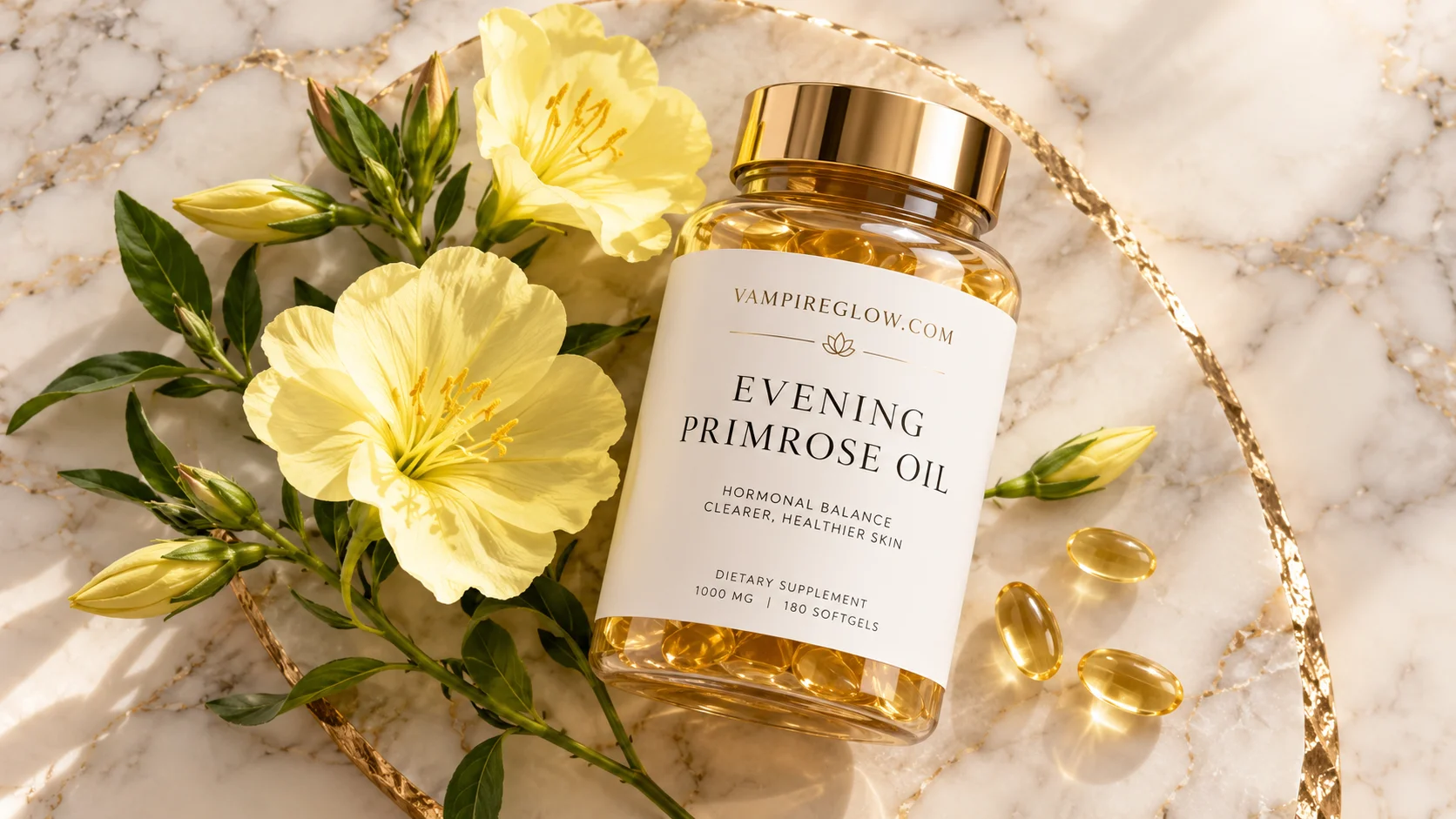
Evening primrose oil is extracted from the seeds of the evening primrose plant and contains gamma-linolenic acid, or GLA, an omega-6 fatty acid with anti-inflammatory properties. It has a long history of traditional use for premenstrual syndrome, breast tenderness, menopause symptoms, and skin conditions, which is part of why it’s crossed over into hormonal acne conversations specifically.
The theory behind using it for hormonal acne is that GLA’s anti-inflammatory activity might help calm the inflammation involved in breakouts, and because hormonal acne is often linked to the same hormonal fluctuations associated with PMS, some people have extended its traditional PMS use into an acne context. It’s important to say upfront that this is a theoretical connection, not a proven one.
Does Evening Primrose Oil Help With Hormonal Acne
The honest answer is that there isn’t direct research establishing evening primrose oil as an effective treatment for hormonal acne specifically. The U.S. National Center for Complementary and Integrative Health has reviewed evening primrose oil across a range of health conditions and concluded there isn’t enough evidence to support its use for any of them, including the skin conditions it’s most commonly studied for.
That doesn’t mean it does nothing for everyone, individual anecdotal reports exist, and its anti-inflammatory properties are real at a biochemical level. But if you’re expecting evening primrose oil to meaningfully clear hormonal acne based on solid clinical evidence, that evidence currently isn’t there. It’s best approached as a low-confidence, optional addition rather than a primary treatment.
Does Evening Primrose Oil Balance Hormones
There’s no robust human evidence that evening primrose oil directly balances hormone levels. The plausible mechanism involves GLA’s role in prostaglandin production, which is part of why it’s been studied for PMS and breast pain, but “balancing hormones” is a broader claim than the research supports.
Given that the same national health authority that reviewed its use for various conditions found insufficient evidence across the board, it’s more accurate to describe evening primrose oil as a supplement with a long traditional history and a plausible but unproven mechanism, rather than one with established hormone-regulating effects.
Who Should Consider It, and Who Should Avoid It Entirely
Some people choose to try evening primrose oil as a low-risk, optional addition to a broader hormonal acne routine that already includes evidence-based approaches, understanding that its own supporting evidence is limited. It’s not a fit for anyone looking for a primary, reliable treatment, since better-supported options exist for hormonal acne specifically through a dermatologist.
Several groups should avoid it entirely or only use it under medical supervision. This includes anyone with a bleeding disorder or taking blood-thinning medication such as warfarin, since evening primrose oil may increase bleeding risk. It should also be avoided by anyone with epilepsy or schizophrenia, since it may increase seizure risk, and by anyone with a hormone-sensitive cancer, since some evidence suggests it may have mild estrogen-like activity. Pregnant women should avoid it as well, since it may increase the risk of pregnancy complications, and anyone with upcoming surgery should stop taking it at least two weeks beforehand.
Benefits People Associate With Evening Primrose Oil
- Anti-inflammatory properties from its GLA content, at a general biochemical level
- A long traditional history of use for PMS symptoms, breast tenderness, and menopause-related discomfort
- Support for skin barrier function, since GLA and linoleic acid contribute to the skin’s natural lipid layer
- A generally low-risk profile for short-term use in people without the specific contraindications above
It’s worth being clear that these are the associations people make with the ingredient, not established, proven outcomes specifically for hormonal acne.
Should I Take Evening Primrose Oil With Food
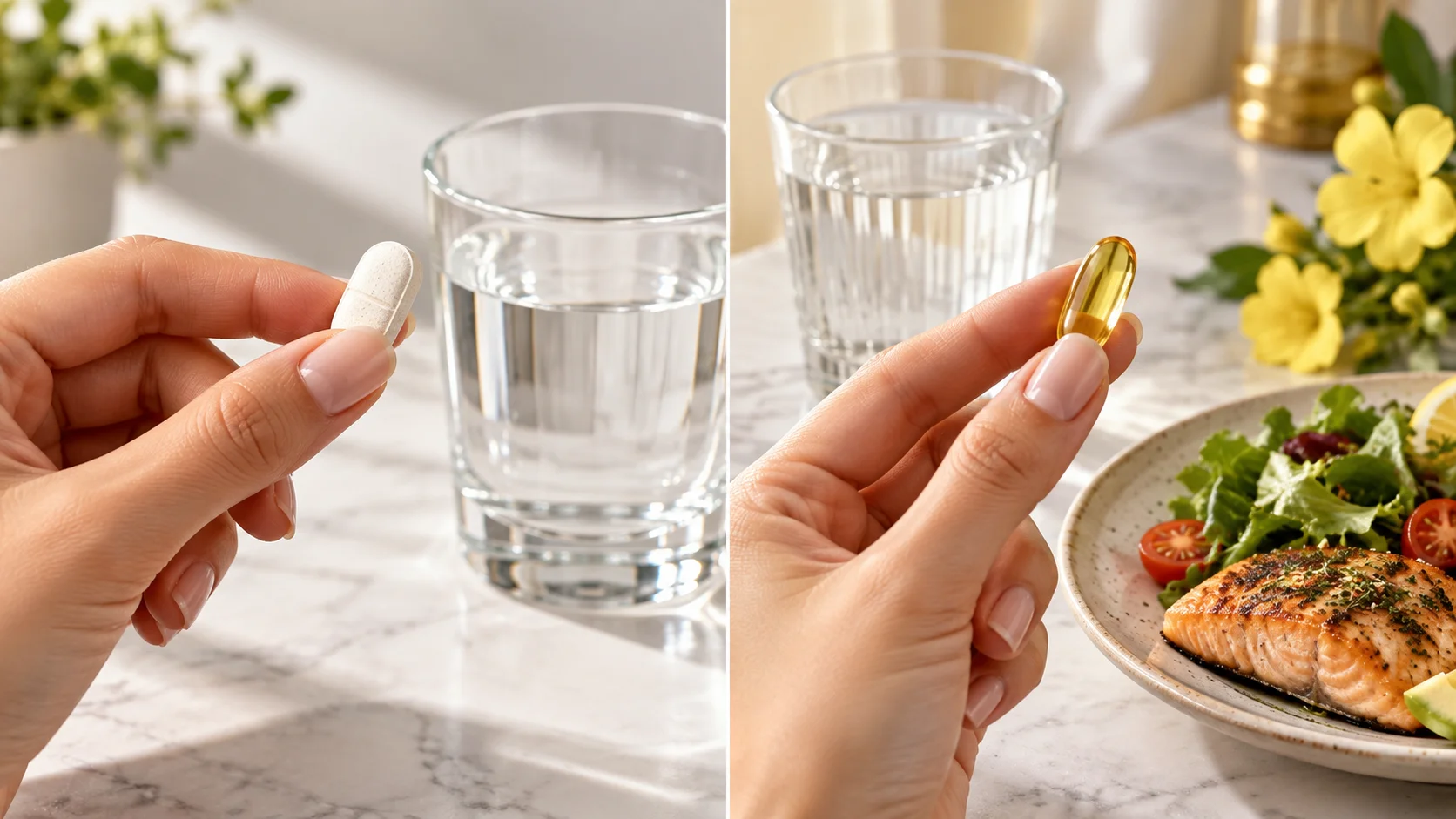
Taking it with a meal is commonly recommended and can help reduce the mild stomach upset, nausea, or indigestion some people experience. There isn’t strong evidence that taking it with food changes its effectiveness, so this is more about comfort and tolerability than optimising any specific outcome.
When Is the Best Time to Take Evening Primrose Oil, Morning or Night
There’s no research establishing one time of day as more effective than another. Some people prefer taking it in the morning with breakfast, others find an evening dose with dinner more comfortable, particularly if they’re prone to any stomach sensitivity. Consistency in taking it daily matters more than the specific hour you choose.
Results Timeline
Because there isn’t well-established research specifically measuring evening primrose oil’s effect on hormonal acne, there’s no reliable timeline to point to for this particular use. Studies on its traditional applications, such as PMS symptoms, have generally used it over several months before evaluating results, so if you’re trying it, a similarly patient, multi-month trial alongside realistic expectations is more sensible than expecting change within days or weeks.
Aftercare and Usage Tips
Do:
- Take it with food if you notice any stomach discomfort.
- Treat it as an optional addition to an evidence-based routine, not a replacement for one.
- Check with a doctor before starting if you take any regular medication, particularly blood thinners.
Don’t:
- Take evening primrose oil if you have a bleeding disorder, epilepsy, schizophrenia, or a hormone-sensitive cancer, without explicit medical guidance.
- Continue taking it within two weeks of a planned surgery.
- Expect it to outperform or replace dermatologist-guided treatment for hormonal acne.
Evening Primrose Oil vs Zinc for Hormonal Acne
| Evening Primrose Oil | Zinc | |
| Evidence base | Very limited, no dedicated acne research, mechanism theoretical | More established, several clinical trials on inflammatory acne |
| Mechanism | Anti-inflammatory via GLA, prostaglandin pathway | Anti-inflammatory and mild antibacterial activity |
| Hormonal acne specifically | No direct evidence | Also limited, but broader inflammatory acne evidence exists |
| Key safety concerns | Bleeding risk, seizure risk, pregnancy risk, hormone-sensitive cancer caution | GI upset, copper deficiency with long-term high doses |
| Overall confidence | Lower, described by NIH as insufficient evidence overall | Moderate, better supported for mild to moderate acne |
If you’re deciding between the two, zinc currently has a stronger, more direct evidence base for inflammatory acne, even though its evidence for hormonal acne specifically is also limited. Browse the skin supplements range to compare both options.
What Are the Side Effects of Evening Primrose Oil
The most commonly reported side effects are mild: headache, nausea, indigestion, and loose stools or diarrhea. These tend to be manageable and often improve when taken with food.
More serious, less common effects include an increased risk of bleeding, particularly in people taking anticoagulant or anti-platelet medication, an increased seizure risk in people with epilepsy or schizophrenia, and a possible increase in the risk of pregnancy complications. Rare but serious allergic reactions are also possible, including swelling, difficulty breathing, or hives, which require immediate medical attention if they occur. Long-term safety beyond short-term use hasn’t been well established.
Precautions and When to See a Doctor
This information is general and not medical advice. If you are pregnant, breastfeeding, taking any medication, particularly blood thinners, or managing a health condition such as epilepsy, schizophrenia, a bleeding disorder, or a hormone-sensitive cancer, speak with a doctor before starting evening primrose oil. If you’re scheduled for surgery, stop taking it at least two weeks in advance. The NIH National Center for Complementary and Integrative Health has further detail on its safety profile and the current state of the evidence.
Cost and Pricing Factors
Capsule strength and the number of servings per bottle are the main factors behind price differences for evening primrose oil supplements. Given the limited evidence specifically supporting its use, it’s worth weighing the cost against better-established options for hormonal acne before committing to a long-term supply.
Prices on vampireglow.com display in AED for the UAE and in USD for other regions, with delivery destination within the UAE or wider GCC affecting your final total at checkout.
Why Choose Vampire Glow
- Authentic brands sourced directly, with batch codes and expiry checked on arrival
- A curated edit built for the Gulf climate and lifestyle, not an overwhelming, bottomless catalogue
- Cruelty-free brands only, across the full range
- Delivery across the UAE and the wider GCC, with options confirmed at checkout
- Clear ingredient and usage information listed on every product page
FAQs
Does evening primrose oil help with hormonal acne? There isn’t direct research confirming this specific use. National health authorities have found insufficient evidence to support evening primrose oil for any health condition, so it’s best treated as a low-confidence, optional addition rather than a primary treatment.
Does evening primrose oil balance hormones? No robust human evidence supports this claim directly. Its plausible mechanism involves prostaglandin production, but overall research hasn’t established a reliable hormone-balancing effect.
What are the side effects of evening primrose oil? Common side effects include headache, nausea, indigestion, and loose stools. More serious concerns include increased bleeding risk, particularly with blood-thinning medication, and increased seizure risk for people with epilepsy or schizophrenia.
When is the best time to take evening primrose oil, morning or night? There’s no research establishing one time as more effective. Take it with a meal if you experience stomach sensitivity, and choose whichever time you’ll remember consistently.
Should I take evening primrose oil with food? Yes, taking it with food is commonly recommended to reduce mild digestive side effects, though it isn’t shown to change how effective it is.
Weigh the Evidence Before You Buy
Evening primrose oil for hormonal acne is more folklore than proven science right now, and it’s worth going in with that understanding rather than expecting a guaranteed fix. If you decide to try it, do so as a low-risk addition alongside evidence-based options, not instead of them, and check the specific precautions above before starting.
Browse the skin supplements range at Vampire Glow to compare options and build a routine grounded in what’s actually well supported, delivered across the UAE and the GCC.
About author