
How to Get Glass Skin in Saudi Arabia Without Looking Oily
There is a reason glass skin went from a Seoul skincare trend to the most searched glow goal in the Gulf. That luminous, lit-from-within finish looks incredible in photos, in person, and under the kind of lighting that usually makes pores a headline. But if you live in Saudi Arabia, you already know the catch. Heat. Humidity on the coast, desert dryness inland, and air conditioning everywhere in between. A routine that makes skin look translucent in Seoul can make it look slick in Riyadh by noon.
Table of Contents
- What Is Glass Skin
- Who Should Try a Glass Skin Routine
- Benefits of a Glass Skin Routine in Saudi Arabia's Climate
- How to Get Glass Skin: Step by Step for Hot Climates
- How Soon Does Glass Skin Appear
- How Often to Follow This Routine
- Aftercare Tips: Keeping the Glow Without the Grease
- Glass Skin vs Dewy Makeup: What's the Difference
- Possible Side Effects and Precautions
- What Does a Glass Skin Routine Cost
- Why Choose Vampire Glow
- FAQs
- Start Building Your Glass Skin Routine
So the real question isn’t just how to get glass skin. It’s how to get glass skin that stays glass and doesn’t slide into greasy. That’s what this guide is built for.
What Is Glass Skin
Glass skin refers to a complexion so well hydrated and smooth that it appears almost translucent, with a natural reflective quality, like light bouncing off a clean pane. It’s not shimmer from highlighter or surface oil sitting on top of the skin. The glow comes from underneath, from skin that’s genuinely hydrated, has a healthy barrier, and reflects light evenly because its texture is smooth.
The concept comes from Korean skincare culture, where layered hydration and barrier care have been central to routines for decades. Brands like Mixsoon and Some By MI are known for the lightweight, water-rich textures that make this kind of finish possible, without heavy creams that trap heat against the skin.
It sounds simple. The tricky part is building that finish in a climate designed to undo it.

The Glass Skin Package collects the steps in this routine into one set, which is simpler than sourcing each layer separately.
Who Should Try a Glass Skin Routine
Glass skin is achievable for nearly all skin types, though the path and the products differ.
Oily and combination skin types in Saudi Arabia’s heat actually have an advantage here, since natural sebum already adds some luminosity. The key is controlling where that oil sits and making sure hydration comes from water-based layers, not cream. Dry skin gets glass skin too, it just needs more hydrating layers and a slightly richer final seal. Sensitive skin can follow the same structure, but should introduce products one at a time and patch test anything with active ingredients before committing.
If you’re managing active acne, rosacea or a prescription treatment, consult a dermatologist before layering new products, since some actives can conflict with what’s already on your skin.
Benefits of a Glass Skin Routine in Saudi Arabia’s Climate
- Layered hydration holds up better under constant AC, which quietly strips moisture from skin all day
- Water-based textures absorb fast and sit flat under makeup, hijab or a headscarf without sliding
- A strong skin barrier reduces the redness and irritation that heat and dust can trigger
- Even skin texture means less need for heavy foundation, letting skin breathe in the heat
- SPF becomes a fixed daily habit, not an afterthought, which matters under Saudi Arabia’s year-round UV
- The routine scales: start with four core steps and add layers only when skin is ready
How to Get Glass Skin: Step by Step for Hot Climates
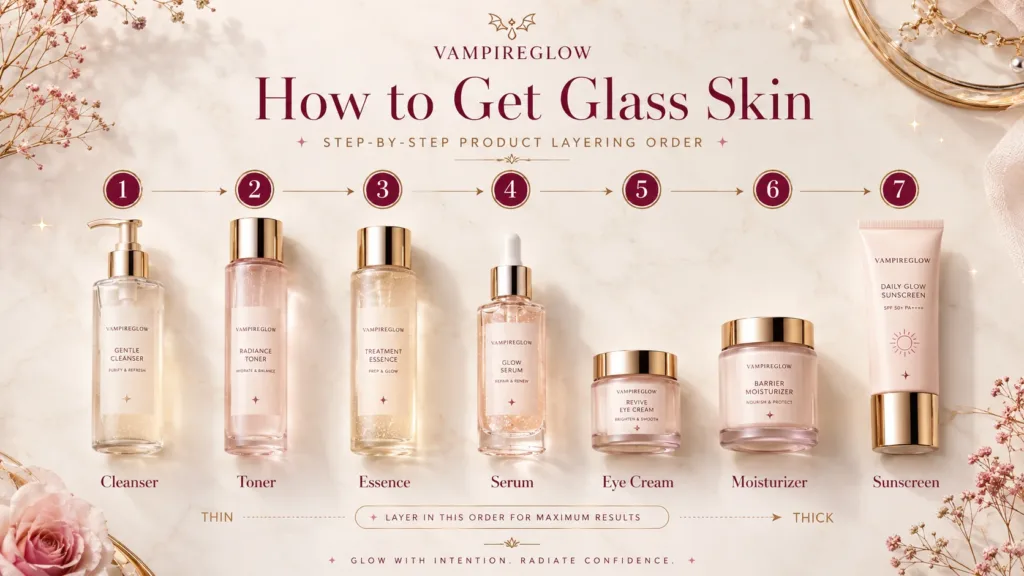
The golden rule is thin to thick, water to oil. Every layer should absorb before the next one goes on. In humid heat, patience between steps is what separates glow from grease.
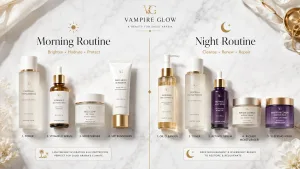
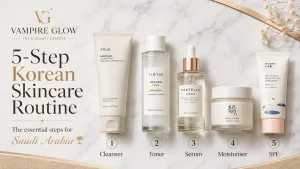
Step 1: Double cleanse (evening only). Start with an oil-based cleanser to dissolve SPF, makeup and the day’s sebum. Follow with a gentle water-based cleanser. This two-step approach gets skin properly clean without stripping. In the morning, the water-based cleanser alone is enough.
Step 2: Exfoliate gently (two to three times a week, not daily). A mild chemical exfoliant with AHA or BHA smooths texture and clears the surface so light reflects evenly rather than scattering off rough patches. Over-exfoliating is the fastest way to wreck glass skin, so keep this step measured.
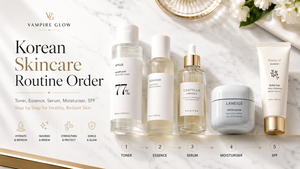
Step 3: Hydrating toner. Skip alcohol-heavy toners entirely. A hydrating, watery toner is the first layer of real moisture. Pat it in rather than wiping, so it absorbs instead of evaporating. This is where the skin care range at Vampire Glow becomes useful, since Korean toners are formulated specifically for this layering approach.
Step 4: Essence. The signature K-beauty step. An essence is thinner than a serum, packed with hydrating and barrier-supporting ingredients, and designed to be the base layer that everything else builds on. If you only add one “new” product to a standard routine, make it this.
Step 5: Serum. Choose based on what your skin actually needs. Niacinamide for pore refinement and oil control. Hyaluronic acid for hydration. Centella for calming. One or two serums maximum, not five.
Step 6: Lightweight moisturiser. A gel or gel-cream locks in the layers below without adding heaviness. This is the critical step that separates glass from greasy in Saudi heat. Rich, thick creams are not the friend of glass skin in a hot climate. Choose something that seals without suffocating.
Step 7: Sunscreen (morning only). Non-negotiable and non-optional. A lightweight, non-comedogenic SPF that doesn’t leave a white cast or add visible shine. Korean sunscreens are known for finishing like a skincare product rather than a chalky shield, which is exactly what glass skin needs as a final layer. The American Academy of Dermatology recommends broad-spectrum SPF 30 or higher for daily wear.
How Soon Does Glass Skin Appear
Be honest with yourself about the timeline. Improved hydration and a softer surface texture can show within the first week or two of consistent use. That lit-from-within quality, the real glass effect, usually takes six to eight weeks of daily routine before it becomes reliably visible.
Individual results vary by skin type, concern severity, and how consistent you are. Skipping steps, swapping products too often, or quitting after ten days resets the process.
Nobody woke up with glass skin after a single sheet mask. The glow is cumulative.
How Often to Follow This Routine
Cleansing, toning, moisturising and SPF happen daily, morning and night (minus SPF at night). Essence and serum can be daily for most skin types, though sensitive skin might prefer every other day while building tolerance.
Exfoliation stays at two to three times per week. Sheet masks, if you use them, are a once or twice a week addition, not a daily event. Overuse of exfoliants and masks is one of the fastest ways to flip glass skin into irritated, reactive skin, especially in the dry indoor air that’s standard across Saudi Arabia.
Aftercare Tips: Keeping the Glow Without the Grease
Do blot gently through the day with oil-absorbing sheets rather than adding powder, which can dull the glass finish. Do reapply SPF if you’re outdoors for extended periods. Do keep drinking water, since internal hydration supports the external routine.
Don’t layer too many serums hoping to speed things up. Two targeted serums is plenty, and stacking more can create pilling and congestion. Don’t touch your face during the day, since oil and dust transfer from hands and undo the clean finish. Don’t assume that a shiny forehead by 3pm means the routine is wrong. Blot the T-zone, leave the cheeks, and the glow still reads as glass.
Glass Skin vs Dewy Makeup: What’s the Difference
| Glass Skin (Skincare) | Dewy Makeup Look | |
| Source of glow | Genuine skin hydration from within | Cosmetic products applied on top |
| Longevity | Builds over weeks, lasts all day with the right routine | Lasts until makeup fades or is removed |
| Feel on skin | Lightweight, skin breathes normally | Can feel layered or heavy, especially in heat |
| Maintenance | Daily skincare routine | Touch-ups and reapplication through the day |
| Suitable for Saudi heat | Yes, when using lightweight layers | Risky, dewy products can melt and slide |

Glass skin is a condition of the skin itself. Dewy makeup is an effect applied on top. They look similar in photos but feel very different at 45 degrees in August.
Possible Side Effects and Precautions
Introducing too many hydrating layers at once can sometimes cause milia, small white bumps under the skin, especially if textures are too rich for the climate. Start with fewer layers and build up. Chemical exfoliants, even gentle ones, increase sun sensitivity, which is why daily SPF is non-negotiable in Saudi Arabia’s UV conditions.
Anyone using prescription retinoids, strong acids or medicated treatments should consult a dermatologist before adding AHA, BHA or active serums, since doubling up on exfoliation can damage the barrier. Patch test anything new on the inner arm before applying to the full face.
If you notice persistent redness, stinging or breakouts that don’t settle within a few days of starting a new product, stop using it and give your skin a reset.
What Does a Glass Skin Routine Cost
The investment depends on how many steps you build in at once rather than a single fixed number. Key factors that move the price:
- Starting with the core four (cleanser, toner, moisturiser, SPF) versus a full seven-step routine from day one
- Product size and how long each bottle lasts with daily use, since Korean skincare tends to come in generous sizes
- Whether you buy pieces individually or choose a bundle or set
- Your region and currency: Vampire Glow displays pricing in AED for Gulf shoppers and in USD for other regions
- Delivery destination within Saudi Arabia or the wider GCC
Check live prices directly on each product page, since they can shift and differ by region. A smart starting point is the essentials first, then adding one treatment step per month as budget allows.
Why Choose Vampire Glow
- Authentic Korean brands sourced directly, with batch codes and expiry dates checked on arrival
- A curated edit chosen specifically for the Gulf climate, not a generic international catalogue
- Cruelty-free brands only
- Delivery across the UAE and the wider GCC, including Saudi Arabia, with options confirmed at checkout
- Clear ingredient lists and usage guidance on every product page, so you know exactly what you’re layering
Related reading
- The full Korean skincare routine for Saudi Arabia's weather
- Whether you really need all 10 steps
- Rice water for skin, and whether it's worth it
- How to use Korean toner pads properly
FAQs
How do I get glass skin without looking oily? The key is product texture and layering order. Use water-based, lightweight formulas rather than heavy creams. Let each layer absorb before applying the next. A gel moisturiser seals hydration without adding surface oil, and a mattifying or lightweight SPF as the final step keeps the finish luminous rather than slick. Blotting sheets through the day help control the T-zone without dulling the glow on the cheeks.
How do I look glowy but not greasy? Glow comes from well-hydrated, smooth skin reflecting light evenly. Grease comes from excess surface oil or products that sit on top instead of absorbing. The difference is almost always about texture choice: essences and gel creams give glow, thick oils and rich creams give grease in hot climates. Allowing each layer to absorb fully before applying the next also makes a noticeable difference.
How is Korean glass skin not just greasy skin? Greasy skin has a visible film of oil sitting on the surface, often concentrated on the forehead and nose, and usually comes with enlarged pores and a heavy feel. Glass skin has a uniform, reflective quality across the whole face, looks translucent rather than wet, and feels light and comfortable. The distinction comes down to skin health: glass skin is hydrated from within, while greasy skin is usually dehydrated underneath and overproducing oil to compensate.
Can a glass skin routine actually make skin look better without makeup? That’s the whole point. A well-maintained glass skin routine can improve texture, reduce visible pores, even out tone, and create a natural luminosity that reduces the need for foundation or concealer. Many people following the routine consistently find they wear less makeup over time because the bare skin looks better. Results vary depending on skin type and consistency, but the trend is real.
Does Vampire Glow deliver glass skin products to Saudi Arabia? Yes. Vampire Glow delivers across the UAE and the wider GCC, including Saudi Arabia. Delivery options and timelines are confirmed at checkout for your specific region. Browse the full skincare range and add what you need to your routine.
Start Building Your Glass Skin Routine
Saudi Arabia’s climate is extreme in ways that most skincare advice ignores. A glass skin routine built with lightweight Korean formulas, applied in the right order and used consistently, is one of the few approaches that actually delivers a healthy glow without melting in the heat or drying out under AC. Shop the edit at vampireglow.com and start with the essentials. If you need help choosing the right products for your skin type, reach out to the team at support@vampireglow.com.
About author