

Hair Skin Nails Supplements: What to Take Together and When
If you have ever stood in front of a supplement shelf trying to figure out whether to buy one all-in-one hair, skin and nails formula or three separate bottles, you already know the real question isn’t which product looks nicest. It’s whether any of it actually works, and whether taking it daily is doing anything besides making expensive urine.
That’s the honest starting point for hair skin nails supplements. Some of the ingredients that show up in these blends have decent evidence behind them. Others are along for the marketing ride. Knowing which is which changes how you shop for them, how you combine them, and how much you should expect.

What Are Hair, Skin and Nails Supplements, and How Do They Work
A typical hair, skin and nails formula bundles together a handful of nutrients that each play a role in how those tissues are built: biotin, collagen or collagen-building amino acids, zinc, vitamin C, and sometimes silica or selenium. The idea is that hair, skin and nails share overlapping raw materials, mainly keratin and collagen, so supporting one tends to support the others.
Where this gets oversold is in implying that everyone needs extra of all of it. In practice, these nutrients matter most when your levels are actually low. If your diet already covers them, adding more through a supplement does not reliably add extra benefit on top. The honest way to think about a combination formula is as insurance against gaps, not as a guaranteed upgrade.
Who Should Take Them, and Who Should Skip Them
These formulas make the most sense for people with a genuine gap: restrictive diets, certain medications that deplete specific nutrients, visible brittle nails, or hair shedding that a doctor has linked to a nutrient deficiency rather than genetics, hormones, or stress. If you have recently had bloodwork showing you are low in something like zinc, biotin, or vitamin D, a combination formula covering that gap is a reasonable choice.
If your hair, skin and nails concerns are unrelated to nutrition (androgenetic hair loss, an autoimmune skin condition, a fungal nail infection) a supplement is not the fix, and no amount of consistency with it will address the actual cause. Pregnant or breastfeeding women, anyone on blood thinners, and anyone with a kidney condition should check with a doctor before starting, since some ingredients in these blends (notably zinc and certain fat-soluble vitamins) can be a problem at high, unsupervised doses.Link “collagen supplements for skin” to a PubMed systematic review. Research suggests collagen may improve skin hydration and elasticity, although study quality and results vary. PubMed
PubMed Collagen Review
Which Ingredients Actually Have Evidence Behind Them
This is the section most hair, skin and nails marketing skips, and it’s the one that actually matters.
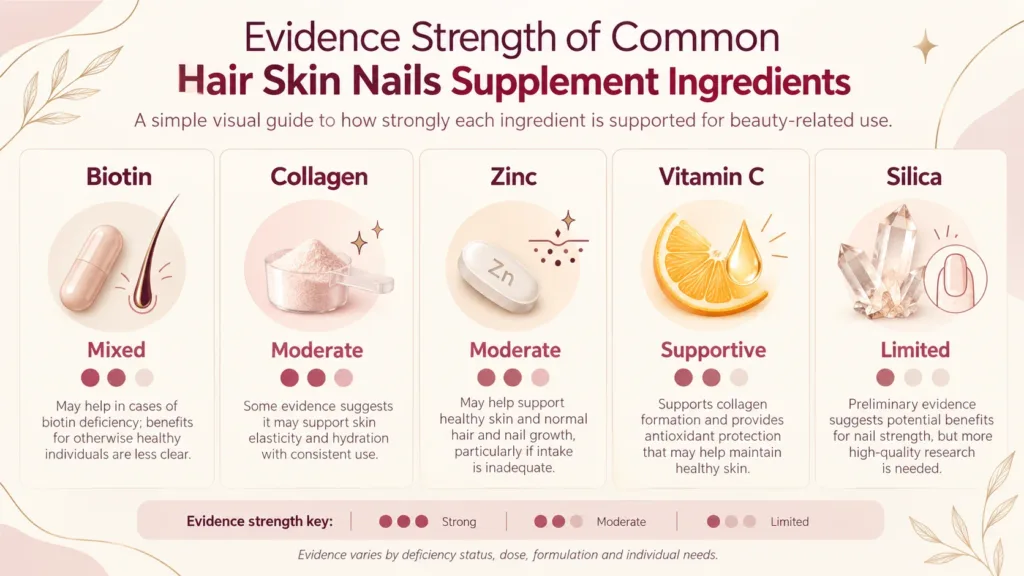
- Biotin. The most heavily marketed ingredient in this category, and also the one with the weakest evidence in people who are not deficient. A widely cited review found the highest-quality trial on biotin for hair growth, a placebo-controlled study, showed no real difference between biotin and placebo. True biotin deficiency is rare in people eating a normal diet. Biotin genuinely helps if you are deficient, and does very little if you are not.
- Collagen or collagen-supporting amino acids. This one has a more encouraging, if still developing, evidence base for skin hydration and elasticity specifically, with several trials showing modest improvements after consistent use over multiple months. The evidence for nail and hair benefits from collagen specifically is thinner than the skin evidence.
- Zinc. Zinc plays a genuine role in tissue repair and keratin production, and a deficiency is linked to hair shedding and slow nail growth. Supplementing helps meaningfully if you are low. Taking more than your body needs does not accelerate growth and can cause its own side effects.
- Vitamin C. Mostly relevant here because it’s required for the body to actually build collagen. If a formula includes collagen without vitamin C, or your diet is very low in vitamin C, that’s worth knowing, since the two work together rather than independently.
- Silica and selenium. Both show up in these blends with a thinner, more preliminary evidence base. Neither is harmful at typical supplement doses, but neither has strong standalone trial support for hair, skin or nail outcomes.
The takeaway: a formula built around zinc, vitamin C and collagen has a more defensible case than one leaning almost entirely on biotin.
What to Take Together, and What to Avoid Pairing
A combination hair, skin and nails formula is designed to be taken as one product, which is part of its appeal, you are not juggling four separate bottles and four separate schedules. If you are building your own stack instead, a few pairing rules are worth knowing.
Zinc and iron compete for absorption when taken at the exact same time in high amounts, so if you are supplementing both, spacing them by a few hours is sensible. Collagen and vitamin C work well taken together, since vitamin C supports collagen synthesis in the body. Calcium can interfere with zinc absorption in a similar way, so a hair, skin and nails formula and a separate calcium supplement are better taken at different times of day rather than side by side.
Avoid stacking two separate products that both contain high-dose biotin or zinc. It is easy to end up doubling a dose without noticing when a multivitamin and a targeted hair supplement overlap on ingredients.
Is It Safe to Take Hair, Skin and Nails Vitamins Every Day
For most healthy adults following the label’s recommended serving, yes. These formulas are designed for daily use, and the doses in a standard combination product are generally within safe ranges for someone without a specific medical condition affecting how their body processes these nutrients.
The caveat is dose stacking, not daily use itself. Taking your hair, skin and nails formula alongside a separate multivitamin, a separate biotin supplement, or a separate zinc supplement can push you well past a sensible daily total without realizing it. If you are taking more than one supplement, add up what each one actually contains before assuming daily use of all of them together is fine.
Morning or Night: When Should You Take Hair, Skin and Nails Supplements
This question comes up in two forms, whether to take a combined hair, skin and nails formula in the morning or at night, and whether a more hair-focused growth supplement specifically should be timed differently. The honest answer for both is the same: timing does not meaningfully change how well most of these nutrients are absorbed for most people, so consistency matters far more than the clock.
That said, there are a couple of practical reasons to lean one way or the other. Taking it with a meal, whichever meal you are least likely to skip, improves tolerance and reduces the mild nausea some people report on an empty stomach. Some people find biotin or B-vitamin-containing formulas feel slightly stimulating and prefer taking them earlier in the day rather than right before bed. Beyond that, pick whichever time you will actually remember every day. A supplement taken inconsistently at the “optimal” time does less than one taken consistently at a convenient one.
How Long Do Hair, Skin and Nails Vitamins Take to Work
Hair and nails grow slowly, and that sets the real timeline here, not the supplement itself. Nails typically take three to six months to fully grow out, and hair follicles work on a cycle where a change made today does not show up as visible new growth for eight to twelve weeks at minimum. Skin-related changes from ingredients like collagen tend to appear somewhat sooner, often reported in the eight to twelve week range in trials, though results vary by individual.
If you are taking a combination formula and looking for signs it is working, realistically give it a full three months of consistent daily use before judging results, and closer to six months for a fair assessment of hair and nail changes specifically. Anything faster than that is either a placebo effect or a formula overpromising what it can deliver.
What Are the Side Effects of Taking Hair, Skin and Nails Vitamins
Most people tolerate these formulas well at standard doses. The side effects that do come up are generally mild and dose-related rather than dangerous: nausea or mild stomach upset, particularly on an empty stomach, and occasionally a metallic taste or mild digestive discomfort from the zinc content specifically.
The more important precaution is one most labels don’t mention. High-dose biotin, which many hair, skin and nails formulas contain, can interfere with certain lab tests, including thyroid panels and cardiac markers, sometimes producing falsely abnormal results. If you have bloodwork scheduled, mention any biotin-containing supplement to your doctor or the lab beforehand. Excess zinc taken over a long period can also interfere with copper absorption, which is why sticking to the labeled dose matters more than it might seem.
This information is general and not medical advice. If you are pregnant, breastfeeding, taking medication, or managing a health condition, speak with a doctor before starting a hair, skin and nails supplement, and mention it at any bloodwork appointment.
Cost and Pricing Factors
Formulation breadth is the biggest driver of price in this category. A basic formula built around one or two ingredients costs less than a fuller blend covering collagen, zinc, vitamin C and biotin together, largely because the raw materials for collagen specifically are more expensive to source than a synthetic vitamin.
Bottle size and days-per-serving also affect the per-day cost more than the sticker price does, so it’s worth comparing servings rather than price alone. For the current price on any product, check the live listing on the product page rather than relying on anything you’ve seen elsewhere.
FAQs
Is it safe to take hair, skin, and nail vitamins every day? For most healthy adults following the recommended serving, yes. The real risk is combining a hair, skin and nails formula with other supplements that share the same ingredients, which can push your total intake higher than intended without you noticing.
Should I take hair, skin, and nails in the morning or at night? Timing itself doesn’t meaningfully change absorption for most people. Take it with a meal for better tolerance, and pick whichever time of day you will actually remember consistently, since consistency matters more than the specific hour.
How long do hair, skin, and nails vitamins take to work? Give it a full three months of consistent use before expecting to see anything, and closer to six months for a fair read on hair and nail changes specifically, since both grow slowly regardless of what you’re taking.
Is it better to take hair growth supplements at night or morning? The same logic applies here. There’s no strong evidence that morning or night changes effectiveness. Take it with food, at a time you won’t forget, and stay consistent rather than chasing an optimal hour that doesn’t meaningfully exist for these ingredients.
What are the side effects of taking hair, skin, and nails vitamins? Mild nausea or stomach upset is the most common, usually from taking it on an empty stomach or from the zinc content. High-dose biotin can also interfere with certain lab test results, so mention any supplement containing it before bloodwork.
Build a Routine Based on What the Evidence Actually Supports
Hair skin nails supplements are not a scam, but they are also not a guaranteed transformation, and the honest answer sits somewhere in between depending on what your actual gaps are. A formula built around zinc, vitamin C and collagen has a stronger case than one leaning entirely on biotin, daily use is generally safe if you’re not doubling up on ingredients elsewhere, and results take months, not weeks, to show up in hair and nails specifically.
Explore the DUOZI range at Vampire Glow or browse the wider skin supplements category to find a formula that matches what your hair, skin and nails actually need, delivered across Saudi Arabia, the UAE and the wider GCC.

About author