Magnesium Glycinate for Sleep: Why Better Sleep Shows Up on Your Skin
Magnesium glycinate for sleep and skin is one of those combinations that sounds like a stretch until you actually look at the mechanism. It isn’t a skincare ingredient, and it doesn’t work on your face directly. What it may do is support deeper, more consistent sleep, and sleep quality has a genuine, well-documented relationship with how your skin looks day to day.
That distinction matters, because a lot of what circulates online about magnesium glycinate and skin overstates what the research actually shows. This article is here to separate the part that’s reasonably well supported, sleep and stress support, from the parts that are more marketing than evidence, like specific claims about face slimming or skin tightening.
What Is Magnesium Glycinate
Magnesium glycinate is magnesium bound to glycine, an amino acid that’s also known to have a calming effect on the nervous system. This combination is one of the more bioavailable, gentler forms of magnesium, meaning it tends to cause less digestive upset than some other forms, like magnesium oxide or citrate.
Magnesium itself is involved in hundreds of processes in the body, including muscle relaxation, nervous system regulation, and the body’s stress response. It’s this last part, the connection between magnesium, relaxation, and stress, that forms the actual bridge to any skin-related benefit, rather than magnesium acting on skin cells directly.

Who Should Consider Magnesium Glycinate
This is a reasonable option to consider if you deal with restless or inconsistent sleep, feel wound up or tense at night, or suspect stress is affecting both your sleep and your skin’s appearance, things like dullness, puffiness, or breakouts that seem to flare during stressful periods.
It’s not a fit for everyone. If you have kidney disease or impaired kidney function, magnesium supplements can build up to unsafe levels, since the kidneys are responsible for clearing excess magnesium from the body. Anyone in this situation should only take magnesium under a doctor’s supervision. It’s also not the right starting point if your skin concerns are unrelated to sleep or stress, such as active acne needing targeted treatment or a diagnosed skin condition.Link the anchor text “magnesium intake and supplementation” to the NIH Magnesium Fact Sheet. It covers recommended intake, supplement forms, safety, and interactions. ODs
NIH Magnesium Fact Sheet
What Does the Research Actually Say About Magnesium and Sleep
The honest answer is that the evidence is genuinely mixed, and it’s worth being upfront about that rather than overselling it. The National Center for Complementary and Integrative Health notes there is very little high-quality research specifically on magnesium supplements for sleep disorders. A review looking at older adults with insomnia suggested magnesium might help people fall asleep somewhat faster, but the underlying studies were considered low quality. A larger review of multiple studies found conflicting results, some showed a benefit for self-reported sleep quality, others found no meaningful difference, and researchers concluded that larger, longer, better-designed trials are still needed before firm conclusions can be drawn.
What this means practically is that magnesium glycinate is a reasonable, low-risk thing to try if your sleep could use support, but it isn’t a guaranteed fix, and anyone with persistent or severe sleep problems should still see a doctor rather than relying on a supplement alone.
How Sleep Actually Connects to Skin
This is the part with a much stronger evidence base than magnesium itself. Poor or insufficient sleep is well documented to affect skin in several ways: it’s associated with elevated cortisol, the body’s primary stress hormone, which can contribute to inflammation, breakouts, and a general dull or tired appearance. Sleep is also when the skin does much of its repair work, so consistently cutting it short can show up as a less refreshed, less even-looking complexion over time.
Dehydration and puffiness are also commonly linked to poor sleep, partly through fluid regulation and partly through the visible effects of a stressed, under-rested body. None of this means magnesium is a direct skincare treatment. It means that if magnesium genuinely helps you sleep more consistently, the skin-related benefits people report are a plausible downstream effect of better sleep and lower stress, not a direct action on skin cells.
Benefits Worth Knowing
- Possible support for sleep onset and quality, based on mixed but not negligible research, particularly for people whose sleep is disrupted by tension or restlessness.
- A calming effect via glycine, which is thought to support relaxation independently of magnesium’s other roles.
- Gentler on digestion than some other magnesium forms, making it easier to take consistently.
- An indirect route to skin benefits, through better sleep and potentially lower stress, rather than a direct topical or cellular effect.
- General magnesium support, relevant given that magnesium intake falls short of recommended levels for a meaningful portion of the population.
How to Use Magnesium Glycinate, Step by Step
- Take it in the evening, generally 30 to 60 minutes before bed, since this is when any calming or sleep-supportive effect is most relevant.
- Follow the recommended serving size on the product label rather than assuming more is better.
- Take it consistently for at least a few weeks before judging whether it’s making a difference, since supplement effects on sleep quality build gradually rather than working like a sedative on night one.
- Pair it with basic sleep hygiene, a consistent bedtime, reduced screen time before bed, and a cool, dark room, since a supplement alone rarely outperforms good sleep habits.
- If you’re not noticing any change in sleep after several weeks, that’s a reasonable point to stop and speak with a doctor rather than increasing the dose.
How Soon Do Results Show
If magnesium glycinate is going to help with sleep, some people notice a subtle difference within the first one to two weeks, while for others it takes longer, or doesn’t produce a noticeable effect at all, which lines up with how mixed the underlying research is. Any skin-related changes, since they depend on improved sleep and lower stress rather than a direct effect, would reasonably take longer still, likely several weeks of more consistent sleep before anything is visible in your skin.
This is not a fast or guaranteed route to visibly different skin, and treating it as one sets up expectations the research doesn’t support.
Usage Frequency
Most people take magnesium glycinate once daily in the evening, following the label’s recommended serving. It’s generally intended for consistent, ongoing use rather than an occasional, as-needed basis, since any sleep-related benefit depends on steady intake rather than a single dose before an important night.
Aftercare and Usage Tips
Do:
- Take it consistently at the same time each evening for at least a few weeks before assessing results.
- Combine it with a proper wind-down routine rather than expecting the supplement to do all the work.
- Check with a doctor first if you have kidney issues, take medication, or are pregnant or breastfeeding.
Don’t:
- Exceed the label’s recommended serving hoping for a faster or stronger effect.
- Expect visible changes to face shape, tightness, or sagging, these aren’t supported outcomes of taking magnesium.
- Treat it as a substitute for addressing an underlying sleep disorder that needs medical attention.
Magnesium Glycinate vs Other Common Magnesium Forms
| Magnesium Glycinate | Magnesium Citrate | Magnesium Oxide | |
| Bioavailability | Higher | Moderate | Lower |
| Digestive tolerance | Generally gentle | Can have a laxative effect | Most likely to cause digestive upset |
| Common use case | Sleep, relaxation, stress support | General supplementation, occasional constipation relief | Budget general supplementation |
| Best for | People prioritising tolerability and evening use | People who don’t mind a mild laxative effect | People less sensitive to digestive side effects |
Glycinate’s main advantage in this context is tolerability, since taking a supplement consistently every evening is much easier when it doesn’t cause digestive discomfort.
Does Magnesium Glycinate Slim Your Face
No, not in any way supported by current evidence. There’s no research showing that magnesium glycinate changes facial shape or bone structure. What likely drives this idea is magnesium’s possible role in reducing water retention and puffiness for some people, particularly if poor sleep or high stress has been contributing to a puffier appearance. A less puffy face can look subtly different, but that’s not the same as slimming, and it isn’t a guaranteed or dramatic effect.
Can Magnesium Make You Look Younger
There’s no direct research supporting an anti-aging effect from taking magnesium glycinate. If it supports better sleep and helps manage stress-related cortisol, the indirect result could be skin that looks more rested and less dull, which people sometimes describe informally as looking “younger” or “fresher.” That’s a meaningfully different claim from magnesium reversing or slowing visible signs of aging, which isn’t something the current evidence supports.
Does Magnesium Glycinate Make Skin Glow
Indirectly, potentially, for the same reason. Well-rested, less stressed skin tends to look more even-toned and less dull, and if magnesium genuinely improves your sleep, that downstream effect could read as a healthier-looking glow. There’s no evidence that magnesium acts on the skin directly to produce radiance, so this depends entirely on whether it’s actually helping your sleep in the first place.
Does Magnesium Help Sagging Skin
There’s no research supporting a direct effect on skin sagging or elasticity from magnesium glycinate. Skin sagging is primarily driven by collagen and elastin changes over time, sun exposure, and genetics, none of which magnesium supplementation has been shown to meaningfully influence. Chronic stress and poor sleep are associated with accelerated visible skin aging, so better sleep may support skin health generally, but that’s a long way from magnesium treating or reversing sagging.
Which Magnesium Is Best for Skin Tightening
None have strong evidence for this specific outcome. Skin tightening claims tied to any oral magnesium form aren’t well supported by current research, regardless of which type you choose. If skin tightening specifically is your goal, that’s better addressed through established topical or dermatological approaches rather than an oral supplement whose main, better-supported role here is sleep and stress support.
Possible Side Effects and Precautions
Magnesium glycinate is generally well tolerated, with digestive upset being less common than with other magnesium forms, though mild stomach discomfort is still possible for some people, especially at higher doses. People with kidney disease or impaired kidney function should not take magnesium supplements without medical supervision, since the kidneys are responsible for clearing excess magnesium, and impaired function can allow it to build up to unsafe levels.
This information is general and not medical advice. If you are pregnant, breastfeeding, taking medication (particularly certain antibiotics or diuretics, which can interact with magnesium), or managing a health condition, speak with a doctor before starting magnesium glycinate or any new supplement.
Cost and Pricing Factors
Formulation strength, capsule count, and whether magnesium is combined with other ingredients like glycine alone versus a broader relaxation blend all affect pricing in this category. A higher-strength or larger-supply option will typically cost more than a basic, lower-dose formula.
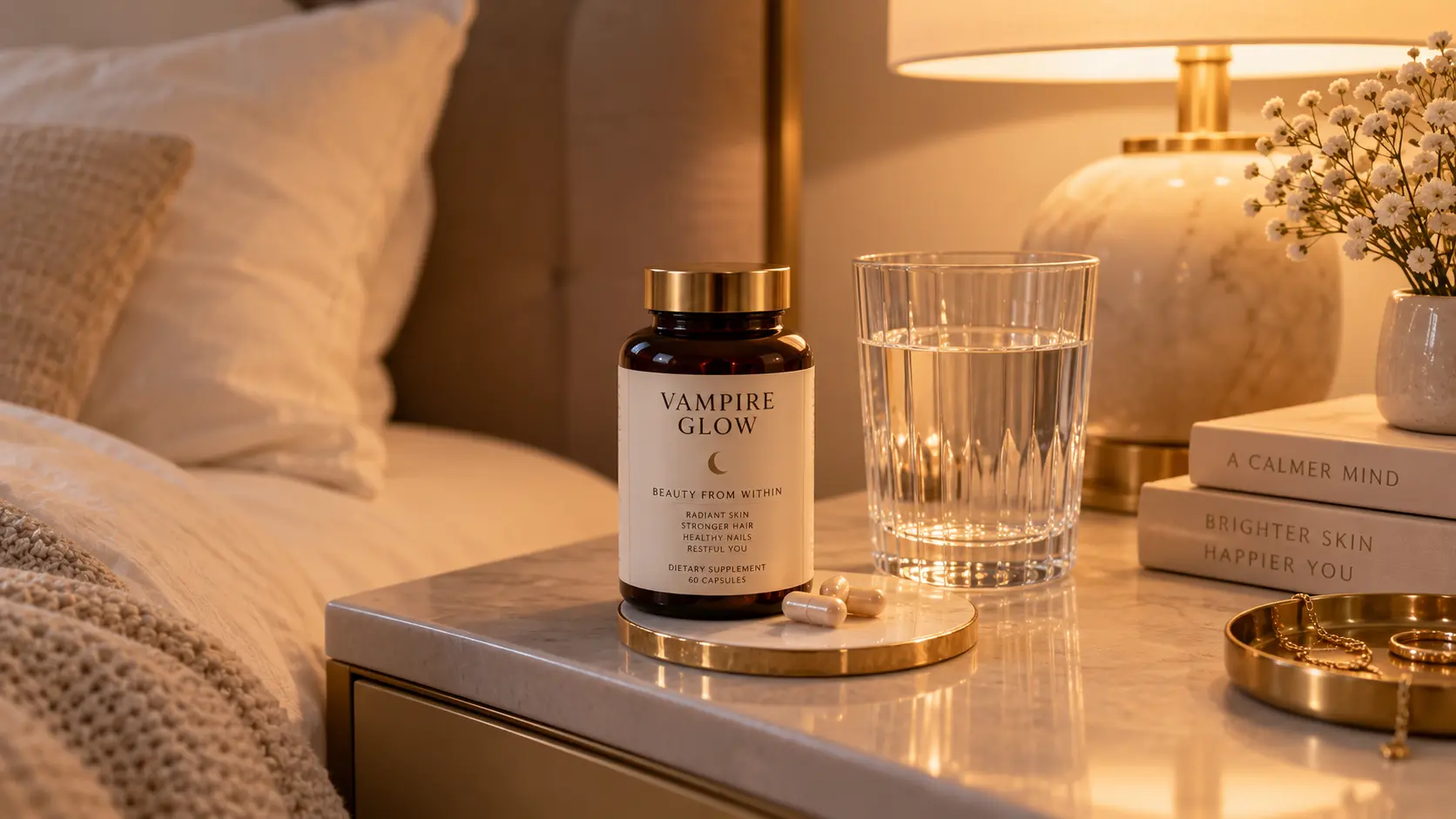
Prices on vampireglow.com display in AED for the UAE and in USD for other regions, including Saudi Arabia, with delivery destination affecting your final total at checkout.
Why Choose Vampire Glow
- Authentic brands sourced directly, with batch codes and expiry checked on arrival
- A curated edit built for the Gulf climate and lifestyle, not an overwhelming, bottomless catalogue
- Cruelty-free brands only, across the full range
- Delivery across the UAE and the wider GCC, including Saudi Arabia, with options confirmed at checkout
- Clear ingredient and usage information listed on every product page
FAQs
Does magnesium glycinate slim your face? No, there’s no evidence it changes facial shape or structure. It may modestly reduce puffiness for some people if poor sleep or stress was contributing to it, but that’s not the same as slimming, and it’s not a guaranteed effect.
Can magnesium make you look younger? Not directly. Any effect would come from better sleep and lower stress showing up as skin that looks more rested and less dull, rather than magnesium acting on skin aging itself. There’s no research supporting a direct anti-aging effect.
Does magnesium glycinate make skin glow? Indirectly, if it’s genuinely improving your sleep quality. Better-rested skin often looks more even and less dull, but magnesium isn’t shown to affect skin radiance on its own, so this depends on whether the sleep benefit actually happens for you.
Does magnesium help sagging skin? There’s no direct evidence supporting this. Skin sagging is primarily driven by collagen and elastin changes, sun exposure, and genetics. Better sleep may support overall skin health, but that’s distinct from magnesium treating or reversing sagging.
Which magnesium is best for skin tightening? No form of magnesium has strong evidence for skin tightening specifically. If that’s your main goal, established topical or dermatological options are better supported than any oral magnesium supplement.
Set Realistic Expectations, Then Prioritise Sleep
Magnesium glycinate for sleep and skin is really a story about sleep and stress, not a direct skincare ingredient. If it helps you sleep more consistently, the skin-related benefits people notice, less puffiness, a fresher look, are a reasonable downstream effect, not a guaranteed transformation. The specific claims about face slimming or skin tightening aren’t backed by current research, and it’s worth going into this with that understanding.
Browse the skin supplements range at Vampire Glow or explore the wider skin care edit, delivered across the UAE and the wider GCC.

About author