
Vitamin D Deficiency and Hair Loss in Saudi Arabia: Signs, Testing and Supplements
Vitamin D deficiency and hair loss in Saudi Arabia is a more common combination than most people expect, precisely because it seems to make no sense. This is one of the sunniest countries on earth, and yet vitamin D deficiency here is not rare, it’s the norm for a large share of the population.
The reason isn’t a lack of sunlight. It’s how little direct skin exposure most people actually get, between covering clothing, indoor working hours, air conditioned environments, and daily sunscreen use, all of which block the UVB rays skin needs to produce vitamin D. If you’ve noticed more shedding than usual and you’re wondering whether a deficiency could be behind it, the link is real, well documented, and worth understanding properly before you start supplementing.
What Is Vitamin D Deficiency and Why Is It So Common in Saudi Arabia
Vitamin D is produced in the skin when it’s exposed to direct sunlight, and it plays a role in far more than bone health, including supporting the hair growth cycle. Deficiency means your blood levels of vitamin D have dropped below what your body needs to function properly.
Multiple studies across Saudi Arabia have found deficiency prevalence ranging from roughly 60% to over 80% of the population, with some studies reporting figures even higher in specific groups, particularly women and younger people. This is a well recognised, sun-paradox pattern: strong sunlight doesn’t help if skin rarely gets direct, unprotected exposure to it. Covering clothing, long indoor hours in air conditioning, and consistent sunscreen use all reduce the skin’s ability to produce vitamin D, regardless of how sunny it is outside.
How Is Vitamin D Deficiency Linked to Hair Loss
Vitamin D receptors are present in hair follicles, and research has consistently found lower vitamin D levels in people experiencing several different types of hair loss, including alopecia areata, female pattern hair loss, male androgenic alopecia, and telogen effluvium, the diffuse shedding pattern often linked to stress, illness, or nutrient gaps. Deficiency rates in these groups have been reported at roughly 39% to over 50% across different studies and hair loss types.
It’s important to be precise about what this evidence shows. This is a consistent association, not proof that low vitamin D directly causes hair loss in every case. Some researchers have also noted that vitamin D levels can shift as a result of the body’s stress response during a shedding episode, rather than the deficiency necessarily being the sole trigger. The honest summary is that the link is well documented and worth investigating, while evidence that supplementing reverses hair loss on its own is more limited and still developing.
Who Should Get Tested
If you’re experiencing noticeable shedding, thinning, or a hair loss pattern that’s developed or worsened recently, and you live or work primarily indoors, cover most of your skin outdoors, or use sunscreen daily, a vitamin D test is a reasonable step alongside seeing a doctor about the hair loss itself.
It’s a particularly relevant check if you also have other classic low vitamin D symptoms, fatigue, bone or muscle aches, or a mood that’s felt lower than usual, since these often go unnoticed until they’re pointed out together. This isn’t a substitute for a proper diagnosis of what’s causing your hair loss, since several different conditions can look similar and only a doctor or dermatologist can accurately tell them apart.
Signs and Benefits of Addressing a Deficiency
- A recognised, research-backed link. Vitamin D deficiency shows up consistently across multiple hair loss types, making it a legitimate factor worth ruling out.
- Support for general health alongside hair. Correcting a deficiency also supports bone, muscle, and immune health, regardless of what it does for hair specifically.
- A simple, low-cost test. A blood test for vitamin D levels is widely available and gives you an actual number to work from, rather than guessing.
- A starting point, not a cure-all. Addressing a deficiency is one piece of a broader picture that may include stress, thyroid function, iron levels, and genetics, particularly for pattern hair loss.
- Relevant regardless of hair loss. Given how common deficiency is across Saudi Arabia specifically, it’s worth knowing your levels even if hair isn’t your primary concern.
How to Test for Vitamin D Deficiency, Step by Step
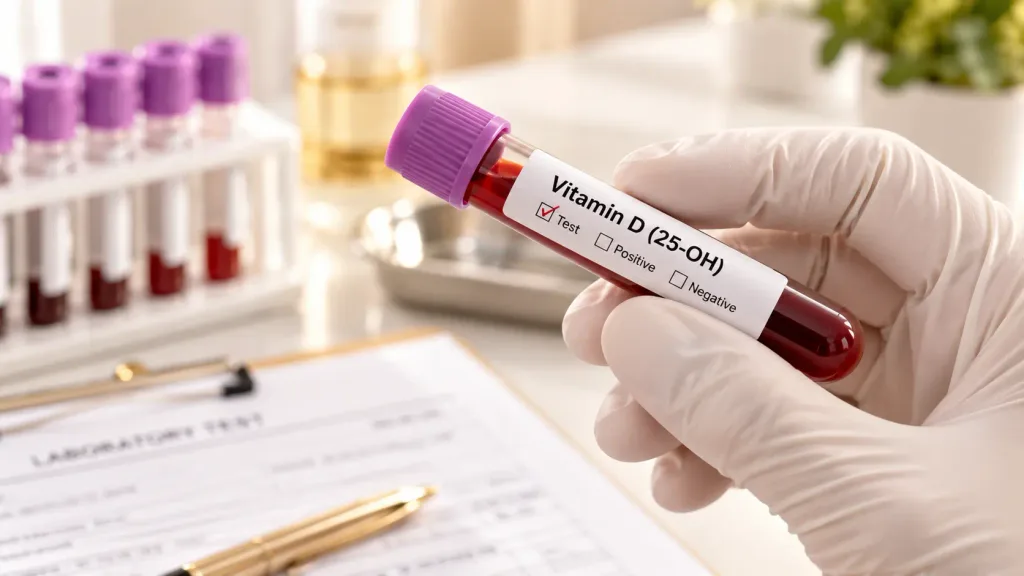
- Book a blood test that specifically measures 25-hydroxyvitamin D, the standard marker doctors use to assess vitamin D status.
- Get tested through a doctor’s referral or a private lab, both are widely available across Saudi Arabia.
- Review your results with a doctor rather than self-interpreting the number, since what counts as “sufficient” can vary slightly by lab and by individual health context.
- If you’re deficient, ask about an appropriate correction plan based on how low your levels are, rather than starting a high-dose supplement on your own.
- Retest after the recommended period to confirm your levels have improved and adjust your supplement plan accordingly.
How Much Vitamin D Should I Take if My Hair Is Falling Out
This is the one question in this article we won’t put a specific number on, and that’s intentional. The right dose depends entirely on how deficient you actually are, which only a blood test can tell you. Taking a high dose without knowing your starting levels isn’t a shortcut, it can lead to vitamin D toxicity, a real and documented risk when supplementation isn’t guided by testing.
The safer, more effective path is: get tested, follow the specific guidance a doctor gives based on your actual result, and follow the label on whatever supplement you’re advised to take. If you’re using an over-the-counter supplement without a specific medical recommendation, stick to the servings size on the label and don’t exceed it in the hope of faster results.
Can Hair Grow Back After Vitamin D Deficiency
In many cases, yes, particularly when the deficiency was a contributing factor in a telogen effluvium-type shedding pattern rather than a more permanent form of hair loss. At least one published case report has described visible regrowth following vitamin D correction, though this kind of single case doesn’t prove the same result for everyone.
Regrowth, when it happens, tends to follow the hair’s natural cycle, which takes months rather than weeks. It also depends heavily on what’s actually driving your hair loss. If vitamin D deficiency is one factor among several, such as thyroid issues, iron deficiency, or genetic pattern hair loss, correcting vitamin D alone may only address part of the picture.
What Does Low Vitamin D Hair Loss Look Like
Vitamin D related shedding most commonly presents as diffuse thinning, meaning hair loss spread across the scalp rather than concentrated in one bald patch. You may notice more hair than usual on your pillow, in the shower drain, or in your brush, along with an overall sense that your hair feels thinner or less dense.
This pattern overlaps significantly with telogen effluvium and can look similar to other causes of diffuse shedding, including stress, thyroid imbalance, or iron deficiency, which is exactly why testing and a proper diagnosis matter more than trying to identify the cause from appearance alone.
How Long Does It Take for Vitamin D to Stop Hair Loss
There’s no fixed timeline that applies to everyone, and this is an area where patience matters. Hair follicles work on a cycle that takes months to shift from a shedding phase to active growth, so even once your vitamin D levels are corrected, visible improvement typically takes several months rather than weeks.
Most guidance points to a minimum of three to six months of consistent, corrected vitamin D levels before you’d reasonably expect to see a difference, and considerably longer in some cases. If your levels are corrected and shedding hasn’t improved after a few months, that’s a sign to go back to your doctor and look at other possible contributing factors.
Usage Frequency and Aftercare
Vitamin D supplementation, once a doctor has recommended a specific plan, is typically a daily habit rather than an occasional one, since consistency is what actually raises and maintains blood levels over time. Getting a modest amount of safe, sensible sun exposure on your arms and legs a few times a week, alongside supplementation, can also support your levels, without needing to abandon sun protection on your face.
Do:
- Get tested before starting any supplement, so you know your actual starting point.
- Retest after a few months to confirm your levels have improved.
- Combine correction of vitamin D with a broader look at your health, especially if shedding continues.
Don’t:
- Take a high-dose supplement without knowing your levels first.
- Expect visible regrowth within a few weeks, this is a slow-build process.
- Assume vitamin D is the only possible cause of your hair loss without a proper diagnosis.
Vitamin D Deficiency vs Other Common Causes of Diffuse Hair Shedding
| Vitamin D Deficiency | Iron Deficiency | Thyroid Imbalance | |
| How it’s confirmed | Blood test (25-hydroxyvitamin D) | Blood test (ferritin and iron panel) | Blood test (TSH and related markers) |
| Shedding pattern | Diffuse thinning | Diffuse thinning | Diffuse thinning, sometimes with texture changes |
| Prevalence in Saudi Arabia | Very common, often 60% plus of the population | Common, particularly in women | Varies, but a frequent hair loss factor |
| Correction approach | Doctor-guided supplementation based on test results | Doctor-guided iron repletion | Medical management of thyroid levels |
| Typical improvement timeline | Several months after levels are corrected | Several months after levels are corrected | Varies with treatment and underlying cause |
These causes frequently overlap, which is exactly why a proper blood panel, rather than a single supplement, is the more reliable starting point when you’re dealing with unexplained shedding.
What Is the Best Vitamin for Hair Thinning
There isn’t one single “best” vitamin, because hair thinning has multiple possible causes, and the right answer depends on what’s actually behind yours. Vitamin D has one of the stronger, more consistent evidence bases among nutrients linked to hair loss, but iron, zinc, and B vitamins like biotin are also commonly involved, depending on the individual.
Rather than guessing which single vitamin to chase, a blood panel that checks vitamin D, iron, and thyroid function gives you a far more useful starting point than any one supplement bought speculatively. From there, a doctor can guide you toward correcting whatever you’re actually low in, rather than supplementing broadly and hoping something helps.
Possible Side Effects and Precautions
Vitamin D supplementation at doctor-guided doses is generally well tolerated. Unsupervised high-dose supplementation is the real risk here, vitamin D toxicity is a documented condition that can cause nausea, weakness, and more serious complications with prolonged excessive intake, which is exactly why testing before supplementing, rather than guessing a dose, matters so much in this specific case.
This information is general and not medical advice. If you are pregnant, breastfeeding, taking medication, or managing a health condition, speak with a doctor before starting a vitamin D supplement. If your hair loss is sudden, patchy, or accompanied by other symptoms, see a doctor or dermatologist for a proper diagnosis rather than assuming vitamin D is the cause. The NIH Office of Dietary Supplements has further guidance on safe vitamin D intake and toxicity risks.
Cost and Pricing Factors
Testing cost varies by lab and whether you go through a doctor’s referral or a private clinic. For supplements, formulation strength and the number of servings per bottle are the main factors behind price differences, with higher-strength, doctor-recommended formulations typically costing more than standard over-the-counter options.
Prices on vampireglow.com display in AED for the UAE and in USD for other regions, including Saudi Arabia, with delivery destination affecting your final total at checkout.
Why Choose Vampire Glow
- Authentic brands sourced directly, with batch codes and expiry checked on arrival
- A curated edit built for the Gulf climate and lifestyle, not an overwhelming, bottomless catalogue
- Cruelty-free brands only, across the full range
- Delivery across the UAE and the wider GCC, including Saudi Arabia, with options confirmed at checkout
- Clear ingredient and usage information listed on every product page
FAQs
Can hair grow back after vitamin D deficiency? In many cases, yes, particularly with diffuse shedding patterns like telogen effluvium, though it depends on whether vitamin D was the main factor or one of several. Regrowth follows the hair’s natural cycle and typically takes several months after levels are corrected.
What does low vitamin D hair loss look like? It typically shows up as diffuse thinning across the scalp rather than a single bald patch, with more shedding noticeable in your brush, shower drain, or pillow. This pattern overlaps with other causes of diffuse hair loss, so testing matters more than judging by appearance alone.
How much vitamin D should I take if my hair is falling out? There’s no safe one-size-fits-all number. The right dose depends on your actual test results, so get tested first and follow a doctor’s specific guidance rather than taking a high dose speculatively, since unsupervised high-dose supplementation carries a real toxicity risk.
How long does it take for vitamin D to stop hair loss? Most guidance points to a minimum of three to six months of corrected, consistent vitamin D levels before visible improvement, since hair follicles work on a slow cycle. If shedding continues after a few months of corrected levels, it’s worth exploring other possible causes with a doctor.
What is the best vitamin for hair thinning? There isn’t a single best vitamin, since hair thinning has multiple possible causes. Vitamin D has a strong, consistent evidence base, but iron, zinc, and B vitamins are also commonly involved, which is why a blood panel is more useful than guessing at one supplement.
Get Tested Before You Guess
Vitamin D deficiency and hair loss in Saudi Arabia are linked closely enough that it’s worth ruling out with a simple blood test, especially given how common deficiency is here despite the sunshine. What matters most is testing before supplementing, following doctor-guided dosing, and giving any correction several months to show in your hair, rather than expecting an overnight fix.
Browse the skin supplements range at Vampire Glow or explore the wider skin care edit, delivered across Saudi Arabia and the wider GCC.


About author