Ashwagandha for Stress Related Hair Fall: How Cortisol Affects Your Hair
Ashwagandha for stress hair loss is a genuinely interesting supplement question, because two separate claims get bundled together here, and only one of them has solid research behind it. Ashwagandha’s ability to lower cortisol is well documented across multiple clinical trials. Whether that specifically translates into less hair shedding is a much shakier, more theoretical leap, and it’s worth understanding the difference before you buy anything.
This guide separates what’s actually proven from what’s plausible but unstudied, walks through how cortisol genuinely affects hair, and covers the dosage and safety details that matter more than most supplement marketing lets on.
What Is Ashwagandha and Its Link to Cortisol
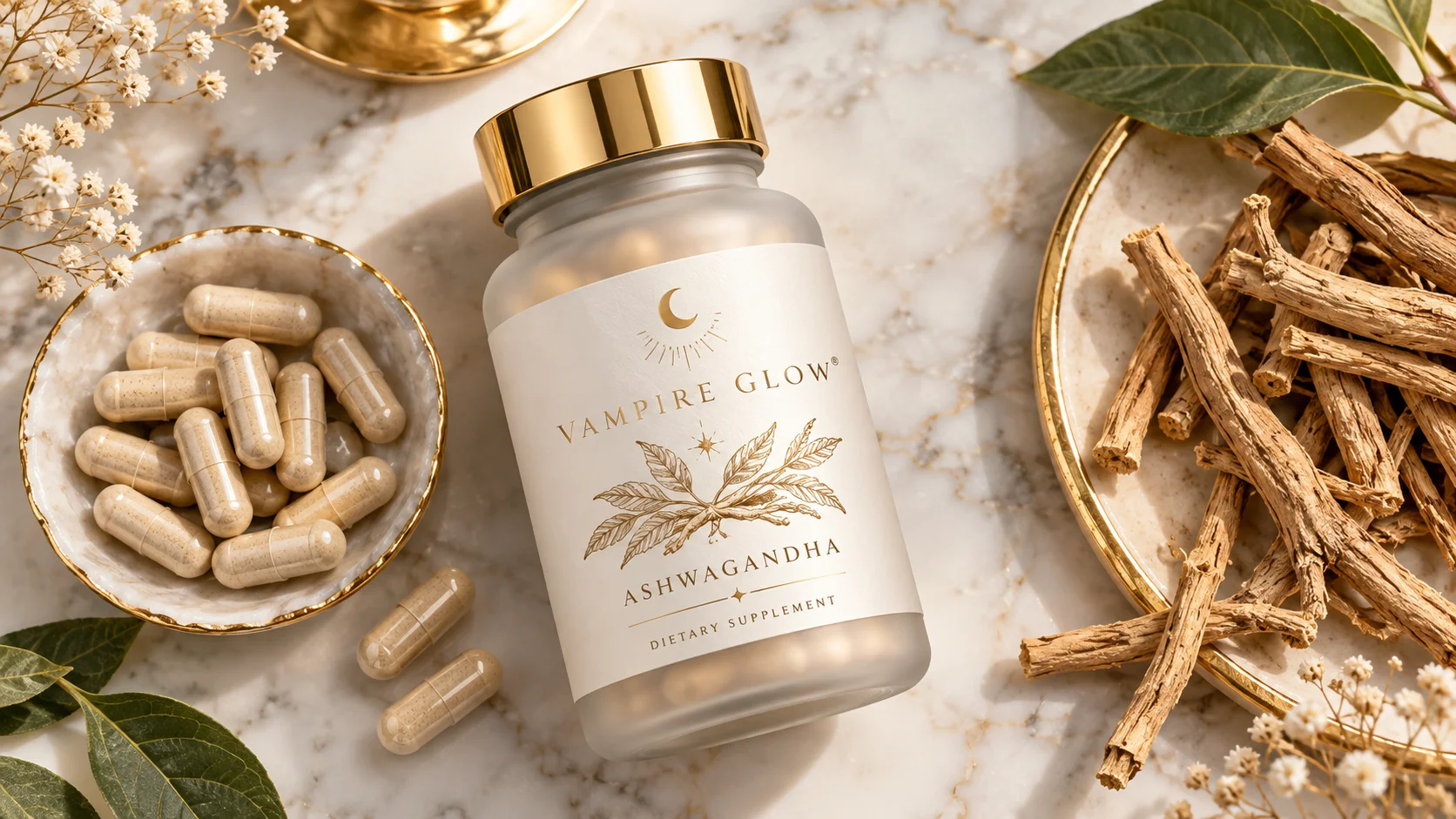
Ashwagandha is an adaptogenic herb used for centuries in Ayurvedic medicine, and it’s one of the better-researched adaptogens when it comes to modern clinical evidence. Multiple randomised, placebo-controlled trials have found that ashwagandha supplementation reduces serum cortisol levels and self-reported stress, with effects appearing more pronounced at doses of 500 to 600 mg per day in several studies, taken consistently for at least six to eight weeks.
The proposed mechanism involves ashwagandha’s effect on the hypothalamic-pituitary-adrenal axis, the system that regulates your body’s stress response and cortisol production. This is a genuinely well-supported area of research, more so than most single-ingredient supplements can claim, which is exactly why it’s worth being precise about what it’s actually been shown to do.
How Cortisol Affects Your Hair
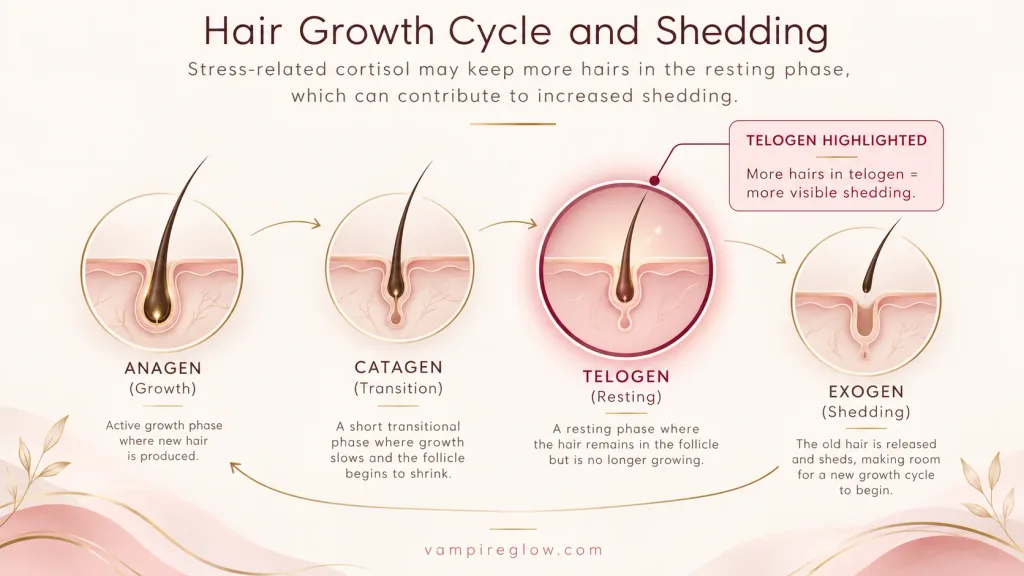
Chronic stress and elevated cortisol are linked to a specific type of hair loss called telogen effluvium. Hair normally cycles through growth, transition, and resting phases, and under significant stress, an unusually high number of hair follicles can shift into the resting, or telogen, phase all at once. Those hairs then shed together a few months later, which is why this type of hair loss typically shows up two to four months after a stressful event rather than immediately.
Unlike genetic pattern hair loss, telogen effluvium tends to cause diffuse thinning across the whole scalp rather than specific bald patches, and it’s generally considered a temporary, reversible condition once the underlying stress is resolved.
Which Hormone Is Responsible for Hair Thinning
There isn’t a single hormone responsible for all hair thinning, since different types of hair loss have different hormonal drivers. Cortisol is the hormone linked to stress-induced telogen effluvium, the diffuse shedding pattern discussed above. Genetic pattern hair loss, androgenetic alopecia, is instead driven primarily by dihydrotestosterone, or DHT, a hormone derived from testosterone that affects genetically susceptible hair follicles differently.
Thyroid hormone imbalances, both an underactive and overactive thyroid, can also cause hair thinning through an entirely separate mechanism. Because the hormone involved differs by hair loss type, identifying which pattern you’re actually dealing with matters more than assuming it’s automatically stress and cortisol related.
Does Ashwagandha Actually Help With Stress-Related Hair Loss
This is where the evidence gets noticeably thinner. Ashwagandha’s cortisol-lowering effect is well studied, but there isn’t direct clinical research measuring ashwagandha’s effect on hair regrowth or shedding specifically. The connection people make, lower cortisol, therefore less stress-driven hair loss, is a logical, biologically plausible one, but it hasn’t been tested as a direct outcome in the way the stress and anxiety research has been.
That doesn’t mean it’s useless for this purpose, but it does mean any claim that ashwagandha “regrows hair” or “stops stress hair loss” is going further than the current evidence supports. It’s more honest to describe it as a supplement with a well-supported effect on cortisol and stress, which may indirectly support the conditions your hair needs to recover, rather than a direct, proven hair loss treatment.
Can Hair Loss From High Cortisol Be Reversed
In most cases, yes. Telogen effluvium, the stress-related shedding pattern linked to cortisol, is generally reversible once the underlying stressor is identified and addressed. Shedding typically slows within three to four months of the trigger resolving, with visible regrowth often taking six to twelve months, and full recovery sometimes taking up to eighteen months in more prolonged cases.
This timeline applies specifically to stress-induced telogen effluvium, not to genetic pattern hair loss, which follows a different course and generally needs a different treatment approach. If you’re not sure which type you’re dealing with, a dermatologist can help distinguish between them before you invest time or money in the wrong solution.
What Are 5 Signs of High Cortisol
- Increased abdominal or facial weight gain, sometimes described as fullness in the face
- Disrupted sleep or ongoing fatigue, despite adequate time spent trying to rest
- Mood changes, including increased anxiety, irritability, or a persistent sense of being overwhelmed
- Skin changes, such as thinning skin, easy bruising, or slower wound healing in more significant cases
- Elevated blood pressure or blood sugar, which may only show up through routine medical testing
These signs overlap considerably with everyday stress and other health conditions, so they aren’t a reliable way to self-diagnose elevated cortisol. If you’re consistently experiencing several of these together, it’s worth discussing with a doctor rather than assuming and self-treating.
How to Reset Cortisol Levels
Cortisol doesn’t work like a switch you can flip, it’s regulated continuously by your body’s stress response system, so “resetting” it is really about consistently supporting that system over time rather than achieving one instant fix. The most evidence-backed approaches include prioritising consistent, adequate sleep, moderate rather than excessive exercise, stress management practices like mindfulness or breathing techniques, and a generally balanced diet.
Ashwagandha’s research fits into this picture as one supportive tool among several, not a standalone solution, and even in the studies showing cortisol reductions, the effect built over several weeks of consistent use rather than appearing immediately.
How to Balance Hormones to Stop Hair Loss
“Balancing hormones” is a broad, often vague phrase in wellness marketing, and it’s worth being specific about what that actually means for hair loss. If cortisol-driven telogen effluvium is the cause, addressing the underlying stressor and supporting your body’s stress response, through sleep, lifestyle changes, and potentially a supplement like ashwagandha, is the relevant approach.
If a different hormone is involved, thyroid imbalance or androgen-driven pattern loss, for example, the “balancing” needed is entirely different and typically requires medical diagnosis and treatment rather than a general wellness supplement. A doctor or dermatologist can identify which hormonal pathway is actually driving your specific hair loss before you commit to a general approach that may not address the real cause.
Who Should Consider Ashwagandha, and Who Should Avoid It
Ashwagandha may be worth considering if you’re dealing with general stress and want research-supported support for cortisol and perceived stress levels, understanding that its link to hair specifically remains theoretical rather than proven.
Several groups should avoid it. Ashwagandha should be avoided during pregnancy and should not be used while breastfeeding. It isn’t recommended for people about to have surgery, or for those with autoimmune or thyroid disorders, since it may affect thyroid hormone levels and immune activity. It may also interact with medications for diabetes, high blood pressure, immunosuppressants, sedatives, anticonvulsants, and thyroid hormone treatments. Because it may increase testosterone levels, people with hormone-sensitive prostate cancer should avoid it as well.
Benefits of Ashwagandha
- Well-documented reduction in cortisol levels, supported by multiple clinical trials
- Support for perceived stress and anxiety, based on validated psychological measures across studies
- Possible support for sleep quality and fatigue, reported in several trials
- A generally well-tolerated option for short-term use, in people without the specific contraindications above
How to Use Ashwagandha
Follow the recommended serving on your specific product’s label. Clinical studies have generally used doses between 250 and 600 mg per day, with some research suggesting slightly more pronounced effects at the higher end of that range, though individual products vary in concentration and standardisation.
Consistency over six to eight weeks is what the research is actually built on, so a short trial of a few days isn’t a fair test of whether it’s doing anything for you.
Usage Frequency
Most ashwagandha supplements are taken once or twice daily, following the specific serving size on the label. Current safety data mainly covers use up to around three months, and long-term safety beyond that hasn’t been well established, so ongoing long-term use is worth discussing with a doctor.
Aftercare and Usage Tips
Do:
- Take it consistently for at least six to eight weeks before judging whether it’s helping with stress.
- Address the actual source of stress alongside supplementation, not instead of it.
- Check with a doctor before combining it with any regular medication.
Don’t:
- Assume it will directly regrow hair or stop shedding on its own.
- Use it during pregnancy or breastfeeding under any circumstances.
- Continue use for months on end without medical guidance, given the limits on long-term safety data.
Ashwagandha vs Direct Hair-Growth Treatments
| Ashwagandha | Direct Hair-Growth Treatments (e.g. minoxidil) | |
| Mechanism | Supports stress response and cortisol reduction | Acts directly on hair follicles to stimulate growth |
| Evidence for hair specifically | Theoretical, not directly studied | Clinically studied for hair regrowth outcomes |
| Evidence for its stated purpose | Strong, for cortisol and stress reduction | Strong, for hair regrowth specifically |
| Best for | Supporting overall stress levels alongside hair recovery | Directly addressing hair thinning or shedding |
| Combinable | Yes, as a general wellness support | Yes, alongside stress management |
If stress-related shedding is confirmed as your specific issue, addressing the stress itself, with or without ashwagandha’s support, alongside patience for the natural regrowth timeline, is more aligned with the actual evidence than expecting a supplement to directly reverse the shedding.
Possible Side Effects and Precautions
Common side effects of ashwagandha include drowsiness, stomach upset, diarrhea, and occasionally vomiting. While rare, there have been reported cases of liver injury associated with ashwagandha supplements, so any unusual symptoms like yellowing skin or eyes warrant stopping use and seeking medical attention immediately.
This information is general and not medical advice. If you are pregnant, breastfeeding, have a thyroid or autoimmune condition, are scheduled for surgery, or take any regular medication, speak with a doctor before starting ashwagandha. The NIH National Center for Complementary and Integrative Health has further detail on its safety profile and current research.
Cost and Pricing Factors
Extract standardisation, concentration, and the number of servings per bottle are the main factors behind price differences in this category. Products using well-studied standardised extracts typically cost more than generic, unstandardised root powder formulas.
Prices on vampireglow.com display in AED for the UAE and in USD for other regions, with delivery destination within the UAE or wider GCC affecting your final total at checkout.
Why Choose Vampire Glow
- Authentic brands sourced directly, with batch codes and expiry checked on arrival
- A curated edit built for the Gulf climate and lifestyle, not an overwhelming, bottomless catalogue
- Cruelty-free brands only, across the full range
- Delivery across the UAE and the wider GCC, with options confirmed at checkout
- Clear ingredient and usage information listed on every product page
FAQs
Can hair loss from high cortisol be reversed? In most cases, yes. Stress-related telogen effluvium generally resolves once the underlying stressor is addressed, with shedding slowing within three to four months and visible regrowth often taking six to twelve months.
What are 5 signs of high cortisol? Common signs include facial or abdominal weight gain, disrupted sleep or fatigue, mood changes like anxiety or irritability, skin changes such as thinning or easy bruising, and elevated blood pressure or blood sugar. These overlap with other conditions, so a doctor’s evaluation is more reliable than self-diagnosis.
How to reset cortisol levels? Cortisol is regulated continuously rather than reset instantly. Consistent sleep, moderate exercise, stress management practices, and a balanced diet are the most evidence-backed approaches, with adaptogens like ashwagandha as one possible supportive addition.
How to balance hormones to stop hair loss? This depends entirely on which hormone is actually driving your hair loss. Cortisol-related shedding responds to stress management, while thyroid or androgen-driven hair loss needs medical diagnosis and a different treatment approach entirely.
Which hormone is responsible for hair thinning? There isn’t one single hormone. Cortisol drives stress-related diffuse shedding, DHT drives genetic pattern hair loss, and thyroid hormone imbalances can cause thinning through a separate mechanism. Identifying which applies to you matters more than assuming one cause.
Separate the Evidence From the Marketing
Ashwagandha for stress hair loss has a genuinely strong foundation on the cortisol and stress side of the equation, but the leap to “stops hair loss” is more theoretical than proven. If stress is genuinely behind your shedding, addressing it directly, with realistic patience for the natural regrowth timeline, is what the evidence actually supports.
Browse the skin supplements range at Vampire Glow to compare options, delivered across the UAE and the GCC.

About author