Does Creatine Cause Hair Loss? What the Evidence Says
You started creatine for the gym, then saw a few extra hairs in the shower drain, and now a reel is telling you the two are connected. Few supplement questions cause as much quiet panic as creatine and hair fall.
Here is the honest short version. The creatine and hair fall worry traces back to one small study from 2009, and no study since has shown that creatine causes hair loss. That is reassuring, but it is not a guarantee for everyone, and shedding has plenty of other causes. This guide walks through the evidence, how to tell shedding from real hair loss, what changes for women, and how to start creatine with confidence.
Does Creatine Cause Hair Fall? What the Science Says
On the best evidence we could read about creatine and hair fall: there is no proof that creatine causes hair loss. No study we found has measured hair loss directly and shown a link.
That is different from saying creatine is proven safe for every scalp. What we can say is that the claim is weak, the original study did not look at hair at all, and a newer controlled trial found nothing. We unpack both below. The practical takeaway on creatine and hair fall: it is not a reason to avoid creatine on its own, and it is also not a reason to ignore real changes in your hair.
Where the Creatine and Hair Fall Myth Came From
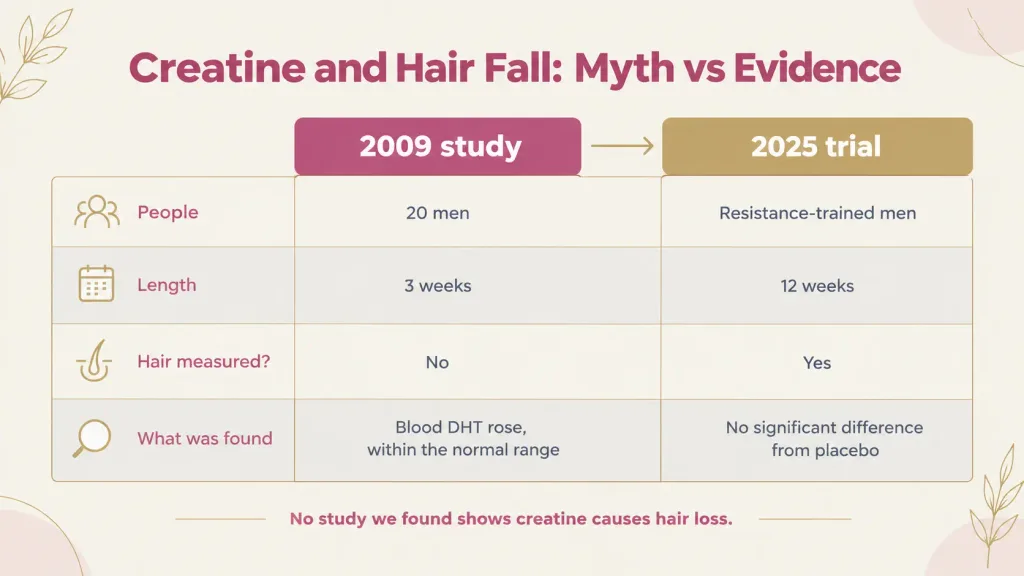
The idea comes from a 2009 study of 20 college-aged rugby players in South Africa. Over three weeks, they took creatine or a placebo, with one week of higher intake followed by two weeks of lower intake. Researchers measured blood testosterone and DHT, a hormone linked to pattern hair loss in people who are genetically prone to it.
According to a summary of the research by Acibadem, testosterone did not change, but DHT rose about 56 percent after the higher-intake week and stayed roughly 40 percent above baseline afterwards, while staying within the normal range for young men. That is where the headline came from.
The same summary lists why this proves little:
- Tiny sample. Twenty men.
- Very short. Three weeks, while pattern hair loss develops over years.
- No hair measured. Only blood hormones were tested, not hair count, density or shedding.
- Blood, not scalp. Follicles respond to DHT in the scalp.
- Not replicated. The DHT finding has not been confirmed by later work as far as the summary reports.
What Newer Research Shows About Creatine and Hair Fall
The same Acibadem summary describes a 2025 randomised, placebo-controlled trial in resistance-trained men that ran for 12 weeks and measured testosterone, DHT, hair count and density with standardised scalp imaging, plus self-reported shedding. It found no significant difference between creatine and placebo on any measure. It also cites a 2021 review in which 10 of 12 studies measuring testosterone found no change, and none documented hair loss.
On creatine and hair fall, a medically reviewed explainer from Ro reaches the same bottom line: creatine does not appear to cause hair loss, and the 2009 study did not assess hair. (Ro’s page was last updated in March 2022, so it predates the 2025 trial.)
Be fair about the limits. The 2025 trial lasted 12 weeks and recruited men without a known predisposition to baldness, so it cannot rule out an effect in someone with a strong family history over years. These summaries are also secondary sources. That is why we say “no evidence of harm” rather than “proven safe”.
Creatine and Hair Fall: Are You Losing Hair or Just Shedding Normally
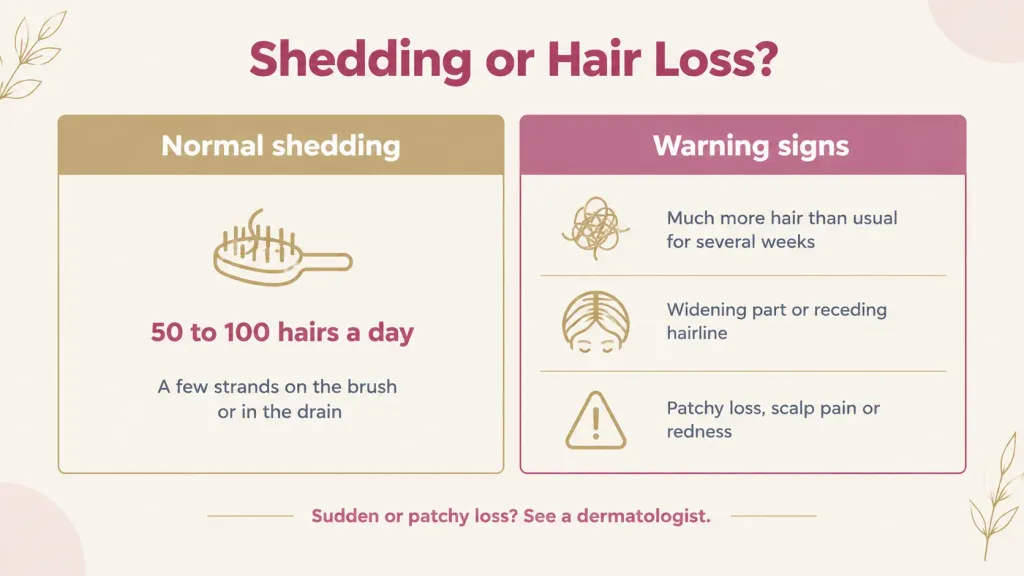
Before blaming a supplement, check whether your creatine and hair fall worry is real, meaning whether you are actually losing more than normal. The American Academy of Dermatology says it is normal to shed 50 to 100 hairs a day. So a few strands on the brush or in the drain is not a crisis.
Signs it may be more than normal shedding:
- Much more hair than usual on your pillow, brush or shower floor for several weeks.
- A widening part, a receding hairline or thinning at the crown over months.
- Patchy loss, scalp pain, redness or scaling. These deserve a doctor’s visit.
- Visible thinning in photos taken in the same light months apart.
A simple test: take a clear photo of your part and hairline in daylight now, and again in a month. Memory is unreliable, photos are not. The AAD explains that heavy shedding, which doctors call telogen effluvium, usually appears months after a trigger such as major weight loss, childbirth, high fever, surgery or stopping birth control pills, and is usually temporary. A dermatologist can tell whether you have hair loss, excessive shedding, or both.
Other Reasons for Hair Fall When You Start Creatine
Timing can fool you when it comes to creatine and hair fall. Many people start creatine alongside a new training plan, a calorie cut or a stricter diet, and any of those can change shedding months later. The AAD lists major weight loss as a classic trigger.
Worth ruling out before blaming creatine:
- Crash dieting or low protein intake
- Heavy stress or poor sleep
- Low iron or vitamin D, which a doctor can test. See our guide on vitamin D deficiency and hair loss
- Hormonal shifts, thyroid problems or stopping medication
- Tight hairstyles and heavy heat styling
- Stress itself, which we cover in ashwagandha for stress-related hair loss
If shedding is sudden, patchy or painful, see a dermatologist rather than guessing.
Creatine and Hair Fall in Women: Is It Different Than in Men
The studies that fuelled the creatine and hair fall worry, and the newer trial that countered it, were in men. We did not find a study measuring creatine and hair in women, so we will not claim a result either way.
What can be said is that hair fall in women has its own common triggers. The AAD lists childbirth and stopping birth control pills among the classic causes of heavy shedding. If you are a woman who notices more shedding after starting creatine, those triggers, along with iron, thyroid and diet changes, are more likely suspects than the supplement, though only a doctor can say. Pregnancy and breastfeeding are reasons to check with a doctor before starting creatine at all.
Creatine and Hair Fall: How Much Is Safe If You Are Prone to Hair Loss
We will not give you a gram figure for creatine and hair fall, because the right serving is the one printed on your product’s label, and no source we read shows that a lower or higher amount changes hair outcomes. There is also no evidence that a special “hair-loss-safe” dose exists.
What is sensible if you are prone to hair loss, for example with a family history:
- Follow the label serving exactly. More does not mean better.
- Talk to your doctor or a dermatologist first if you already have pattern hair loss or take a treatment for it.
- Do not stop or change hair loss medication on your own because of a supplement worry. The AAD warns that serious side effects can occur if you stop a treatment suddenly, and advises talking to your doctor first.
- Track your hair. Same-light photos monthly, so you act on facts, not fear.
- Review at three months. If shedding clearly increased and you cannot explain it, stop and see a professional.
People with kidney conditions should also ask their doctor before using creatine.
Start Your Creatine Journey With Confidence, Hair Fall Worries Included
Starting well, with creatine and hair fall worries in mind, is mostly about being boring and consistent.
- Decide why you are taking it. Creatine is mostly used to support exercise performance, so be clear on your goal and on your creatine and hair fall concerns.
- Check your baseline. Take hair photos now and note any existing shedding.
- Read the label for the serving, ingredients and warnings, and follow it.
- Start with one new supplement. Adding several at once makes it impossible to tell what is causing anything.
- Pair it with the basics. Enough sleep, enough protein overall, and a doctor-checked iron and vitamin D status if you worry about hair.
- Reassess after three months. Compare photos, energy and training, and keep or drop it based on what you see.
Where Vampire Glow’s Range Fits
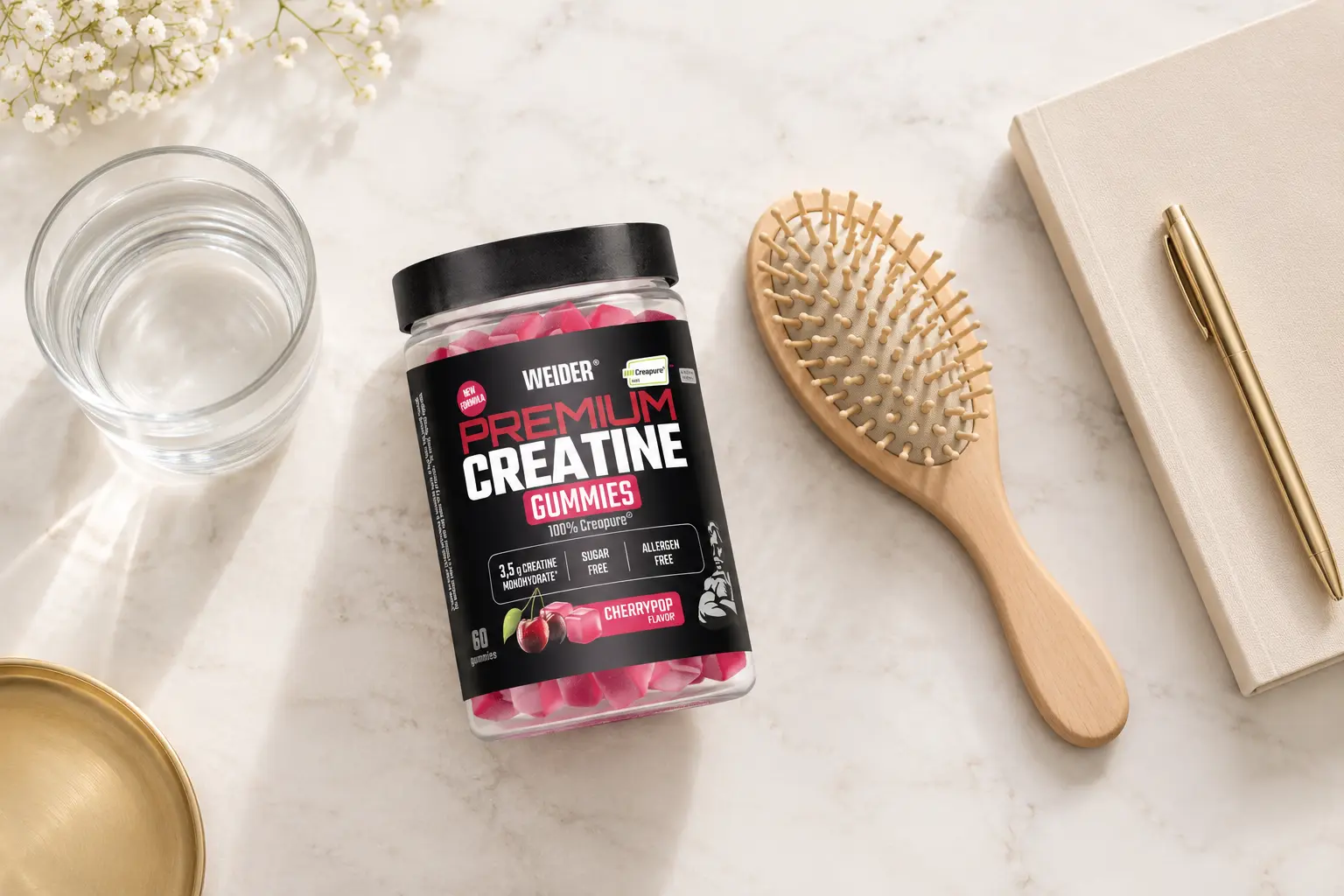
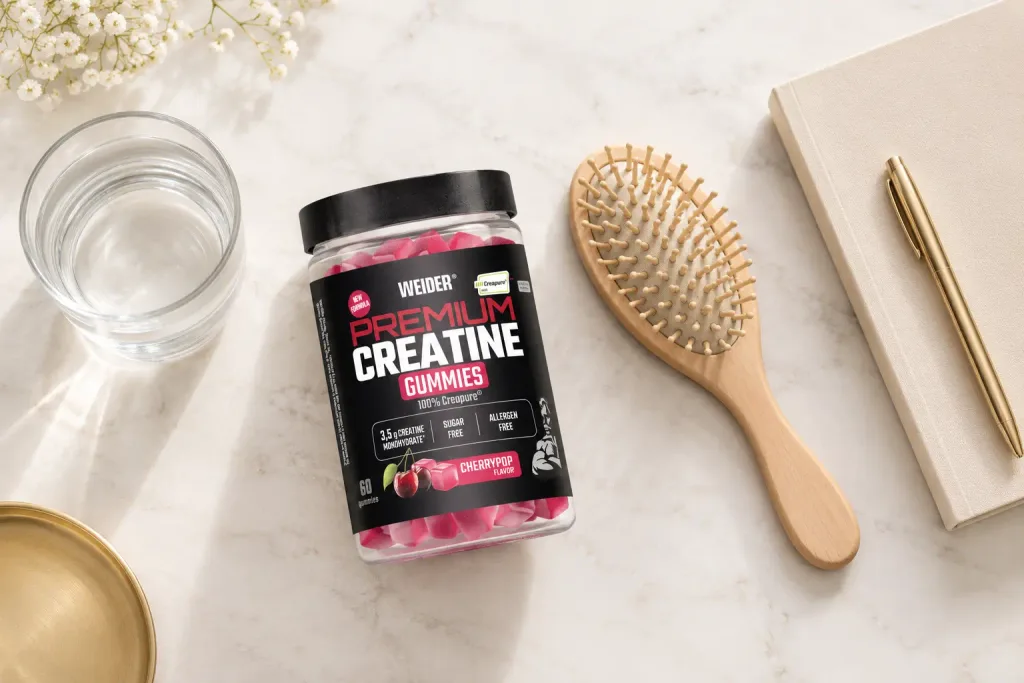
If you are looking for a creatine option, the range includes the Premium Creatine Monohydrate Gummies. Check the pack for the creatine amount per serving, the serving size and the full ingredient list, and follow the label. If halal status matters to you, message support@vampireglow.com before ordering and ask for the certificate.
If creatine and hair fall is your main worry, creatine is rarely the lever to pull. Support the scalp and the basics instead:
- A gentle scalp-friendly shampoo from the hair care range.
- Our guide to how to use a cica peptide scalp treatment if you want a cosmetic scalp routine, with realistic expectations. A cosmetic serum is not a hair loss treatment.
- Our guide to hair, skin and nails supplements for safe timing and combinations.
If you also want the skin and collagen side of a routine, the Best Collagen Booster Package covers marine collagen gummies, collagen powder and vitamin C gummies with a topical set. It is a skin-focused package, not a creatine or hair loss product.
Browse the full skin supplements range.
Precautions Before You Start
On creatine and hair fall, supplements support general wellbeing. They do not treat any condition and do not replace medical care. If you are pregnant, breastfeeding, taking medication or managing a health condition, including kidney problems, speak to your doctor before starting creatine. Follow the label serving. Stop and seek advice if you notice sudden or patchy hair loss, scalp pain, or any reaction that worries you.
FAQs
Does creatine really cause hair loss? What does the science actually say? On creatine and hair fall, no study we found shows that creatine causes hair loss. The worry comes from a small 2009 study of 20 rugby players that found a rise in blood DHT but did not measure hair. A later 12-week controlled trial found no significant difference in hair count, density or shedding. That is reassuring but not a guarantee for everyone.
How can I tell if I am actually losing hair or just shedding normally? The American Academy of Dermatology says shedding 50 to 100 hairs a day is normal. Worry more if you see much more hair than usual for weeks, a widening part or receding hairline, or patchy loss with scalp pain or redness. Same-light photos a month apart help, and a dermatologist can tell shedding from hair loss.
Can women experience creatine differently than men? The creatine and hair studies we found were in men, so we cannot say. In women, common shedding triggers include childbirth, stopping birth control pills, weight loss, and iron or thyroid problems. If you are pregnant or breastfeeding, check with your doctor before using creatine.
How much creatine is safe if you are prone to hair loss? Follow the serving on your product’s label. We found no evidence that a particular dose is safer or riskier for hair. If you have pattern hair loss or take a treatment for it, talk to your doctor first and do not stop medication on your own.
How do I start my creatine journey with confidence? Take baseline hair photos, read the label, start with one new supplement, follow the serving, and review after about three months. See a doctor if shedding is sudden, patchy or painful.
Can creatine raise DHT? One small 2009 study reported a rise in blood DHT that stayed within the normal range, and it has not been confirmed. A later 12-week trial found no significant DHT difference versus placebo. If you have a strong family history of baldness, ask your doctor.
Should I stop creatine if my hair is falling out? First check whether it is normal shedding and look for other triggers like diet changes, stress or low iron. If shedding is heavy or you cannot explain it, pause the supplement and see a dermatologist. Do not stop prescribed hair loss treatment without medical advice.
Is creatine safe for women? We did not find a source in our research specifically on women. Most people use it as directed without issues, but women who are pregnant, breastfeeding, on medication or with a health condition should ask their doctor first.
Know the Evidence, Then Decide
Creatine and hair fall is more myth than proven fact: one small old study, no hair measured, and a newer trial that found nothing. Be honest about what that cannot rule out, track your own hair, and see a professional if shedding changes.
Explore the Premium Creatine Monohydrate Gummies and our hair care range, available now at Vampire Glow and delivered across Saudi Arabia, the UAE and the wider GCC.

About author