Glutathione Side Effects and Who Should Avoid It
You have seen glutathione everywhere: on tablet tubs, in clinic ads, in friends’ bathroom shelves. Almost nobody tells you what it can do to you. The first thing most people want to know is simple: what are the glutathione side effects, and are they a risk for me?
This guide covers glutathione side effects honestly, using the research that actually exists. It explains what glutathione does, what happens if you take it daily, who should avoid it, what not to mix with it, and whether morning or night matters. Where the evidence is thin, we say so.
What Glutathione Does in the Body, Before the Side Effects
Glutathione is a small molecule your body makes itself, built from three amino acids. It works as an antioxidant and takes part in how cells handle oxidative stress. Because your body already produces it, glutathione is not a foreign substance in the way many supplements are.
That is where the marketing leaps start. “The body makes it” does not mean “extra is better”, and it does not mean taking it as a tablet will raise your own levels in a predictable way. Supplement tablets contain reduced L-glutathione, and what happens after you swallow one is still an area of active research.
The main reason people in the Gulf search for it is skin tone. This is also where the evidence is weakest, which we cover next.
Glutathione Side Effects: What the Research Shows
Let us look at a real trial rather than a sales page. A 12-week, placebo-controlled study of oral glutathione, published in Clinical, Cosmetic and Investigational Dermatology, followed 57 healthy Thai women aged 20 to 50. The product was supplied by the manufacturer that funded the study.
What it reported on safety:
| Finding | What was reported |
| Serious adverse events | None reported |
| Minor events | Itching, redness, red spots and tiredness were reported, and some similar events also occurred in the placebo group |
| Liver tests | Two participants had a temporary rise in liver enzymes that returned to normal within a few weeks. Two people withdrew because of it |
| Long-term safety | The authors state that long-term safety has not been examined systematically |
Two honest points. First, this is a small study in one group of healthy women, so it cannot tell you what will happen in someone with a health condition or on medication. Second, the skin-tone result was mostly not statistically significant, which is one reason we do not promise results.
WebMD’s medically reviewed entry sums it up in the same cautious spirit: glutathione “seems to be well tolerated”, but there is not enough research to know what side effects it may cause. It also warns that a severe allergic reaction, with symptoms like breathing trouble or swelling of the face or throat, needs urgent medical help.
So the fair summary of glutathione side effects: usually mild in studies, a small signal on liver tests worth respecting, and a real shortage of long-term data.
Daily Glutathione Side Effects: What Happens If You Take It Every Day
Most studies of glutathione side effects use daily oral dosing for several weeks to a few months, and the minor effects reported in that research were the ones above: itching, redness, tiredness. Some people also report digestive upset with new supplements in general, though that is not unique to glutathione.
What daily use does not give you, on current evidence, is a guaranteed visible change. Any difference in skin tone is described as gradual, and results vary from person to person. There is also no proven benefit in taking more than the label says, and we never recommend going beyond the serving on the pack.
Practical habits for daily use:
- Start with the label serving, not more.
- Watch for itching, rash or unusual tiredness in the first two weeks.
- Mention it to your doctor if you have blood tests coming up, since liver tests were the one lab signal in that trial.
- Review after a few months. If you cannot see or feel a reason to continue, you do not have to.
Who Should Avoid Glutathione Because of Side Effects
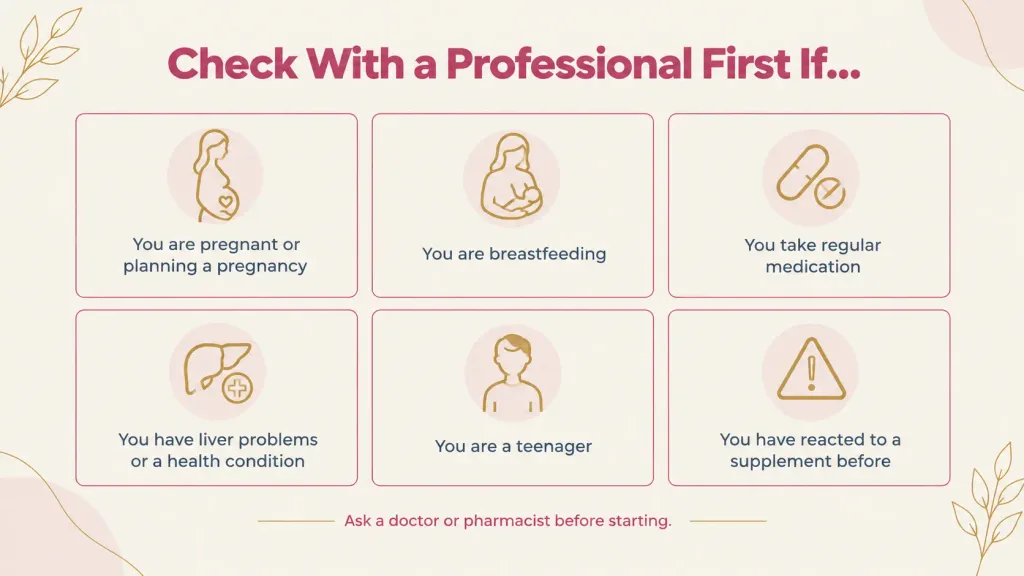
No supplement suits everyone, and glutathione side effects can be more of a concern for some people. Check with a doctor or pharmacist first, or avoid glutathione until you have, if any of these apply:
- You are pregnant or planning a pregnancy. WebMD notes it is not known if or how glutathione could affect pregnancy or harm a fetus.
- You are breastfeeding. Glutathione passes into breast milk, according to the same source.
- You take regular prescription medication. The research on drug interactions is incomplete.
- You have liver problems or an ongoing health condition. The liver-test signal in the trial is reason enough to be careful.
- You have a known allergy or reaction to supplements. Stop and seek help if you get hives, swelling or trouble breathing.
- You are a teenager. The product page says to keep the tablets away from children, and a teenager should ask a doctor before trying any supplement.
- You are expecting dramatic lightening. If a product or clinic promises it, treat the promise itself as a warning sign.
This list is a prompt to ask a professional, not a diagnosis. Your doctor knows your history, and we do not.
What Not to Mix With Glutathione to Limit Side Effects
When it comes to mixing and glutathione side effects, the honest answer is “less is known than you would like”. WebMD reports no known interactions with medicines, but is clear that the research is incomplete. So the safest approach is to treat it like any new supplement:
- Prescription medicines. Ask your pharmacist before combining, rather than assuming it is fine.
- Heavy alcohol use. WebMD notes that heavy drinking may lower glutathione levels in the body, so it undermines the point of taking it.
- Stacks of lightening products. Combining several “whitening” tablets, creams and drips at once raises your risk of irritation and makes it impossible to tell what is working.
- Injections and drips. Covered below. Do not mix these with anything.
- High doses of anything. Adding vitamin C or other supplements does not make it safer to go beyond the label on either.
Plenty of people take glutathione with vitamin C and collagen, and we found no documented reason not to. Our guide to taking collagen with a glutathione supplement covers how to do that sensibly, and our post on glutathione vs vitamin C for skin brightening explains how the two differ.
Glutathione Injections and Drips: Why the Warnings Matter
Oral tablets and injections are not the same thing, and the glutathione side effects risk is very different. Intravenous glutathione for skin lightening carries a much sharper warning. The Philippine Dermatological Society reminded the public in January 2025 that IV glutathione is not approved for skin whitening by that country’s Food and Drug Administration. A dermatology review in Dermatology Practical & Conceptual likewise describes the intravenous evidence for skin tone as resting on one study with a dubious design, and notes that most countries have no clear laws on systemic glutathione for skin lightening.
We do not sell, recommend or encourage injections or drips for skin tone. If you are considering one, speak to a licensed doctor first, and be wary of any clinic that promises fast or permanent results.
Best Time to Take Glutathione: Morning or Night
There is no proven best time, and no research linking timing to glutathione side effects. We did not find research showing that morning beats night, or the reverse, and any website claiming a precise “golden hour” is guessing.
What helps in practice:
- Follow the label. If the pack says with food, or at a certain time, that is your answer.
- Pick a time you will keep. Consistency matters more than the clock. Pair it with something you already do, like breakfast or brushing your teeth.
- If you get stomach upset, ask your pharmacist whether a different time or taking it with a meal is appropriate for your product.
How to Start Safely: A Beginner’s Checklist
If you decide glutathione is for you, do it carefully, with the possible glutathione side effects in mind.
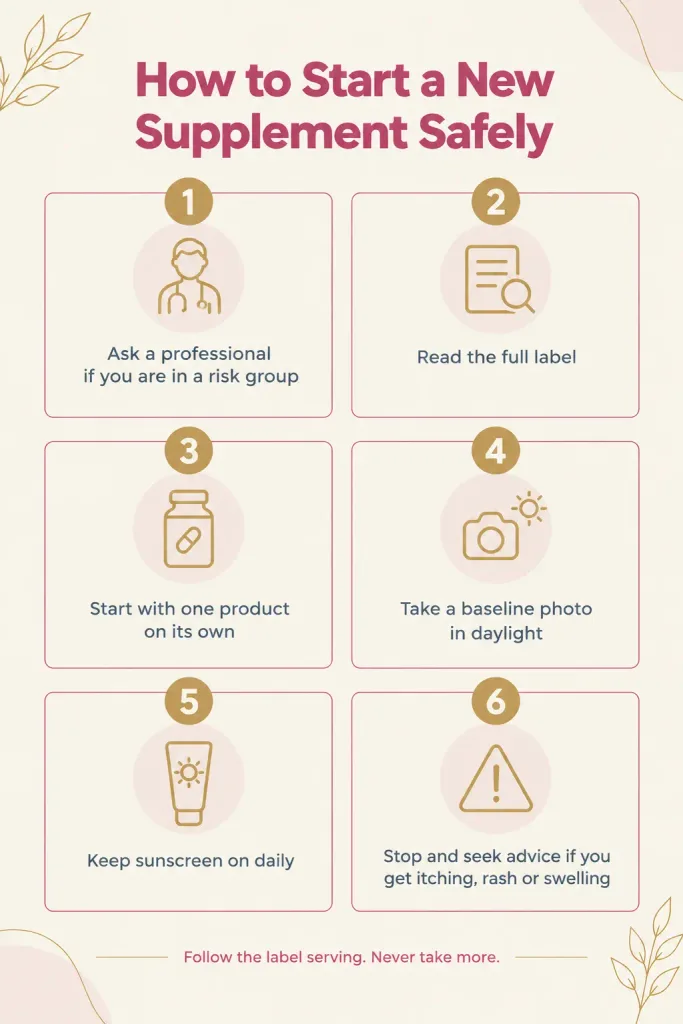
- Check with a doctor or pharmacist if you fall into any group above.
- Read the full label, including serving, ingredients and warnings.
- Introduce it on its own for a couple of weeks before adding other new supplements.
- Take a baseline photo in daylight so you can judge changes fairly.
- Keep daily sunscreen on. Sun exposure undoes more skin-tone effort than any tablet can add.
- Stop and seek advice if you notice itching, rash, swelling, unusual tiredness or anything that worries you.
Where Vampire Glow’s Glutathione Fits
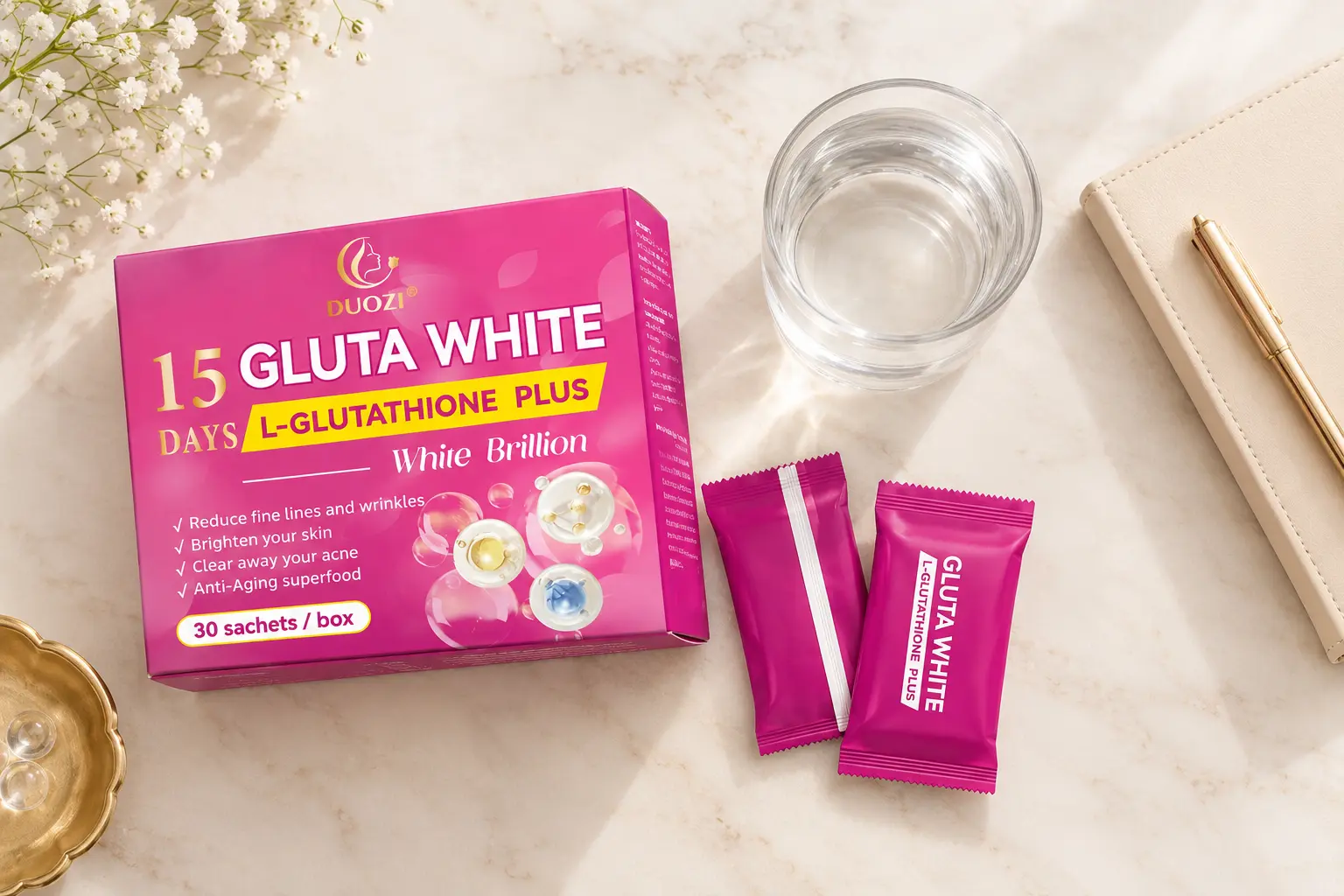
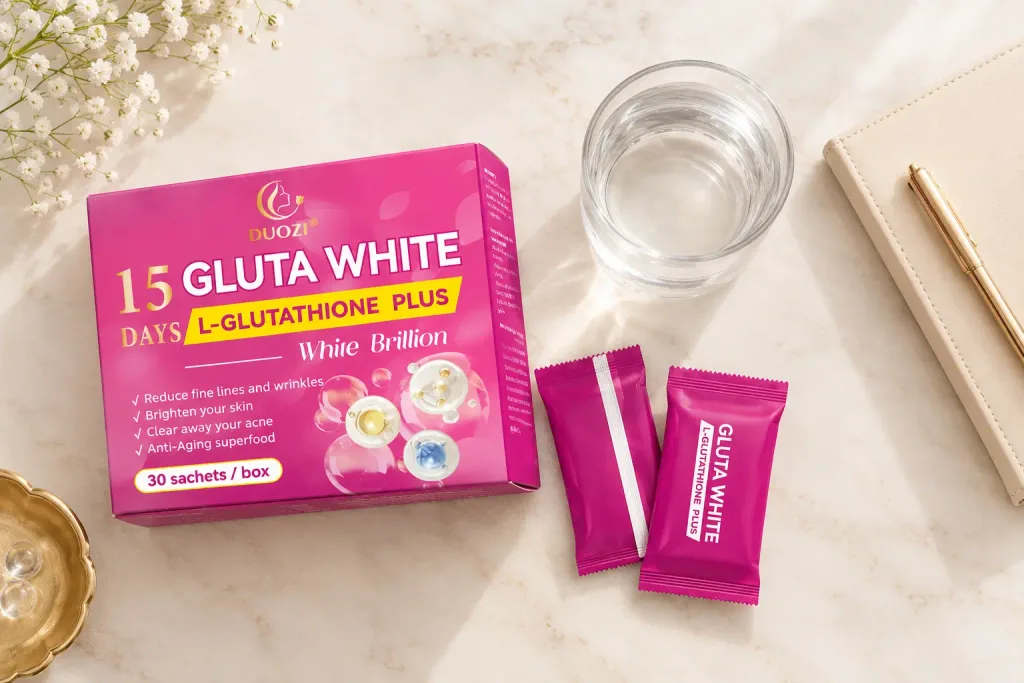
If you want to try a glutathione supplement, the DUOZI Gluta White Tablets with L-Glutathione Plus are the option in our range. They are reduced L-glutathione tablets, and the product page is straightforward that the evidence on glutathione and skin tone is mixed and any effect is gradual. That honesty is what we would want from a product we recommend putting in your body.
A few practical notes. To keep glutathione side effects low, note that the product page does not list the amount per tablet or the count, so read the pack for the serving and follow it exactly. The tablets suit the beginner approach above: one product, introduced on its own, judged over months rather than days. If halal status matters to you, message support@vampireglow.com before ordering and ask for the documentation, since the page does not currently state a halal certificate.
If you also want collagen and vitamin C in your routine, the Best Collagen Booster Package covers marine collagen and vitamin C, with a topical set. It does not include glutathione, so add the tablets separately if you want both.
Browse the wider skin supplements range or the DUOZI collection. For a closer look at the tablets, read our guide to glutathione tablets for skin in Saudi Arabia.
Precautions in Short
Glutathione side effects aside, supplements support general wellbeing. They do not treat any condition and do not replace medical care. Speak to your doctor first if you are pregnant, breastfeeding, taking medication or managing a health condition. Do not exceed the label serving. Never use injections or drips for skin tone without a licensed doctor, and be cautious of unregulated products.
FAQs
What does glutathione do in the body? Glutathione is an antioxidant your body makes from three amino acids. It helps cells handle oxidative stress. Taking it as a supplement is popular for skin tone, but the evidence for that use is mixed, and results are gradual and vary.
What will happen if I take glutathione daily? In studies of daily oral use for several weeks to months, the glutathione side effects were mostly mild, such as itching, redness or tiredness, and a small number of people had a temporary rise in liver enzymes. Daily use does not guarantee a visible change. Keep to the label serving and speak to a doctor if you have a health condition or take medication.
What not to mix with glutathione? No well-documented interactions are known, but the research is incomplete. Check with a pharmacist before combining it with prescription medicine, avoid heavy alcohol use, do not stack multiple lightening products at once, and never combine it with injections or drips for skin tone.
Who should avoid glutathione? Anyone who is pregnant, planning a pregnancy or breastfeeding should get medical advice first, as should people on regular medication or with liver problems or other health conditions. Teenagers should ask a doctor first, and anyone who has had an allergic reaction to a supplement should be cautious.
When is the best time to take glutathione, morning or night? There is no proven best time. Follow the label, and choose a time you can keep consistently. If it causes stomach upset, ask your pharmacist whether a different time or taking it with food suits your product.
Can glutathione damage the liver? In one 12-week trial, two participants had temporary liver enzyme increases that returned to normal, and the authors noted that long-term safety has not been studied systematically. That is a reason to take it seriously, not a reason to panic. Tell your doctor if you have liver concerns.
Is glutathione safe in pregnancy? It is not known. WebMD states that it is not known if or how glutathione could affect pregnancy, so the safest course is to ask your doctor before using it.
Are glutathione injections safe? We do not recommend them. Intravenous glutathione is not approved for skin whitening in the Philippines according to its dermatology society, and the evidence supporting it is weak. See a licensed doctor before considering any injection.
Know the Risks, Then Decide
Glutathione side effects in studies are mostly mild, but the research is small, short and often funded by the makers, and long-term safety is unknown. If you decide to try it, start slowly, follow the label, avoid injections and keep sunscreen on.
Explore the DUOZI Gluta White Tablets or browse the full range, available now at Vampire Glow and delivered across Saudi Arabia, the UAE and the wider GCC.

About author