Sheet Mask Routine: How Often and When
It is 10pm in Jeddah. You have a sheet mask in your hand and no idea where it fits. Before the serum? After the moisturiser? Every night, or once a week? A good sheet mask routine comes down to three decisions: where the mask goes, how often you use it and how long it stays on. Get those right and the rest is easy.
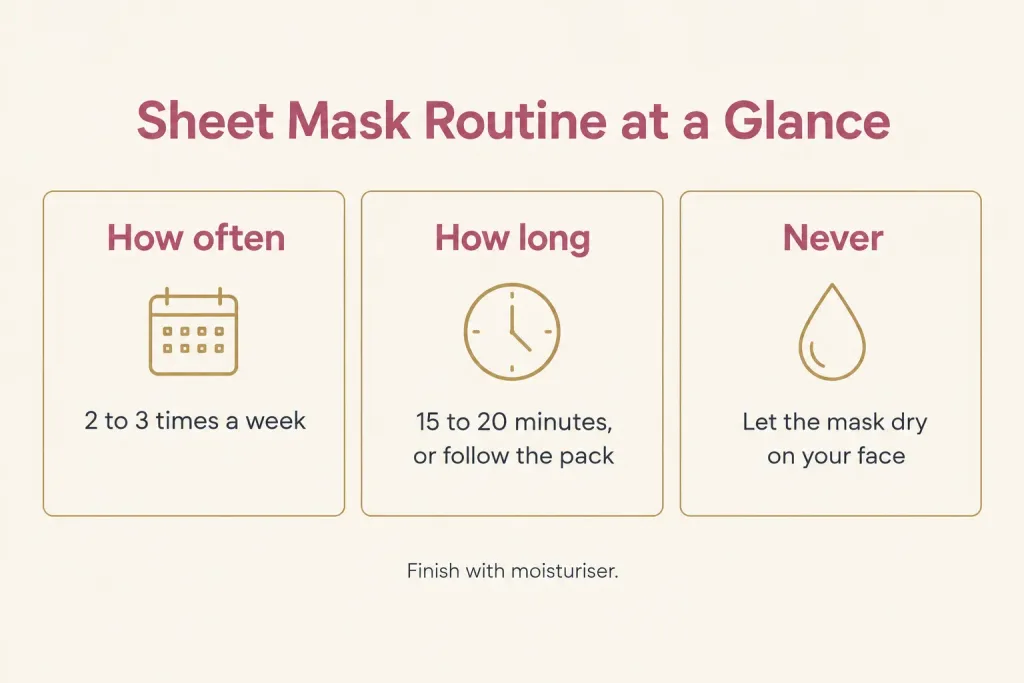
Here is the short version. Put the mask after cleansing and toning, use it two or three times a week, leave it on for the time printed on the pack (often 15 to 20 minutes), then finish with moisturiser. This guide covers each rule, how to layer masks, what to do before an event, and how to keep your sheet mask routine working in Gulf heat and office air conditioning.
Where Does a Sheet Mask Go in Your Sheet Mask Routine
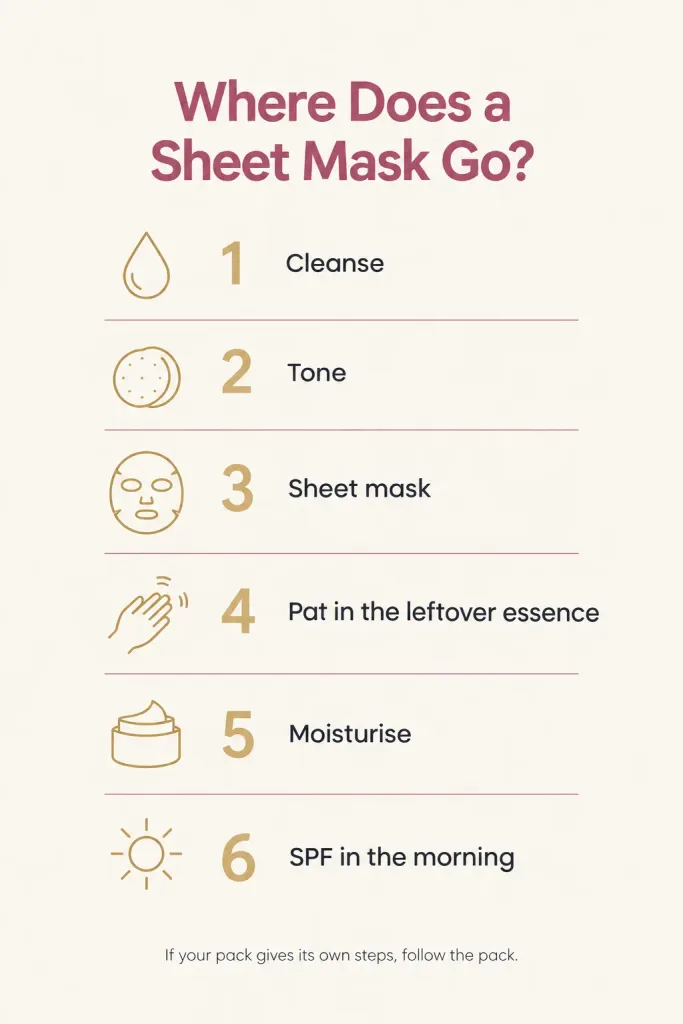
After cleansing and toning, and before moisturiser. That is the slot named by Dr. Jane Yoo, a board-certified dermatologist in New York, and Garnier’s routine guide puts the mask in the same place: cleanse, tone, mask, moisturise.
A simple order for your sheet mask routine:
- Cleanse. Start with clean skin so the mask is not sitting on sunscreen or makeup. If you wore both, our guide to the Korean skincare routine order shows how the first steps fit together.
- Tone. A light toner or essence prepares the skin.
- Sheet mask. Smooth it over the face for the time on the pack.
- Pat in what is left. Dr. Yoo advises patting the leftover essence into the skin rather than rinsing it off.
- Moisturise. This seals the hydration in, and it is the step people skip most.
- SPF in the morning. A mask never replaces sunscreen.
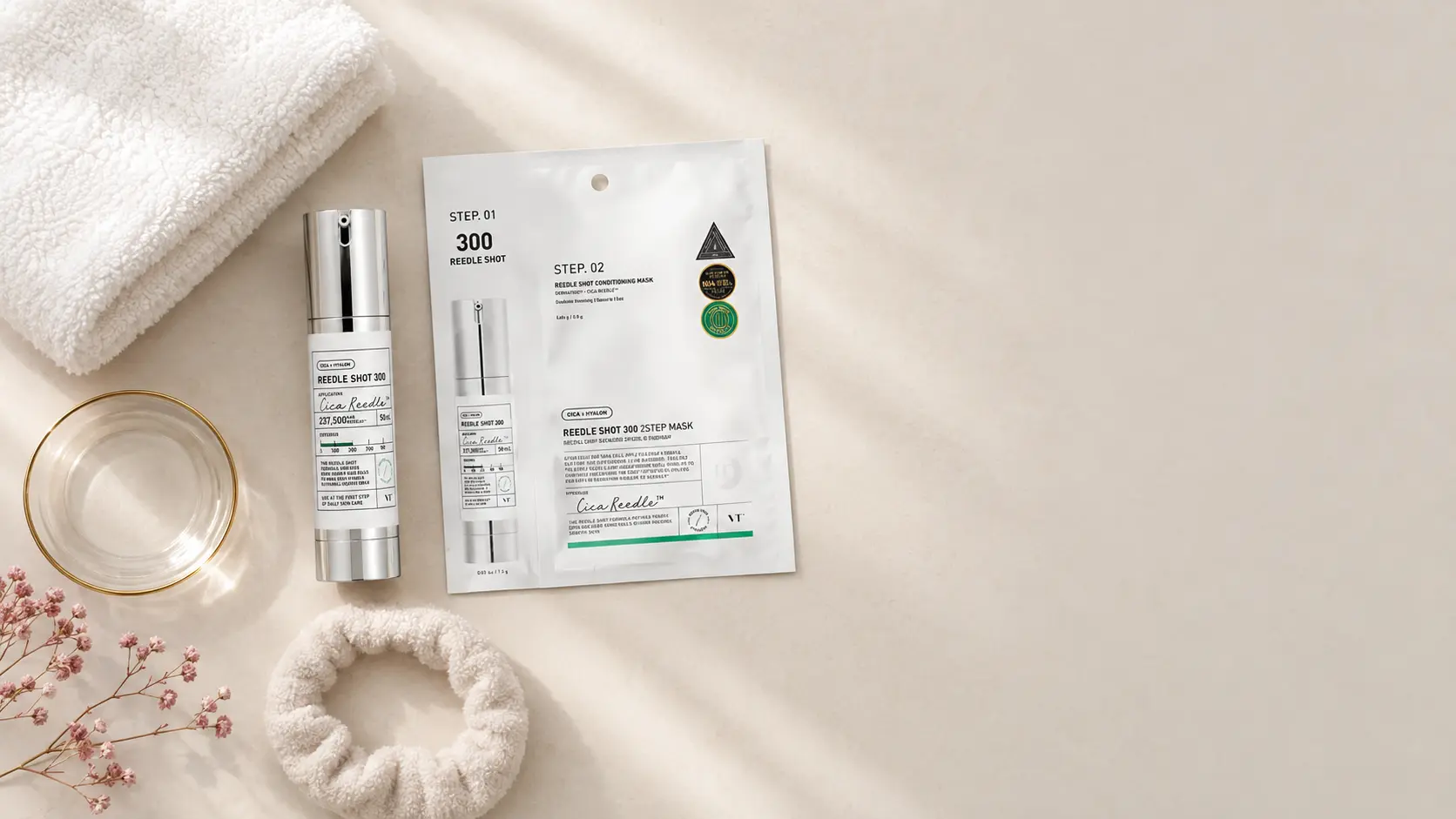
One exception: some masks come as a two-step kit, with a serum-style step to apply first, like the Reedle Shot 300 2 Step Sheet Mask. If your pack gives its own order, follow the pack.
Can You Use a Sheet Mask Every Day
You can, but a sheet mask routine does not need to be daily. Dr. Yoo says daily use is generally tolerated but not necessary, and that two to three times a week is enough for most skin types.
The American Academy of Dermatology is more cautious: using a mask too often can cause side effects such as irritation, and the label should guide you. It also advises avoiding masks that repeat the active ingredients already in your routine, because that can trigger dryness and irritation.
So if you want a daily sheet mask routine:
- Choose a gentle, fragrance-free, hydrating mask, not one built around acids.
- Skip it on nights you use retinol or exfoliating acids.
- Cut back at the first sign of stinging, redness or new breakouts.
If your skin already feels tight or reactive, daily masking is the wrong move. See our guide on how to repair a damaged skin barrier first.
How Long Should You Leave a Sheet Mask On
The time printed on the pack wins. The AAD says leaving a mask on longer than intended can cause irritation. Most sources land in the same range: Dr. Yoo says typically 15 to 20 minutes, and Garnier’s guide says about 15.
The one rule worth remembering in any sheet mask routine: do not let the mask dry out on your face. Dr. Yoo notes that a dry mask may pull moisture back out of the skin. Longer is not better.
In an air-conditioned room the sheet can dry faster than you expect. Set a timer, and take the mask off while it is still damp. This part is my reasoning from the drying warning, not a rule from a study.
How to Use Sheet Masks in Your Weekly Skincare Routine
Think in nights, not days, when you plan your sheet mask routine. Two or three fixed nights a week turns masking into a habit instead of a mood.
- Two-night version: one midweek night and one weekend night.
- Three-night version: add a third night between them.
- Keep it away from strong actives. If you exfoliate or use retinol on certain nights, give the mask a separate night.
Everything else around your sheet mask routine stays the same. Cleanse, moisturise, wear sunscreen. The mask is an extra, not a foundation. For how the rest of the day and night fits together, read our 5-step Korean skincare routine and the guide to morning vs night skincare.
How to Layer Multiple Face Masks in One Routine
Honest note first: we did not find dermatology guidance on stacking several sheet masks in one sitting. What follows is cautious reasoning from the AAD’s advice on repeated actives and on leaving masks on too long.
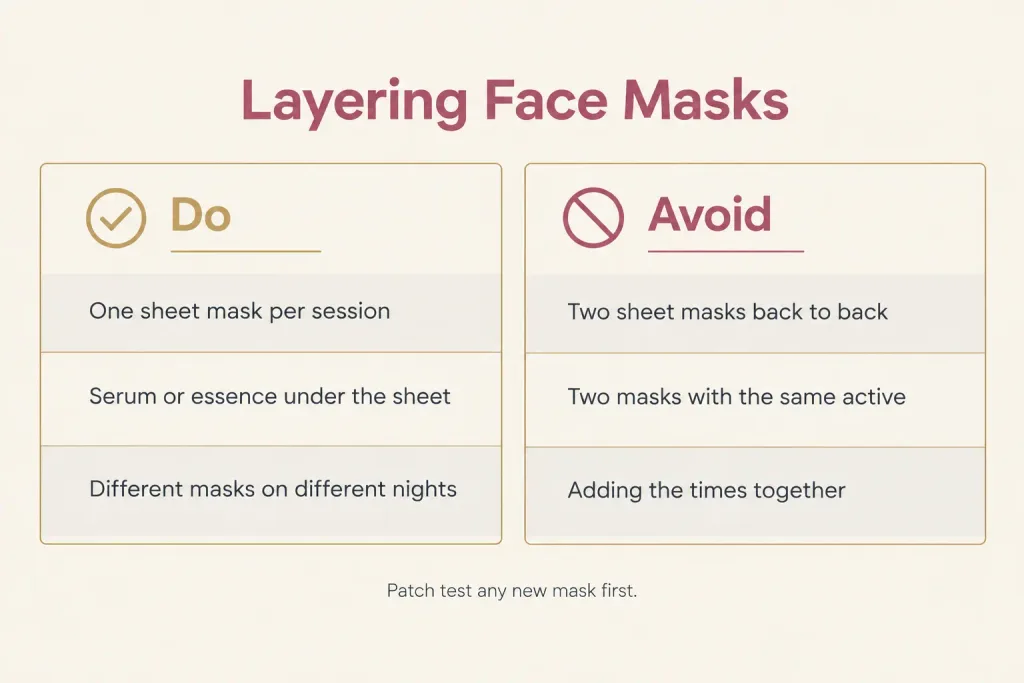
- One sheet mask per session. A second sheet straight after the first adds time on the skin, not benefit.
- Layer by purpose, not by quantity. A serum or essence under a sheet mask is how many masks are designed. Two sheet masks back to back is not.
- Do not combine two masks with the same active. The AAD flags duplicate ingredients as a source of dryness and irritation.
- Never add the times together and go longer. Each mask has its own limit.
- Use different masks on different nights instead of the same night. A hydrating mask on one night and a barrier-support mask on another gives you variety with less risk.
If you want to multi-mask, build it into your sheet mask routine as a rotation across the week.
Best Sheet Mask for Glowing Skin Before an Event
For a glow, pick a hydrating, fragrance-free sheet mask that you have already used at least once. The AAD recommends testing a new mask on a small area first, and the night before a wedding is a bad time to find out your skin dislikes it.
Set expectations too. According to Dr. Yoo, a sheet mask works through hydration and surface smoothness, and 15 to 20 minutes will not meaningfully change wrinkles, pigmentation or the skin barrier. That is plenty for what most people want before an event: skin that looks plumper and feels smoother under makeup.
A practical sheet mask routine for the event:
- The night before: cleanse, tone, mask, moisturise.
- The day of: keep your routine simple and let your sunscreen and base go on over well-hydrated skin.
- Do not try anything new. No new mask, acid or scrub on the day.
If you want a mask for the occasion, a two-step option such as the Reedle Shot 300 2 Step Sheet Mask is available in our range. Try it a few days earlier, not on the day. Timing is my practical judgment, not a clinical rule. Doing it the evening before leaves time for any mild redness to settle.
Your Sheet Mask Routine in Gulf Heat and Air Conditioning
The climate changes the details of a sheet mask routine, not the rules.
- Air conditioning dries the sheet quickly. Check it early and remove it while it is still damp.
- Heat damages stored masks. Do not leave packs in a hot car or in direct sun. The Reedle Shot 300 page on our site also says to protect the product from intense sunlight.
- Hydration needs a seal. Indoor air in an AC office can leave skin tight, so the moisturiser step after the mask matters more than the mask itself.
- Evenings suit most people. There is no study behind this, but night is when you can leave the mask on without sunscreen or makeup plans.
For the wider picture, read our Korean skincare routine for Saudi summer heat and AC.
Sheet Mask Mistakes to Avoid
Most sheet mask routine problems come from the same few habits.
- Leaving it on until it dries. See above.
- Skipping moisturiser. The mask is not the sealing step.
- Using one with acids on top of retinol or exfoliants. Duplicate actives are the AAD’s warning.
- Expecting it to treat acne. Dr. Yoo and the AAD both say masks do not treat conditions like acne or eczema.
- Using it instead of sunscreen. Masks never replace SPF.
- Trying a brand new mask before an event. Test first.
Sheet Masks at Vampire Glow
For a sheet mask routine you can start tonight, the range includes the Reedle Shot 300 2 Step Sheet Mask from Cica Skin Care. It comes as a pack of five two-step sets: a serum-style first step, then the sheet mask. According to the product page, it is for all skin types and made in South Korea, and the ingredient list includes niacinamide, sodium hyaluronate, ceramide NP, centella asiatica extract and propolis extract. If centella is new to you, our guide to centella asiatica benefits for skin explains it.
It slots straight into the rules above. After cleansing and toning, apply the first step all over the face. Once it has absorbed, lay the sheet over the face, keep to the time on the pack, then pat in what is left and moisturise. Used two or three times a week, one pack of five covers roughly two weeks.
Two safety notes. Because the mask contains propolis, a bee product, check the ingredient list first if you have any bee-product allergy. And patch test before the first full use, as the product page advises, and keep the mask away from the eyes.
Browse the wider skin care range at Vampire Glow, delivered across Saudi Arabia, the UAE and the wider GCC.
Precautions
Before starting any sheet mask routine, test a new mask on a small patch of skin first, as the AAD advises. Avoid fragrance, essential oils and rubbing alcohol if your skin is sensitive. Dr. Yoo adds that sensitive or rosacea-prone skin is more likely to react to a longer contact time. Wash a mask off immediately if you feel itching, burning or stinging. Masks do not replace treatment for conditions such as acne or eczema, so see a dermatologist if you have one. Speak to a dermatologist before using masks after any cosmetic procedure.
FAQs
Where does a sheet mask go in your skincare routine? In a sheet mask routine, it goes after cleansing and toning, and before moisturiser. Pat in the leftover essence, then moisturise to seal. Use SPF in the morning. If your pack comes with its own steps, follow those.
Can you use a sheet mask every day? Many people tolerate it, but a sheet mask routine works well without it, because two to three times a week is enough for most skin types, according to dermatologist Dr. Jane Yoo. The American Academy of Dermatology warns that overuse can cause irritation. Avoid daily use of masks with acids or retinoids.
How long should you leave a sheet mask on? Follow the pack. Typically it is 15 to 20 minutes. Do not leave it on until it dries, because a dry mask may pull moisture back out of the skin.
What is the best sheet mask for glowing skin before an event? A hydrating, fragrance-free sheet mask you have already tried. Use it the evening before, then moisturise. A sheet mask supports hydration and smoothness, but it will not change wrinkles or pigmentation in one sitting.
How do you layer multiple face masks in one routine? We found no dermatology guidance on stacking sheet masks. Use one sheet mask per session, avoid combining masks with the same active ingredient, and rotate different masks across different nights of the week.
How do you use sheet masks in your weekly skincare routine? Build your sheet mask routine around two or three fixed nights a week. Keep them away from nights with strong acids or retinol, and keep cleansing, moisturiser and sunscreen as the base of your routine.
Do you rinse your face after a sheet mask? Usually not. Dr. Yoo advises patting the leftover essence into the skin, then applying moisturiser. If your pack says to rinse, follow the pack.
Can you do a sheet mask routine in the morning? Yes, as long as you finish with moisturiser and sunscreen. Evenings are easier for most people because there is no makeup to apply afterwards.
Are sheet masks safe for sensitive skin? Often, if you choose carefully. Pick fragrance-free, alcohol-free formulas, patch test first, and keep the time short. If you have rosacea or eczema, ask your dermatologist.
Build Your Sheet Mask Routine Around Three Rules
Where it goes, how often you use it and how long it stays on. Stick to those three and a sheet mask routine becomes simple, even in Gulf heat.
Start with the Reedle Shot 300 2 Step Sheet Mask or shop the skin care range, available now at Vampire Glow and delivered across Saudi Arabia, the UAE and the wider GCC.
About author