Collagen and Vitamin C: Why They Are Paired
Walk down any supplement shelf and you will see collagen and vitamin C sold side by side, or even in the same product. Some of that pairing is real biology. Some of it is marketing. This guide separates the two: what vitamin C actually does for collagen, whether you can use both on your skin, the best time to take vitamin C with collagen, what else is worth taking, and how long to wait before you judge results.
Collagen and Vitamin C: 5 Reasons They Are Paired
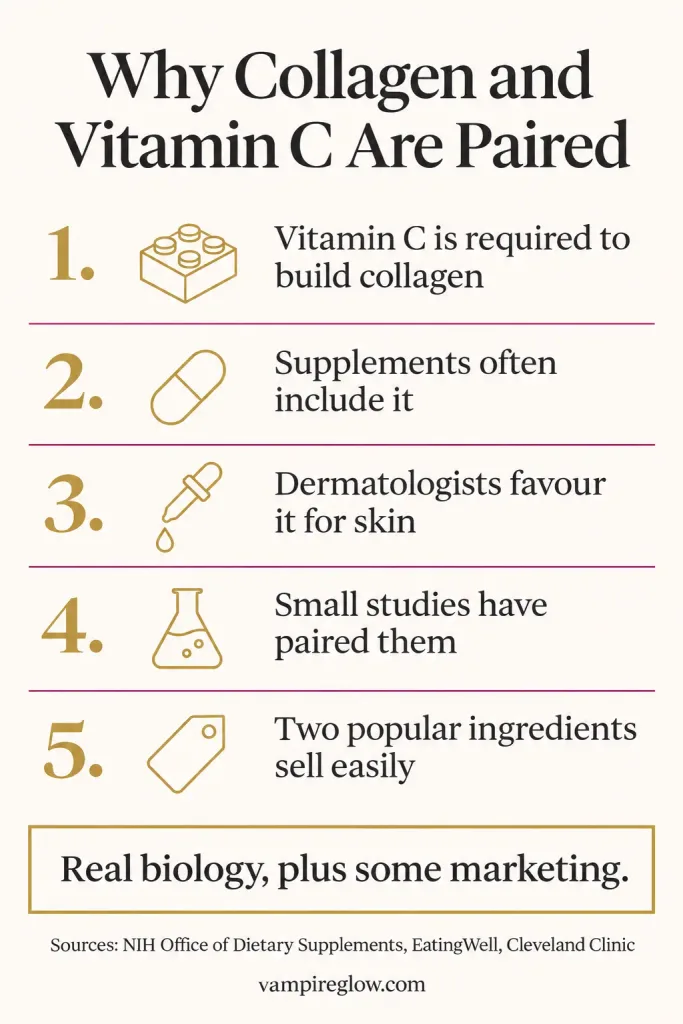
- Vitamin C is required to build collagen. The US National Institutes of Health (NIH) says vitamin C is required for the biosynthesis of collagen. Without enough of it, collagen production declines and connective tissue weakens, which is what happens in scurvy.
- Collagen supplements often include it. Dietitian Diana Nguyen, quoted by EatingWell, notes that collagen supplements often contain 80 to 150 mg of vitamin C, and that collagen works alongside vitamin C, copper and zinc.
- Dermatologists point to vitamin C for skin. Cleveland Clinic dermatologist Dr. Shilpi Khetarpal names vitamin C, along with retinoids, as better-established ways to support collagen than collagen supplements themselves.
- Small studies have paired them. A 2017 study in the American Journal of Clinical Nutrition gave 8 young men gelatin with 48 mg of vitamin C an hour before exercise, and found higher markers of collagen synthesis. It was tiny, measured blood markers and engineered ligaments. The authors also noted that vitamin C itself may have contributed to the effects.According to the NIH Office of Dietary Supplements, vitamin C is required for collagen production in the body. You can read more in their Vitamin C fact sheet.
Think of vitamin C as a building-site supply.
How Much Vitamin C Do You Actually Need
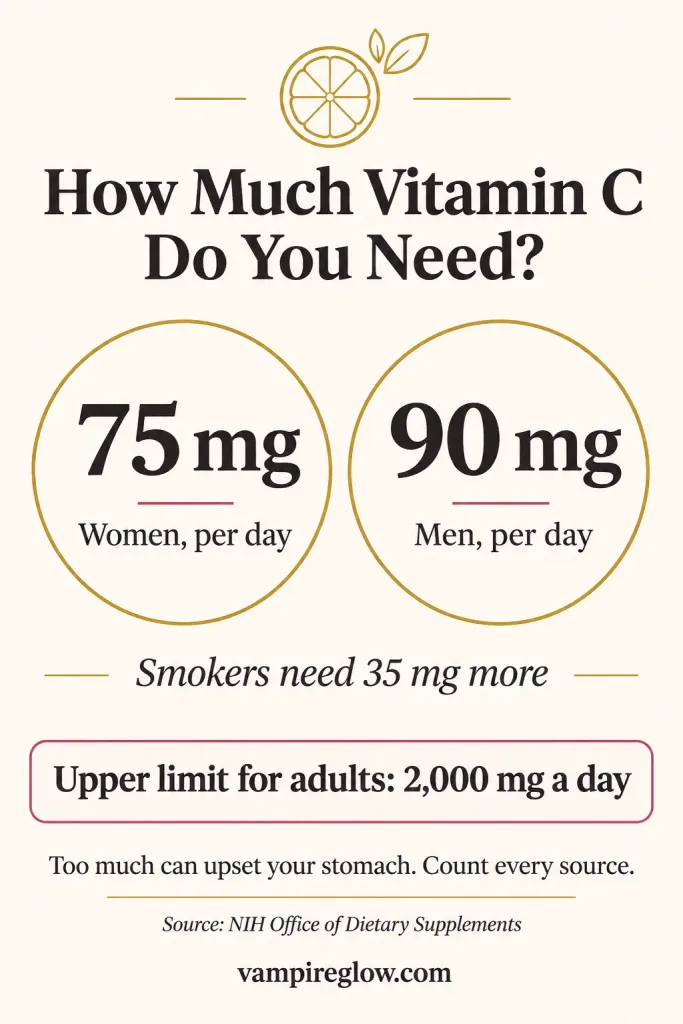
Less than most labels suggest. According to the NIH, the recommended daily intake for adults is 75 mg for women and 90 mg for men, with 35 mg extra for people who smoke. The upper limit for adults is 2,000 mg a day.
Above that, the NIH lists stomach upset, nausea and cramps as common effects. High intakes may also raise urinary oxalate and uric acid, which could contribute to kidney stones in some people. People with hereditary hemochromatosis should be careful, because vitamin C increases iron absorption. Anyone having chemotherapy or radiation should speak to their oncologist first.
Most people can reach the recommended amount through fruit and vegetables. The Academy of Nutrition and Dietetics advises choosing protein- and vitamin C-rich foods to support the body’s natural collagen production, and says supplements are not a replacement for whole foods.
Can I Apply Collagen and Vitamin C Together
Dermatologist Dr. Janiene Luke says vitamin C may help fine lines and wrinkles by boosting collagen production, and Dr. Marisa Garshick adds that results may appear after three to four weeks, with full effects taking three to six months. These quotes come from a Prevention article, so treat them as expert opinion.
If you want to use a vitamin C serum, the same two dermatologists suggest:
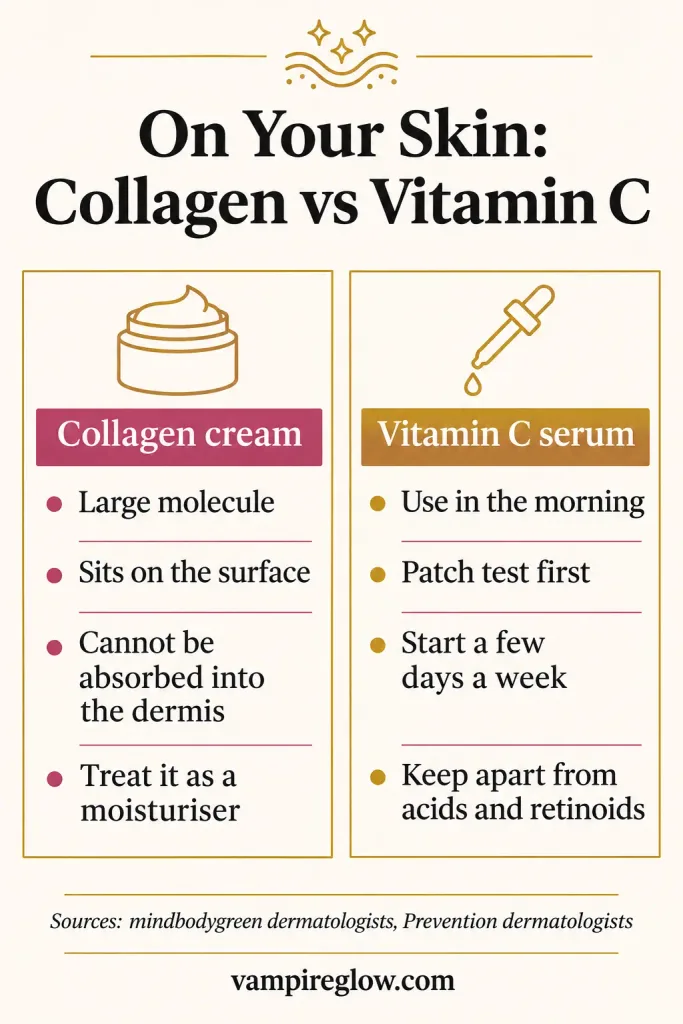
- Use it in the morning, on clean, dry skin, before moisturiser and sunscreen.
- Patch test on the jawline or behind the ear for 24 hours, and start a few days a week.
- Do not combine it in the same routine with exfoliating acids, benzoyl peroxide or retinoids. Use those at night instead.
Using a collagen cream, a vitamin C serum and an oral supplement in the same day is not harmful in itself. It just means you are paying for three things when one or two may do the job.
Best Time to Take Vitamin C With Collagen
The EatingWell article recommends vitamin C-rich foods and does not specify timing. What exists:
- The 2017 study used the pair about an hour before exercise. It was small and measured collagen synthesis markers.
- Dietitians agree that consistency matters more than the exact hour. See our guide to the best time to take collagen.
- Practical approach (my suggestion, not a study result): take your collagen with a meal that includes fruit or vegetables, and keep your vitamin C intake within the recommended range.
If you use a topical vitamin C serum, the morning is the better time, per Dr. Garshick.
What Else Should You Take With Collagen
Collagen is one piece of a bigger picture. The sources point to these partners:
- Vitamin C, zinc and copper. Nguyen says collagen works with these three. The Academy of Nutrition and Dietetics also says collagen production relies on nutrients such as vitamin C and zinc. Food is the first source for all of them.
- Protein-rich meals. Collagen lacks one essential amino acid found in other animal proteins, so it works best alongside a balanced diet.
- Sunscreen. Cleveland Clinic’s Dr. Khetarpal says sun and other environmental elements degrade collagen. Daily broad-spectrum SPF protects what you have.
- Not too many extras. Hair, skin and nails blends can overlap with your vitamin C, zinc and biotin. Add up what you already take. See our guide to hair, skin and nails supplements.
Zinc and vitamin C both have upper limits. Check labels, and speak to a doctor or pharmacist before combining several supplements.
How Long Until You Notice the Benefits of Collagen
The research measures skin hydration and elasticity, not overnight changes. A 2019 systematic review of 11 randomised, placebo-controlled trials with 805 patients (Choi and colleagues, Journal of Drugs in Dermatology) found that oral collagen increased skin elasticity and hydration. The trials ran from about 4 to 24 weeks, and the authors called the findings preliminary. The Academy of Nutrition and Dietetics links 8 to 24 weeks of use to better skin elasticity.
So give any collagen supplement at least 8 weeks, and take photos in the same light every two weeks (my suggestion). For topical vitamin C, the dermatologists above suggest three to four weeks for early results. Our guide on how long marine collagen gummies take to work goes into more detail.
What Is the Best Collagen Supplement for Me
A checklist drawn from the Academy of Nutrition and Dietetics:
- Third-party tested for purity, dose and label accuracy.
- Know the source. Collagen can come from chicken, cow, pig or fish. Check for allergies, and ask for halal certification if it matters to you.
- Type. Types I and III are the ones linked to skin, bones and tendons.
- Form. Powders typically provide about 20 g of peptides per quarter cup, while gummies provide roughly 1 to 2 g per piece. Choose the one you will use daily, and compare in our collagen gummies vs powder guide.
- Vitamin C inside? Check how much, so you do not double up with your other supplements.
- Label amounts. Skip products that hide amounts or promise dramatic results.
If you spend on one thing for collagen, protect what you have first.
Collagen and Vitamin C in a Gulf Routine
These points are my reasoning, not research findings.
- Sun is the biggest daily drain on collagen here. Sunscreen matters more than any supplement.
- Citrus, peppers and berries are easy to add to a Gulf diet, so food-first is realistic.
- In summer, a gummy that is easy to carry or a powder in a cold drink can be easier to keep up than a complicated routine.
- During Ramadan, choose one fixed slot with a meal after iftar or suhoor and keep it the same each day.
Collagen and Vitamin C at Vampire Glow
Our product pages do not list every amount, so please read each pack before use.
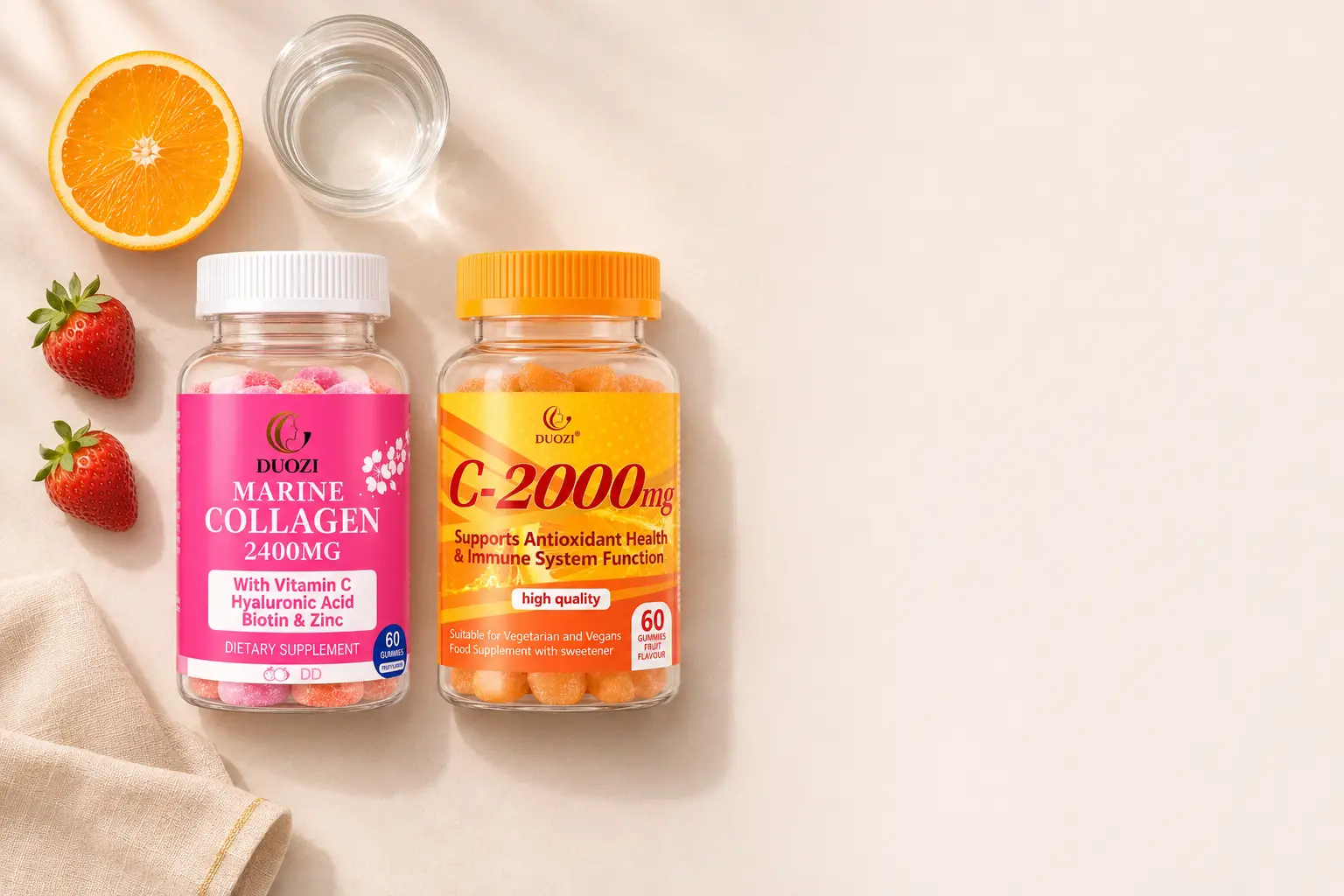
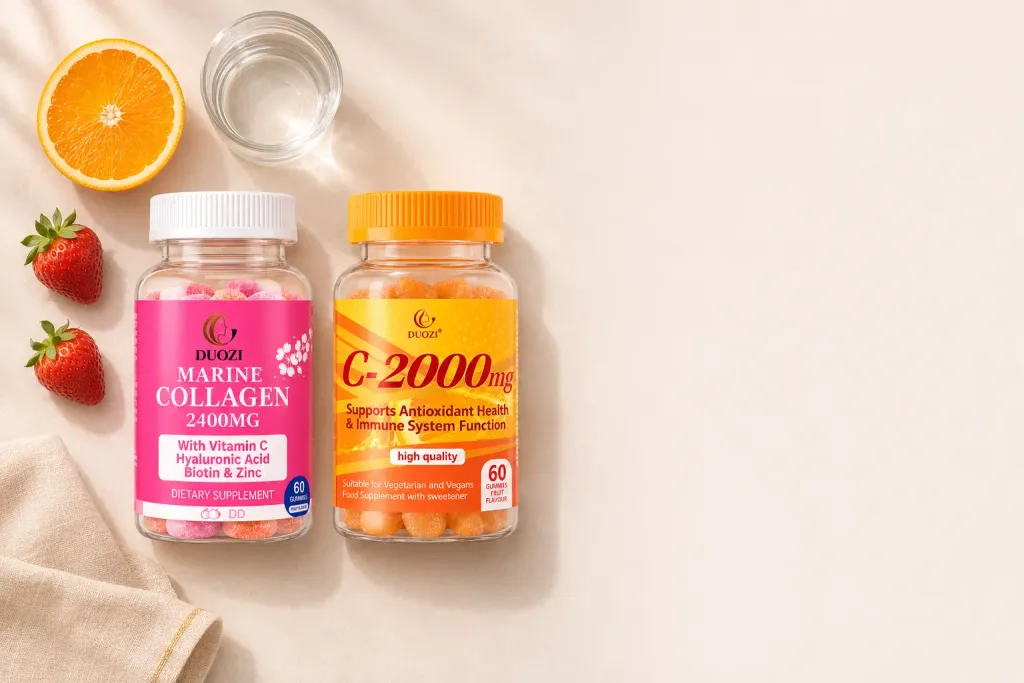
- Marine Collagen Gummies. A bottle of 60 gummies with hydrolysed marine collagen, biotin and hyaluronic acid. The serving and full ingredients are on the pack. Because it is marine-derived, check with us if you have a fish or shellfish allergy. The page does not state halal status.
- Marine Collagen Peptide Powder with Biotin. A drink mix. The page suggests stirring it into warm water, and says it can also go in soups, smoothies or other drinks. The full ingredient list is on the pack.
- Vitamin C Gummies. The page states 2,000 mg of vitamin C per serving, which is the same as the NIH adult upper limit, so follow the serving printed on the pack, do not add other vitamin C supplements, and speak to your doctor first if you have kidney stones, hemochromatosis or other conditions. Our page also makes brightening and other claims. Those are marketing, not clinical results.
- Best Collagen Booster Package. Six items together: Snail Whitening Oil, 3W Clinic Snail Eye Cream, Reedle Shot 300 sheet masks, Marine Collagen Gummies, Vitamin C Gummies and Marine Collagen Peptide Powder. Read each pack before use.
Delivered across Saudi Arabia, the UAE and the wider GCC.
Precautions
Speak to your doctor or pharmacist before starting any supplement, especially if you are pregnant, breastfeeding, managing a medical condition or taking medicines. Follow the label and do not exceed the stated serving. Check the source for allergens such as fish or shellfish. Count vitamin C from every source, because high intakes can cause stomach upset. Patch test any new topical product, and wash it off if you notice itching, burning or stinging. This guide is educational and does not replace medical care.
FAQs
Can I apply collagen and vitamin C together? On skin, yes, but they do different jobs. Topical collagen cannot be absorbed into the dermis, according to dermatologist Dr. Engelman, so treat it as a moisturiser. A vitamin C serum is best used in the morning, and dermatologists advise keeping it apart from exfoliating acids and retinoids. Patch test first.
What is the best time to take vitamin C with collagen? No source says they must be taken at the same moment. A small study used them an hour before exercise. In practice, take collagen with a meal that includes fruit or vegetables, and keep your vitamin C within the recommended range.
What else should you take with collagen? The sources point to vitamin C, zinc and copper from food, plus protein-rich meals and daily sunscreen. Add up what you already take before adding more supplements.
How long until you notice the benefits of collagen? Trials ran from about 4 to 24 weeks and measured skin hydration and elasticity. Give it at least 8 weeks and track with photos.
What is the best collagen supplement for me? It depends on your goal, source, allergies and budget. Choose a third-party tested product with a clear label, check the source, and ask for halal certification if it matters to you.
Do I need vitamin C to make collagen? Yes. The NIH says vitamin C is required for collagen biosynthesis. Most people can get enough from fruit and vegetables.
How much vitamin C is too much? The NIH upper limit for adults is 2,000 mg a day. High intakes commonly cause stomach upset, and may increase kidney stone risk in some people.
Can I take collagen and vitamin C every day? Studies tested daily collagen use over weeks to months. Follow the label for both, and speak to your doctor if you have a medical condition.
Is vitamin C serum better than collagen cream? For supporting collagen, dermatologists quoted here favour vitamin C and retinoids over collagen creams. Collagen creams mainly hydrate.
Can vitamin C and retinol be used together? Dermatologists suggest not combining them in the same routine, because they can irritate skin or inactivate vitamin C. Use vitamin C in the morning and retinoids at night.
Do collagen supplements really work? The evidence is promising but preliminary, according to a 2019 systematic review.
Pair Them Thoughtfully, Not Heavily
Collagen and vitamin C belong together in the sense that your body needs vitamin C to build collagen. They do not need to be taken in huge amounts or at one exact moment. Start with food, choose a supplement that fits your goal, protect your skin from the sun and give it at least 8 weeks.
Explore our collagen range at Vampire Glow, delivered across Saudi Arabia, the UAE and the wider GCC.

About author