Dandruff vs Dry Scalp: How to Tell and What Helps
You run your fingers through your hair and a small snowfall lands on your dark top. You scratch, you worry, you wonder whether you need a stronger shampoo or just a richer one. The trouble is that dandruff vs dry scalp is not a question you can answer by guessing, because the two look alike and need opposite fixes.
Here is the short version. Dandruff comes from excess oil and a yeast that feeds on it. Dry scalp comes from a lack of moisture. In the dandruff vs dry scalp question, the flakes, the oil level and how your scalp responds to treatment tell them apart. This dandruff vs dry scalp guide walks through five signs, the types of dandruff, why it keeps coming back, whether a vitamin is to blame, and how Gulf heat and air conditioning play a part.
Why Is My Scalp Flaking
Flaking has more than one cause, which is why the same shampoo works for your friend and not for you. The sources we read list these:
- Dandruff. A common, harmless condition linked to oily skin and a yeast called Malassezia that lives on most adult scalps, according to Mayo Clinic.
- Dry scalp. Moisture loss from low humidity, harsh or stripping products, ageing and other factors, as described by Cleveland Clinic.
- Product sensitivity. A reaction to something in your shampoo or styling products, known as contact dermatitis.
- Other skin conditions. Psoriasis and eczema can flake the scalp, and Cleveland Clinic also lists scalp ringworm (tinea capitis). These need a doctor, not a new shampoo.
- Triggers that make it worse. Mayo Clinic says dandruff can worsen with stress and with cold, dry weather.
So “why is my scalp flaking” has one honest answer: it depends which of these you have. Settling dandruff vs dry scalp is the first step, and the next sections help you narrow it down.
Dandruff vs Dry Scalp: What Each One Actually Is
Cleveland Clinic puts the dandruff vs dry scalp difference in one line: excess oil causes dandruff, and loss of moisture causes dry scalp.
Dandruff is usually a milder form of seborrheic dermatitis, according to a medically reviewed explainer from Ro. Malassezia feeds on scalp oils and leaves irritating byproducts that speed up skin cell turnover, so more flakes shed. Mayo Clinic says it is not contagious or harmful.
Dry scalp happens when the scalp lacks moisture. Ro lists causes such as frequent washing with hot water, heat styling, harsh products, dry air and not enough healthy fats in the diet. Dry scalp often comes with dry skin elsewhere on the body.
Neither side of the dandruff vs dry scalp question means your hair is dirty. The American Academy of Dermatology (AAD) calls the idea that dandruff is caused by poor hygiene a misconception.
Dandruff vs Dry Scalp: How to Tell Which You Have
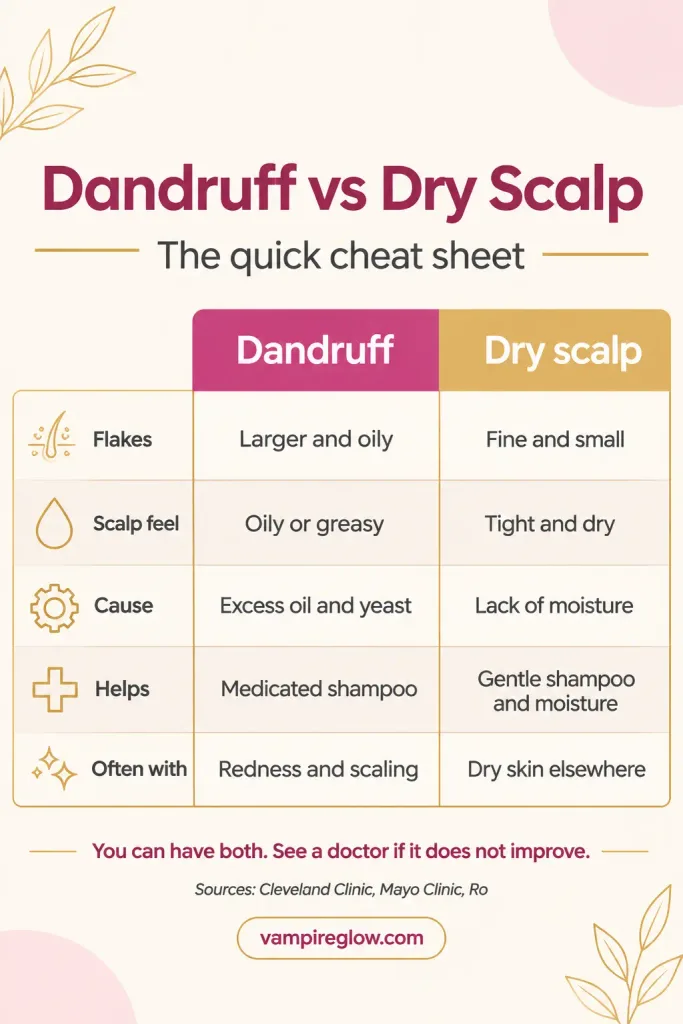
Check these five dandruff vs dry scalp signs together, because no single one is decisive.
| Sign | Dandruff | Dry scalp |
| 1. Flake size | Larger, oily-looking flakes | Fine, small, dry flakes |
| 2. Scalp and hair feel | Oily or greasy | Tight and dry |
| 3. Redness | Scalp may look red, oily and scaly | Usually less red |
| 4. Where else | Flakes can show on eyebrows and shoulders | Often dryness elsewhere on the body |
| 5. What helps | Medicated anti-dandruff shampoo | Gentle shampoo, moisture, less stripping |
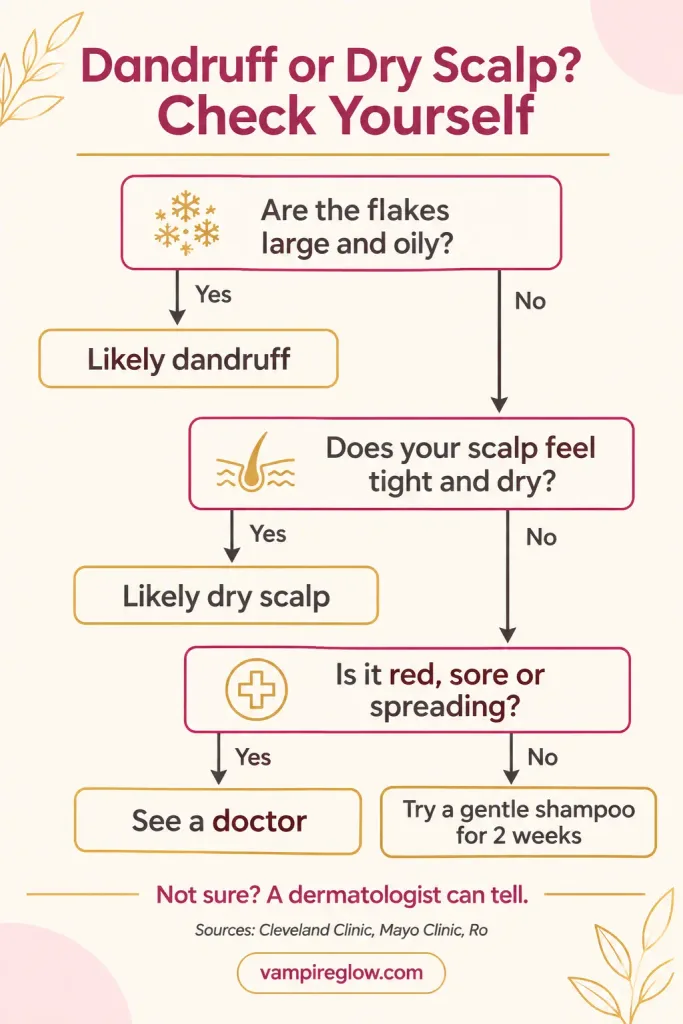
The flake size and oil description comes from Ro and Cleveland Clinic. Flake colour is a weaker clue, and I would trust size and oiliness first. That is my judgement, not a rule from a source.
A simple dandruff vs dry scalp test: switch to a gentle shampoo, rinse it out thoroughly and moisturise for two weeks. If the flakes shrink and the tightness eases, dry scalp is likely. If your scalp stays oily and flaky, dandruff is more likely. You can also have both. If you cannot tell, a dermatologist can.
What Are the Different Types of Dandruff
The sources we read do not name official “types” of dandruff. They do describe different causes, which is a practical way to sort them:
- Oily-type dandruff. Malassezia plus oil, the classic form and a milder version of seborrheic dermatitis.
- Dry-skin flaking. Fine flakes from moisture loss, often mistaken for dandruff.
- Product-reaction flaking. Contact dermatitis from shampoos or styling products. Ro notes it can be mistaken for dandruff.
- Flaking from another condition. Psoriasis, eczema or scalp ringworm. These look similar but need a diagnosis.
- Cradle cap. Mayo Clinic describes this scaly, crusty scalp in infants. It is a separate topic for a paediatrician.
When you sort dandruff vs dry scalp in your own flakes, the first two are the common ones and the rest are reasons to see a doctor.
Why Does My Dandruff Keep Coming Back
Because dandruff is usually a condition you manage, not one you cure. Mayo Clinic says it often starts in young adulthood and can last through middle age, and it sometimes never goes away. Common reasons it returns:
- You stopped treating it. Mayo Clinic advises that once dandruff improves, use the shampoo less often but at least weekly to help prevent recurrence.
- The shampoo stopped working. The AAD says that if one active ingredient does not work, try alternating between shampoos with different actives.
- Oil and product buildup. Mayo Clinic says styling-product buildup can make the scalp oilier and worsen dandruff.
- Triggers. Stress and cold, dry weather can bring it back, per Mayo Clinic. Our guide on ashwagandha for stress-related hair loss covers the stress side.
- You mixed up dandruff vs dry scalp. Dry scalp, product sensitivity or psoriasis treated with the wrong shampoo will keep flaring.
- An underlying condition. Mayo Clinic lists nervous system conditions and a weakened immune system as risk factors.
If a good routine fails after a few weeks, that is the signal to see a professional.
Dandruff vs Dry Scalp Treatment: What Helps Each
If it is dandruff
- Choose a medicated shampoo. Mayo Clinic lists antifungals (ketoconazole, pyrithione zinc, selenium sulfide) and anti-scaling ingredients (salicylic acid, coal tar). The AAD also lists sulfur.
- Follow the leave-on time. The AAD says some shampoos need about 5 to 10 minutes on the scalp before rinsing. Read the bottle.
- Match frequency to your hair. According to the AAD, fine, straight or oily hair can wash often and use a dandruff shampoo about twice a week. Coarse, curly or coily hair can use it about once a week, on the scalp only, because the ingredients can dry hair out. Mayo Clinic says some people tolerate it 2 to 3 times a week.
- Be cautious with coal tar. Both sources note it can make the scalp more sensitive to the sun. Mayo Clinic adds it can stain light hair.
- Do not count on tea tree oil. Mayo Clinic says there is no strong evidence it helps dandruff, and it may cause allergic reactions.
- Expect time. Ro says improvement should appear within about two weeks.
If it is dry scalp
- Switch to a gentle, non-medicated shampoo and rinse it out thoroughly, per Cleveland Clinic.
- Stop products that sting or irritate.
- Wash with lukewarm water, not hot, and go easy on heat styling.
- Use a humidifier in very dry rooms, as Cleveland Clinic suggests, and stay hydrated.
- Get omega-3 fats from food. Ro mentions low intake of healthy fatty acids as a possible factor. Our guide to omega-3 fish oil for dry skin and dry scalp covers the evidence honestly.
What Vitamin Am I Lacking If My Scalp Itches
Probably none, and we did not find a source that ties one vitamin to an itchy scalp. Itching mostly comes from dandruff, dry scalp, product reactions or a skin condition, so settle dandruff vs dry scalp before you blame a vitamin.
Here is what the research suggests for dandruff-type flaking, which doctors call seborrheic dermatitis:
- Zinc. In a case-control study of 71 people with seborrheic dermatitis and 71 healthy people, zinc levels were significantly lower in the seborrheic dermatitis group, as reported by Dermatology Times. The article calls this an association and says supplementation is a hypothesis that needs confirming.
- Vitamin D. The same study found no significant difference between the groups overall, though people with moderate to severe disease had lower levels than those with mild disease. The article calls the link ambiguous.
Those findings show a possible link, not proof that a deficiency causes itching. The sensible step is a blood test from your doctor before you supplement. Our guide on vitamin D deficiency and hair loss explains why testing beats guessing. Supplements support general wellbeing and do not treat a scalp condition. If you are pregnant, breastfeeding, taking medication or managing a health condition, speak to your doctor first.
Dandruff vs Dry Scalp in Gulf Heat and Air Conditioning
The Gulf climate pushes in two directions at once, which is why dandruff vs dry scalp can flip between seasons.
- Air conditioning dries the scalp. Cleveland Clinic lists low humidity as a cause of dry scalp, and a cold office can do the same. That tilts you toward the dry side of dandruff vs dry scalp.
- Heat and sweat can build oil. After a hot commute or a workout, oil and sweat sit on the scalp. That is general reasoning, not a study result, but oil is what Malassezia feeds on. That tilts you toward the dandruff side of dandruff vs dry scalp.
- Rinse well and wash after sweating. Leftover product and sweat are an easy way to irritate the scalp.
- Wash caps and head coverings regularly. Anything that sits on a warm scalp all day can hold sweat and oil. This is my practical tip, not a clinical rule.
- Protect the scalp from sun. The AAD notes a scalp sunburn can worsen flaking and recommends a wide-brimmed hat and SPF 30+ on a thinning scalp.
For the wider routine, read our Korean skincare routine for Saudi summer heat and AC.
Scalp Care at Vampire Glow
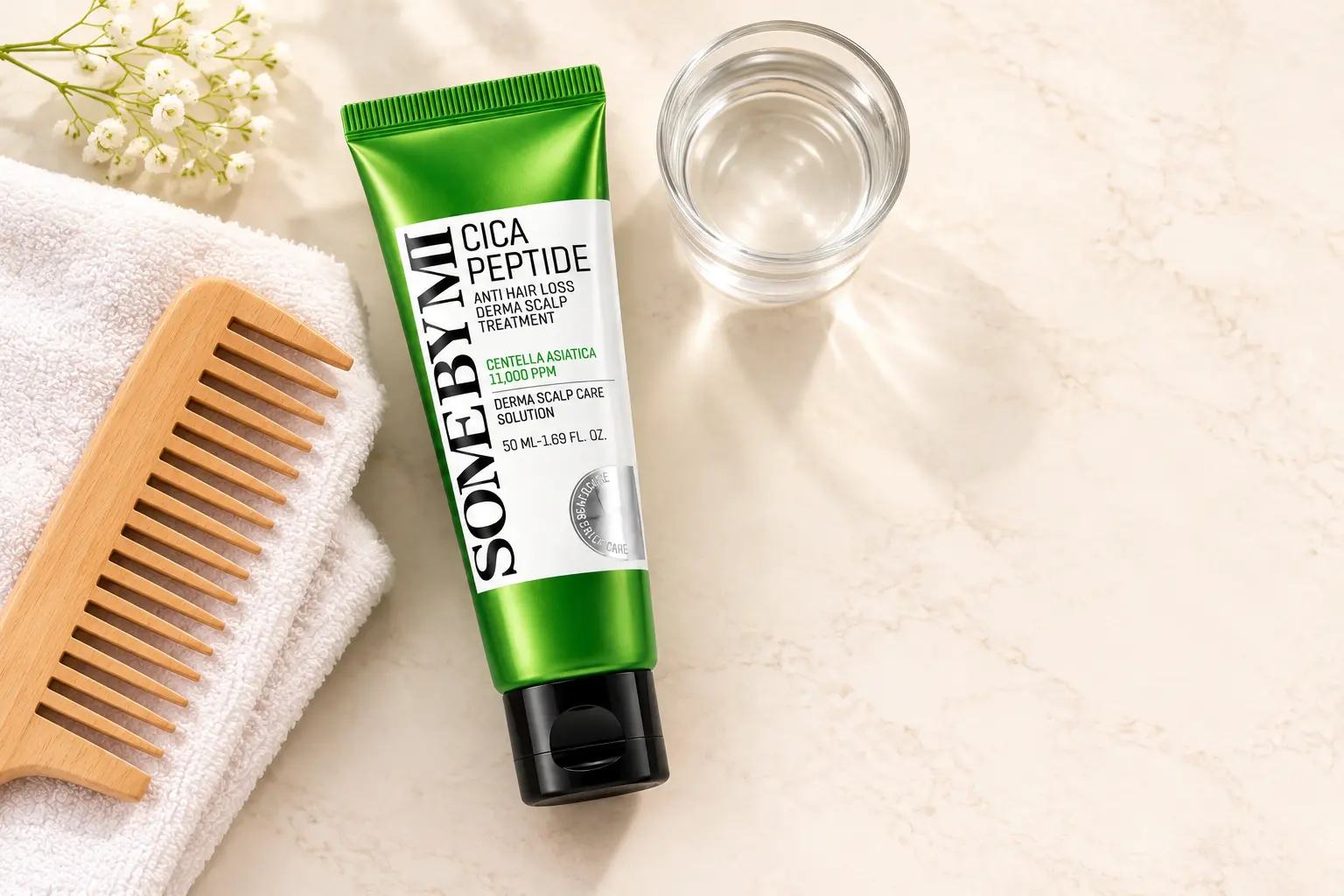
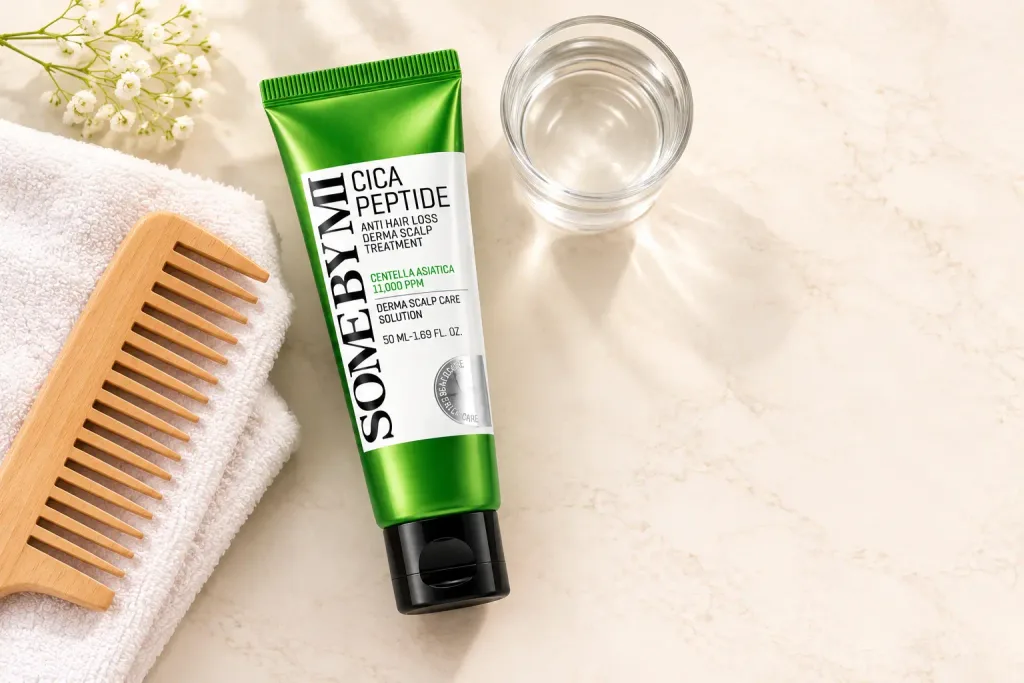
If you want a calming scalp step in your routine, the range includes the Cica Peptide Anti Hair Loss Derma Scalp Treatment from Some By Mi. According to the product page, it is a 50 ml cream that aims to moisturise the scalp and hair and reduce dryness, and it is free of silicone and sulfates. The ingredient list includes centella asiatica extract, madecassoside, panthenol, biotin, zinc pyrithione and salicylic acid.
Be clear about what it is. In dandruff vs dry scalp terms, it is scalp care that leans toward comfort. The page does not claim to treat dandruff, and it does not state the concentration of zinc pyrithione or salicylic acid. So treat it as scalp care, not a replacement for a medicated shampoo if you have true dandruff.
A few notes before you buy:
- It contains fragrance and menthol, which may irritate a sensitive or already inflamed scalp. Patch test first and skip it if your scalp is sore or red.
- The product description says to apply to wet hair, leave for 2 to 3 minutes and rinse, while another tab on the page describes a leave-on skincare routine. Follow the directions on your pack.
- Our guide on how to use a cica peptide scalp treatment explains how to use it with realistic expectations.
Browse the wider hair care range at Vampire Glow, delivered across Saudi Arabia, the UAE and the wider GCC.
When to See a Doctor and Precautions
If you cannot settle dandruff vs dry scalp yourself, see a doctor or board-certified dermatologist. Also go if your flakes do not improve after a few weeks of consistent treatment. Seek help sooner for constant itching, a red rash, or a scalp that is swollen, warm or painful, as Cleveland Clinic advises. Stop any shampoo that causes itching, burning or stinging, and seek urgent help for an allergic reaction such as hives or trouble breathing.
Patch test any new scalp product before using it all over, and avoid fragrance if your skin is sensitive. Scalp products do not replace medical care. Do not start or stop a prescribed treatment without your doctor.
FAQs
Why is my scalp flaking? The dandruff vs dry scalp question is the first thing to settle. The main causes are dandruff (oil plus Malassezia yeast), dry scalp (moisture loss), a reaction to hair products, and conditions such as psoriasis or eczema. Stress and cold, dry weather can make flaking worse. The size of the flakes and how oily your scalp feels help you work out which one it is.
How can I tell if I have dandruff or dry scalp? In dandruff vs dry scalp terms, dandruff flakes are larger and oily, and your hair may feel greasy. Dry scalp flakes are fine and small, and your scalp feels tight, often with dryness elsewhere. Try a gentle shampoo and moisture for two weeks. If that does not help, see a dermatologist.
Why does my dandruff keep coming back? Sometimes dandruff vs dry scalp was mixed up. Otherwise, dandruff is usually a long-term condition that needs ongoing care. It can return if you stop treatment, if your shampoo stops working, if products build up, or if stress and weather trigger it. Mayo Clinic suggests using the shampoo at least weekly once you improve.
What are the different types of dandruff? Sources do not name official types. In practice, flaking comes from oily-type dandruff, dry-skin flaking, a reaction to products, or another condition such as psoriasis or eczema. Infants can have cradle cap.
What vitamin am I lacking if my scalp itches? We found no source linking one vitamin to an itchy scalp. One study found lower zinc in people with seborrheic dermatitis, and vitamin D results were mixed. Ask your doctor to test before supplementing.
Can you have dandruff and dry scalp at the same time? Yes, the dandruff vs dry scalp split is not always clean. You can have an oily, flaky scalp in some seasons and a dry, tight one in others, especially with air conditioning and heat. A dermatologist can tell you what you have.
What is the difference between dandruff and dry scalp? The dandruff vs dry scalp difference is oil versus moisture. Excess oil and yeast cause dandruff, and a lack of moisture causes dry scalp. Flake size, oiliness and response to treatment help you tell them apart.
Is dandruff contagious? No. Mayo Clinic says dandruff is not contagious or harmful.
Is dandruff caused by dirty hair? No. The AAD calls that a misconception. Oily skin, hair care habits and certain medical conditions are the usual causes.
How often should I use dandruff shampoo? Follow the bottle. The AAD suggests about twice a week for fine or oily hair and about once a week for coarse, curly or coily hair. Mayo Clinic says some people use it 2 to 3 times a week, then at least weekly to prevent a return.
Does tea tree oil help dandruff? Mayo Clinic says there is no strong evidence that it helps, and it may cause allergic reactions.
Can I use dandruff shampoo on a dry scalp? Use it cautiously. The AAD warns that the ingredients can dry out curly or coily hair, so apply it only to the scalp. If your scalp is dry, not oily, a gentle shampoo and moisture are usually the better start.
Know Which One You Have, Then Treat It
Dandruff vs dry scalp comes down to oil and moisture, and getting that call right saves you months of the wrong shampoo. Check the flakes, the oil level and how your scalp responds, treat the cause you find, and see a doctor if it does not clear.
Explore the Cica Peptide Scalp Treatment and the wider hair care range, available now at Vampire Glow and delivered across Saudi Arabia, the UAE and the wider GCC.

About author