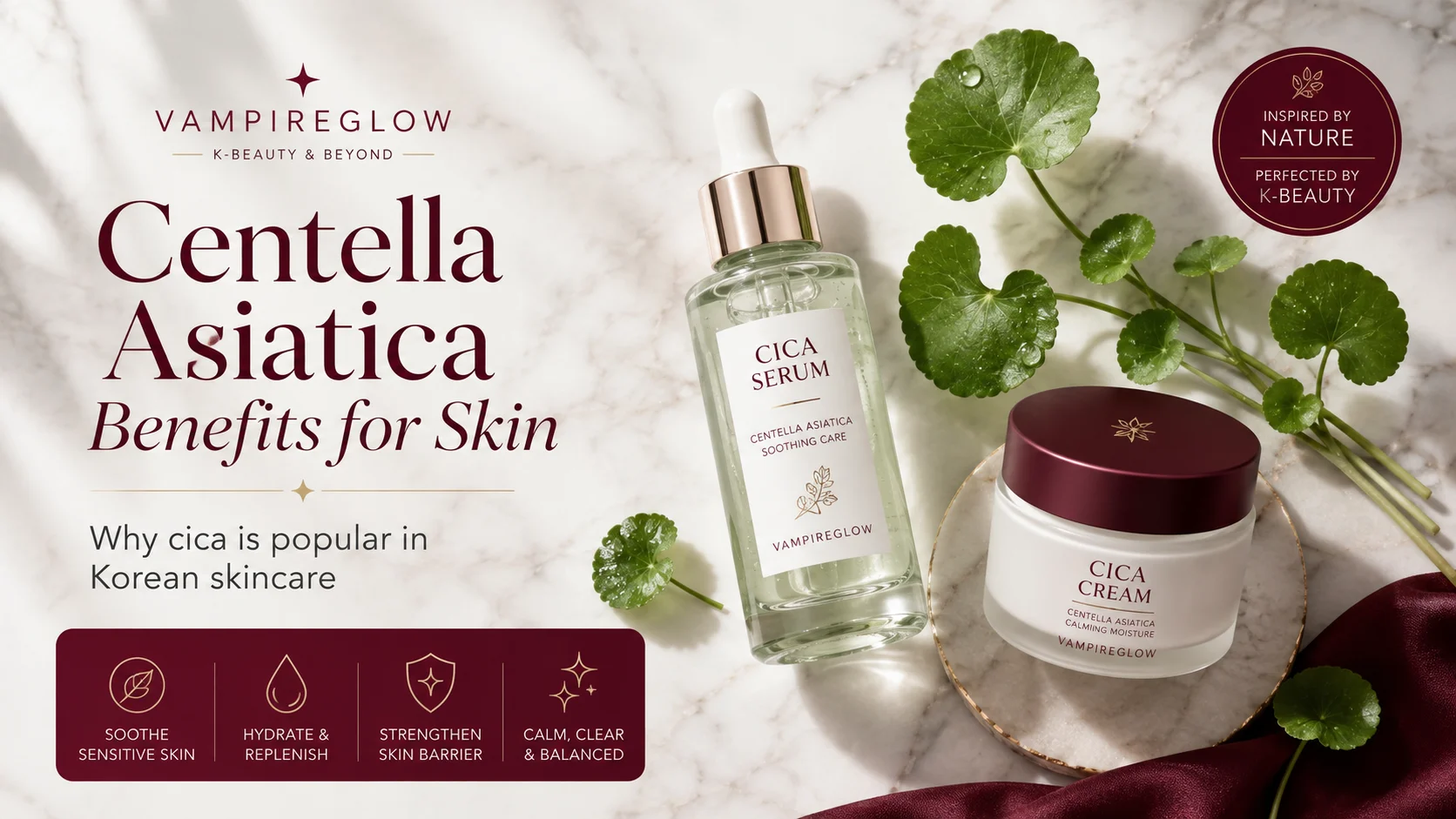
Centella Asiatica Benefits: Why Cica Is Popular in Korean Skincare
Walk through the active ingredients on any Korean skincare shelf and centella asiatica appears everywhere. In toners, essences, serums, sleeping masks, SPF and dedicated cica creams, it shows up across routine steps and across skin type categories with a consistency that most trend ingredients never achieve. That’s not coincidence. Cica has earned its place in K-beauty through a combination of a genuinely strong scientific profile, broad skin type compatibility, and a calming, repair-focused benefit set that addresses what Korean consumers, and increasingly Gulf-based shoppers dealing with Saudi Arabia’s heat and UV stress, actually need.
Table of Contents
- What Is Centella Asiatica and Is Cica the Same Thing
- The Active Compounds That Make Cica Work
- Who Should Use Centella Asiatica
- Benefits of Centella Asiatica for Skin
- How to Use Centella Asiatica in Your K-Beauty Routine
- What Should Not Be Mixed with Centella Asiatica
- How Soon Centella Asiatica Results Show
- Aftercare Tips for Cica Users in Saudi Arabia
- Centella Asiatica vs Niacinamide: Which Is Better for Sensitive and Acne-Prone Skin
- Possible Side Effects and Precautions
- What Does a Cica Product Cost at Vampire Glow
- Why Choose Vampire Glow
- FAQs
- Discover Cica Products at Vampire Glow
This guide covers what centella asiatica is, what makes it effective, which skin types and concerns it suits best, how to use it correctly, and why it’s become one of the most trusted ingredients in the K-beauty toolkit.
What Is Centella Asiatica and Is Cica the Same Thing
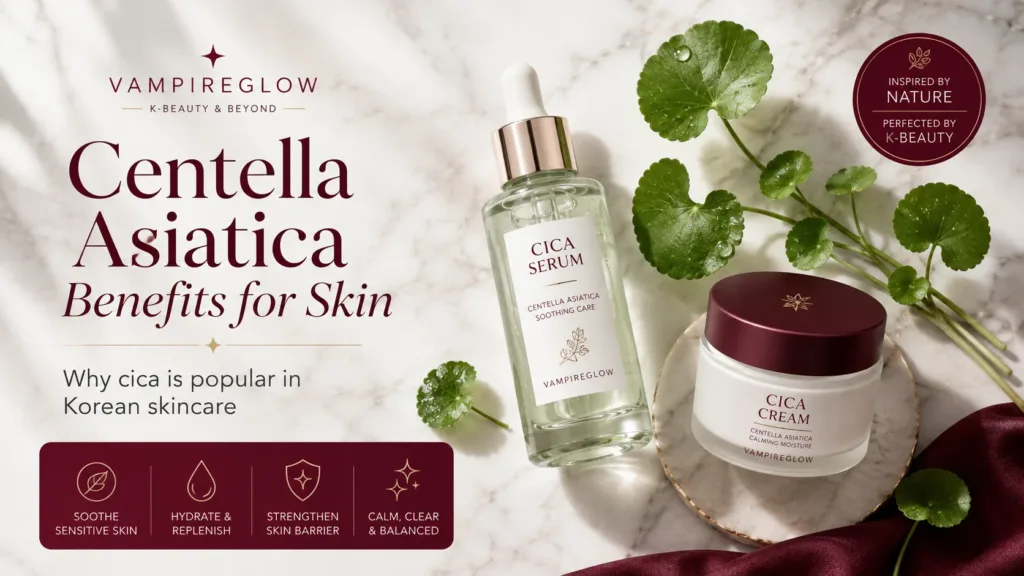
Yes. Cica is simply the abbreviation of centella asiatica, derived from its botanical name. The two terms are used interchangeably in Korean skincare marketing. Some brands use “cica” as their primary label, others list the full botanical name on ingredient lists, and some use derivative compound names like madecassoside, asiaticoside or centella asiatica extract, all referring to components extracted from the same plant.
Centella asiatica is a small herbaceous plant native to Asia and parts of Africa. It has been used in traditional medicine across India, China and Southeast Asia for centuries, particularly for wound healing, skin repair and as an anti-inflammatory agent. In Korean skincare, it became popular as a targeted active for sensitive, reactive and compromised skin, building on that traditional use with modern formulation methods that standardise the concentration of its key active compounds.
The full ingredient name on a product label may appear as centella asiatica extract, centella asiatica leaf extract, centella asiatica meristematic cell extract, or as one of its isolated active compounds: madecassoside, asiaticoside, asiatic acid or madecassic acid.
Centella shows up across the range, most concentrated in the Reedle Shot 300 two step sheet mask and in the AHA BHA PHA Miracle Calming Body Lotion for body use.
The Active Compounds That Make Cica Work
Understanding what centella asiatica actually contains explains why it delivers the benefits it does rather than relying on general claims about being “calming” or “natural.”
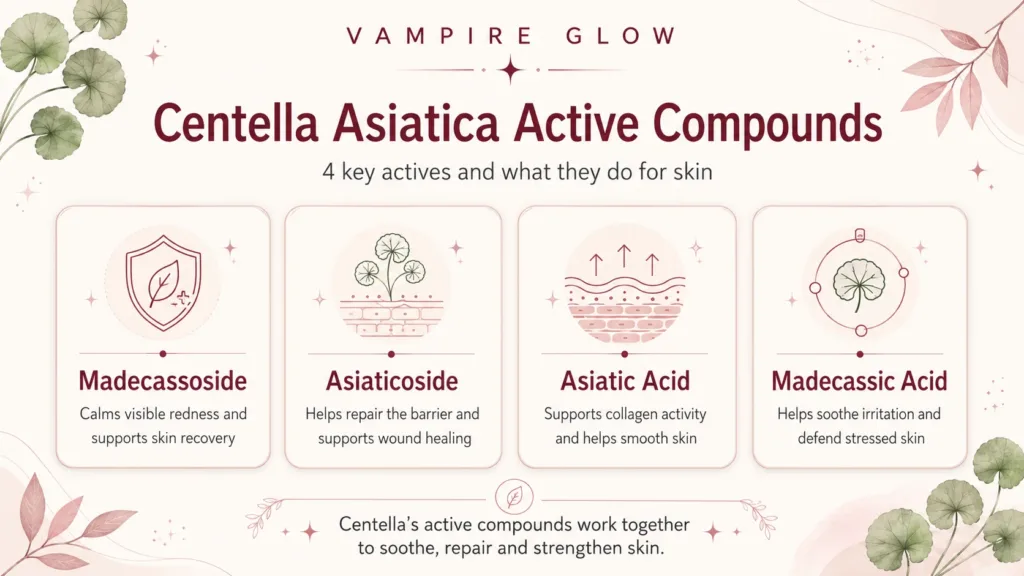
Madecassoside. An anti-inflammatory compound isolated from centella asiatica and one of the most studied active derivatives. Found in wound-healing research, it has been shown to support skin recovery and reduce inflammatory responses in the skin. In Korean skincare, madecassoside is often listed as the star active in dedicated cica products.
Asiaticoside. A triterpenoid saponin with documented wound-healing properties. Research has associated it with supporting the skin’s collagen synthesis pathways, which is one of the reasons cica appears in formulas aimed at both barrier repair and anti-ageing.
Asiatic acid. Anti-inflammatory and antioxidant properties. Helps reduce redness, support barrier repair and may contribute to the skin’s resistance to oxidative stress.
Madecassic acid. Works alongside asiaticoside in supporting the skin’s natural healing response. Together with madecassoside, it forms the core of centella’s therapeutic profile.
Formulas that include these named compounds alongside the general centella extract are typically more concentrated and more effective than those listing only “centella asiatica extract” at the bottom of the ingredient list.
Who Should Use Centella Asiatica
Centella asiatica is one of the most broadly applicable actives in K-beauty. Its calming, barrier-repairing properties make it useful across skin types.
Sensitive and reactive skin benefits most directly. Skin that flushes easily, reacts to new products, or flares with redness in response to environmental stress finds cica’s anti-inflammatory properties genuinely helpful. It’s one of the few actives that soothes rather than challenges reactive skin.
Skin stressed by Saudi Arabia’s climate. Extended UV exposure, heat, and long hours in dry air conditioning are exactly the kind of chronic low-grade stress that cica’s barrier repair and anti-inflammatory properties are suited to managing. Daily use supports a more resilient skin surface that holds up better against environmental triggers.
Acne-prone skin. Cica’s anti-inflammatory properties help manage the redness and swelling associated with breakouts without the drying or purging effect of traditional acne actives. It also supports skin recovery after a breakout, which addresses the post-inflammatory marks that often follow.
Skin recovering from over-exfoliation. For anyone whose skin has been irritated by overuse of AHAs, BHAs or retinol, centella asiatica is a standard recommendation in Korean skincare to calm the barrier down and support recovery.
Dry and dehydrated skin. Cica’s wound-healing and barrier-strengthening properties help skin retain moisture more efficiently, making it useful not just as an anti-inflammatory but as a barrier support for dry and damaged skin.
Mature skin also benefits from cica’s collagen-supporting compounds, which may contribute over time to a firmer, more resilient skin surface.
Explore current cica and centella products at Some By MI and Mixsoon, both stocked at Vampire Glow.
Benefits of Centella Asiatica for Skin
Reduces redness and calms skin inflammation. The madecassoside and asiatic acid in centella work on the skin’s inflammatory pathways. Consistent daily use can visibly reduce baseline redness, flushing and the reactive behaviour of sensitive skin over time.
Accelerates skin barrier repair. Centella’s active compounds support the skin’s ability to repair its protective barrier after damage from UV, exfoliation, shaving, waxing or environmental exposure. A stronger barrier retains moisture better, reacts less easily to products and environmental triggers, and shows fewer signs of chronic stress over time.
Supports wound healing and skin recovery. This is the function centella has been documented for longest, going back to its traditional use in wound care. In topical skincare, this translates to faster recovery from minor skin stress, including post-breakout marks, the mild micro-damage that accumulates from daily UV exposure in Saudi Arabia, and the skin’s response to over-exfoliation.
Collagen synthesis support. Asiaticoside in particular has been associated with supporting collagen production in published research. This is a slower, cumulative benefit that makes centella relevant in anti-ageing formulas alongside its calming role.
Antioxidant protection. The asiatic acid component provides some antioxidant activity, supporting the skin’s defence against oxidative stress from UV exposure and environmental pollution.
Hydration support through barrier strengthening. By helping the skin barrier function more efficiently, centella indirectly improves hydration retention. Skin that loses less water through a compromised barrier simply holds moisture better.
Broad compatibility with other actives. Centella pairs well with niacinamide, hyaluronic acid, snail mucin, peptides and ceramides. It rarely destabilises other actives and often improves their performance by reducing the skin irritation that strong actives can trigger, making it easier for the skin to tolerate an active routine.
How to Use Centella Asiatica in Your K-Beauty Routine
Cica appears across multiple product formats, so placement in the routine depends on the format rather than the ingredient.
Cica toner: After cleansing, as the first hydration and calming layer. Especially useful if skin is reactive from morning heat or overnight product use.
Cica essence or serum: After toner, before moisturiser. As a treatment step focused on calming and barrier repair, it sits in the same position as other treatment essences and serums.
Cica cream or gel-cream: As the final moisturising step. Cica creams are among the most common cica formats in K-beauty and act as both a treatment and a sealing layer.
Cica sleeping mask: Two to three times a week as the final evening step for intensive overnight barrier repair. Particularly effective the evening after long outdoor exposure in Saudi Arabia’s sun.
Morning routine with cica: Cleanser, cica toner or hydrating toner, cica essence or serum, lightweight moisturiser or cica cream, SPF50+ PA++++.
Evening routine with cica: Double cleanse, cica toner, cica essence or serum, treatment serum if using one, cica cream or gel-cream, cica sleeping mask on designated evenings.
Browse the current skin care range at Vampire Glow for cica toners, essences, creams and sleeping masks available across the K-beauty brands stocked for the Gulf market.
What Should Not Be Mixed with Centella Asiatica
Centella asiatica is one of the most compatible actives in a K-beauty routine. Unlike retinol or vitamin C, it doesn’t have a long list of ingredients it conflicts with. There are a few considerations worth knowing.
High-concentration direct acids in the same session. A dedicated AHA or BHA exfoliant at a meaningful concentration creates a temporarily acidic environment on the skin’s surface. While centella itself isn’t destabilised by this, using a strong exfoliant and a cica product simultaneously in the same session sends conflicting signals to the skin, one agitating and exfoliating, the other calming and repairing. They’re better separated into different sessions. Use the exfoliant in the evening and the cica product the following morning to let the skin recover, with cica supporting that recovery process.
Anything that irritates your skin. Centella’s role is calming, which makes it a useful pairing with potentially irritating actives like retinol or strong peptides. However, adding cica on top of something that’s actively causing a skin reaction is not a substitute for removing the irritating product. If skin is reacting badly to an active, stop the active first, let the skin settle, then use cica to support recovery.
Products with high alcohol content. Denatured alcohol in a toner or essence used before a cica product can counteract the calming effect by irritating the skin surface. Check the formulas you’re layering and avoid high-alcohol products in the same routine if the goal is anti-inflammatory skin support.
In general, centella works well with niacinamide, hyaluronic acid, snail mucin, peptides, ceramides and most other standard K-beauty actives. It is a calming complement to most routines rather than a demanding active that requires compatibility management.
How Soon Centella Asiatica Results Show
Redness reduction and a calmer skin surface are usually the first noticeable changes, often within the first one to two weeks of daily use for reactive or sensitised skin. The calming effect is one of cica’s faster benefits because it works on existing inflammation directly.
Barrier repair and improved hydration retention typically become apparent after three to four weeks of consistent use, showing as less reactive skin, fewer flushes in response to products or temperature changes, and improved moisture retention through the day.
Collagen support and any contribution to fine line softening take longer, usually eight to twelve weeks of sustained daily use before the effect registers visibly.
Results vary by skin type, severity of concern and how consistently the routine is maintained. Individual outcomes differ, and environmental factors including UV exposure and how diligently SPF is applied each day play a meaningful role.
Aftercare Tips for Cica Users in Saudi Arabia
Do apply cica products generously on evenings after extended time outdoors in Saudi Arabia’s heat. Sun stress triggers the same inflammatory pathways that centella acts on, and a cica sleeping mask on those evenings provides targeted overnight repair support.
Do pair cica with SPF50+ every morning. Anti-inflammatory and barrier-repair support during the day doesn’t cancel out UV damage accumulating without sun protection. The two work together, not as substitutes for each other.
Don’t assume that because cica is calming it can be used to push through skin that’s clearly reacting badly to another product. Cica supports recovery but it’s not a shield that makes irritating actives safe. If skin is showing a significant reaction, step back from the active causing it.
Don’t expect cica to clear acne on its own. Its anti-inflammatory properties support the skin during and after a breakout, but it doesn’t work on the bacteria and clogged pores that cause acne in the first place. It’s best used as part of a broader acne management routine rather than as a standalone acne treatment.
Centella Asiatica vs Niacinamide: Which Is Better for Sensitive and Acne-Prone Skin
| Centella Asiatica (Cica) | Niacinamide | |
| Primary function | Anti-inflammatory, barrier repair, wound healing | Pore refinement, oil control, brightening, barrier support |
| Best for | Sensitive, reactive, post-breakout, sun-stressed skin | Oily, combination, enlarged pores, uneven skin tone |
| Anti-inflammatory | Strong, direct action on inflammatory pathways | Mild anti-inflammatory, primarily works via oil and pore control |
| Barrier support | Strong, direct support through collagen and repair pathways | Moderate, supports barrier via ceramide production |
| Acne management | Supports recovery from breakouts, reduces post-breakout redness | Helps manage sebum, reduces the conditions that cause congestion |
| Brightening effect | Minimal direct brightening | Yes, reduces post-inflammatory pigmentation over time |
| Collagen support | Yes, documented via asiaticoside | Indirect, through improved skin health |
| Sensitivity and tolerance | Very low risk of irritation | Generally very well tolerated, mild flush at high doses |
| Compatible in same routine | Yes, complementary | Yes, complementary |
| Saudi Arabia climate fit | Excellent, anti-inflammatory properties address sun and heat stress | Excellent, oil control and pore refinement suit heat conditions |
| Daily use suitability | Yes, morning and evening | Yes, morning and evening |
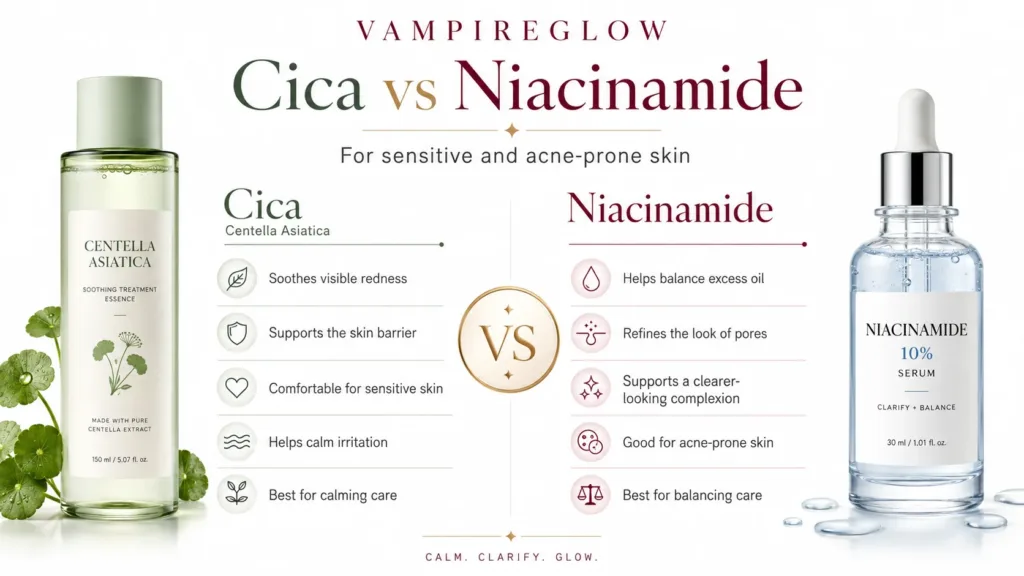
The two are among the best-matched pairs in a K-beauty routine. Centella handles calming and barrier repair while niacinamide manages oil, pores and tone. Used together they address the full picture for combination and acne-prone skin in Saudi Arabia’s heat far more comprehensively than either alone.
Possible Side Effects and Precautions
Centella asiatica is one of the best-tolerated actives in skincare and genuine adverse reactions are uncommon. A small number of people experience contact dermatitis from centella, presenting as persistent redness or a localised rash. This is more likely with isolated compounds like madecassoside at high concentrations than with a general centella extract.
Patch test any new cica product on the inner arm before applying to the full face. If redness or irritation persists beyond 48 hours, the formula or its concentration may not suit your skin.
Anyone pregnant, breastfeeding or managing a diagnosed skin condition should consult a doctor before adding new actives to their routine, including products with centella asiatica.
The acne and post-blemish benefits of cica relate to its anti-inflammatory and recovery-support properties. It is not a prescribed acne treatment and should not be used as a substitute for dermatological care for moderate to severe acne.
What Does a Cica Product Cost at Vampire Glow
Pricing depends on format and formula complexity.
- Cica toners and essences at entry-level are among the more accessible K-beauty products, while concentrated serums with named madecassoside or asiaticoside derivatives are priced higher to reflect concentration
- Sleeping masks, creams and gel-creams vary by size and brand
- Currency and region: Vampire Glow displays pricing in AED for Gulf shoppers and in USD elsewhere
- Delivery options and costs for Saudi Arabia and the wider GCC are confirmed at checkout
Live prices are on each product page at Vampire Glow and update regularly. Browse the skin care range to compare current cica product formats and find the right entry point for your routine
Why Choose Vampire Glow
- Authentic Korean brands with batch codes and expiry dates verified on arrival
- A curated selection that includes cica products specifically chosen for skin dealing with Saudi Arabia’s UV stress, heat and AC conditions
- Cruelty-free brands only
- Delivery across the UAE and the wider GCC, including Saudi Arabia, confirmed at checkout
- Full ingredient lists and usage guidance on every product page, so you can check madecassoside and asiaticoside concentrations before purchasing
Prefer the underlying evidence to any brand's word for it? PubMed indexes the published research on centella asiatica and skin.
Related reading
- Which Korean skincare ingredients actually work
- The signs of a damaged skin barrier and how to fix it
- The best Korean skincare for acne-prone skin
- What snail mucin actually does for skin
FAQs
Is Centella asiatica the same as cica? Yes. Cica is a shortened, informal name for centella asiatica, used widely in Korean skincare marketing and consumer conversations. They refer to the same plant and the same ingredient. On ingredient labels, centella asiatica may appear as the full botanical name, as centella asiatica extract, or as its isolated active compounds including madecassoside, asiaticoside, asiatic acid or madecassic acid. All of these come from the same plant and share the same core benefits profile.
What are the other names for Centella asiatica? Centella asiatica goes by several names depending on regional and traditional use. The most common are gotu kola, used in Ayurvedic medicine and wellness contexts, tiger grass, used in Korean beauty marketing, and Indian pennywort, used in culinary and herbal contexts across South and Southeast Asia. On cosmetic ingredient labels, INCI (International Nomenclature Cosmetic Ingredient) format uses centella asiatica, while isolated active compounds are listed by their own names: madecassoside, asiaticoside, asiatic acid and madecassic acid.
What should not be mixed with Centella asiatica? Centella asiatica is one of the most compatible actives in a K-beauty routine and doesn’t have many strict incompatibilities. The main consideration is avoiding layering it with high-concentration chemical exfoliants (AHAs or BHAs) in the same session, since the exfoliant agitates the skin while cica is trying to calm it. Separate them into different sessions: exfoliant in the evening, cica the following morning to support recovery. High-alcohol formulas used immediately before a cica product can also counteract its calming effect. Most other K-beauty actives, including niacinamide, hyaluronic acid, snail mucin, peptides and ceramides, pair well with centella without issues.
Is cica good for acne? Yes, cica is well suited to acne-prone skin, though it works on the inflammatory and recovery aspects of acne rather than on the underlying bacterial or comedogenic causes. Its anti-inflammatory compounds help reduce the redness and swelling that accompany active breakouts, and its wound-healing properties support the skin’s recovery after a blemish. For oily, acne-prone skin in Saudi Arabia’s heat, cica pairs well with niacinamide (which manages sebum and pore congestion) and a gentle BHA (which clears the inside of pores). Cica is best thought of as part of an acne management routine rather than as a standalone acne treatment.
Can cica reduce the appearance of acne scars? Cica may help support the skin’s recovery after breakouts and may contribute to a gradual improvement in the appearance of post-inflammatory hyperpigmentation over time, through its wound-healing active compounds. Individual results vary considerably depending on the type and depth of marks, skin tone, how consistently the routine is followed, and how well sun protection is maintained, since UV exposure significantly slows the skin’s recovery from post-blemish discolouration. For significant or deep scarring, a consultation with a licensed dermatologist is the appropriate first step, since topical skincare actives have a limited ability to address structural changes in the skin.
Does Vampire Glow deliver centella asiatica products to Saudi Arabia? Yes. Vampire Glow delivers across the UAE and the wider GCC, including Saudi Arabia. Delivery options are confirmed at checkout for your specific region. Browse the Some By MI brand page, the Mixsoon brand page and the full skin care range to see current cica and centella product options.
Discover Cica Products at Vampire Glow
Centella asiatica has earned its place in Korean skincare because it does what it promises, calms, repairs and strengthens the skin barrier, with a research profile to back it up and a compatibility record that makes it genuinely easy to add to almost any routine. For skin navigating Saudi Arabia’s sun stress, heat and daily AC exposure, a cica product isn’t a luxury step. It’s a practical one. Shop the current cica and centella asiatica range at Vampire Glow and find the format that fits where your routine needs support, or email the team at support@vampireglow.com for a recommendation based on your skin type and concern.

About author