Sleeping Pack vs Night Cream: Which One and When
It is late. Your cleanser is done, your essence has soaked in, and now two jars are sitting on the shelf: a night cream and a sleeping pack. Sleeping pack vs night cream is one of those questions where the marketing makes both sound essential, and where using the wrong one, or both at once, can leave skin worse off.
Here is the short version. A night cream is a richer moisturiser you use on most nights. A sleeping pack is a leave-on mask worn overnight as an occasional boost, and most sources treat it as an extra, not a replacement. This guide covers the five differences, whether you can use both, how often is too often, what doctors actually say, and which age suits a night cream.
Sleeping Pack vs Night Cream: The 5 Differences
There is no official medical definition of a “sleeping pack”, so these differences come from dermatology sources on moisturisers and masks, plus brand descriptions where we say so.
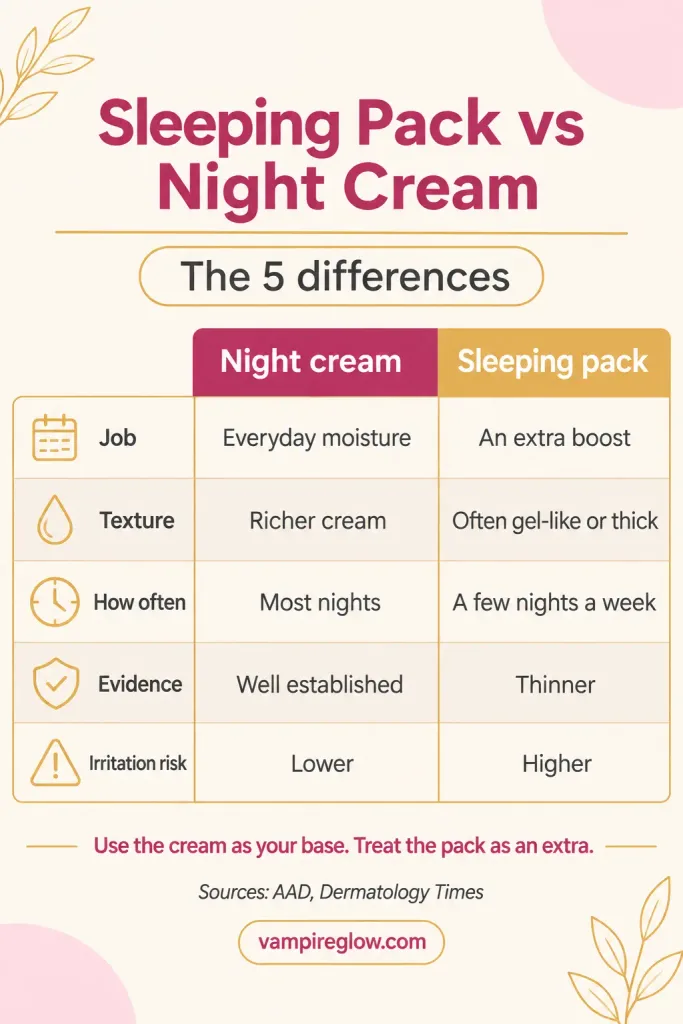
| Night cream | Sleeping pack | |
| 1. Job | Everyday moisture | An extra hydration boost |
| 2. Texture | Cream, richer than a day lotion | Often gel-like or cushiony, and often thick |
| 3. How often | Most nights | A few nights a week, or as the label says |
| 4. Evidence | Moisturisers are well established | Thinner evidence for sleeping masks |
| 5. Irritation risk | Lower | Higher, because it sits under occlusion all night |
Night cream. According to the American Academy of Dermatology (AAD), creams contain more oil than lotions and are more hydrating. A night cream is essentially a cream-type moisturiser made for evening use.
Sleeping pack. A sleeping pack is a leave-on mask you wear overnight. A Dermatology Times review says purpose-made sleeping masks are plausible, but that the evidence behind them is thinner than for conventional moisturisers. It also warns that prolonged occlusion can enhance irritant and allergic reactions.
For the sleeping pack vs night cream choice, the practical rule is: the cream is your base, and the pack is your occasional extra.
What Type of Moisturizer Is Best at Night
The best one depends on your skin type. The AAD’s guidance on choosing a moisturizer is a good starting point:
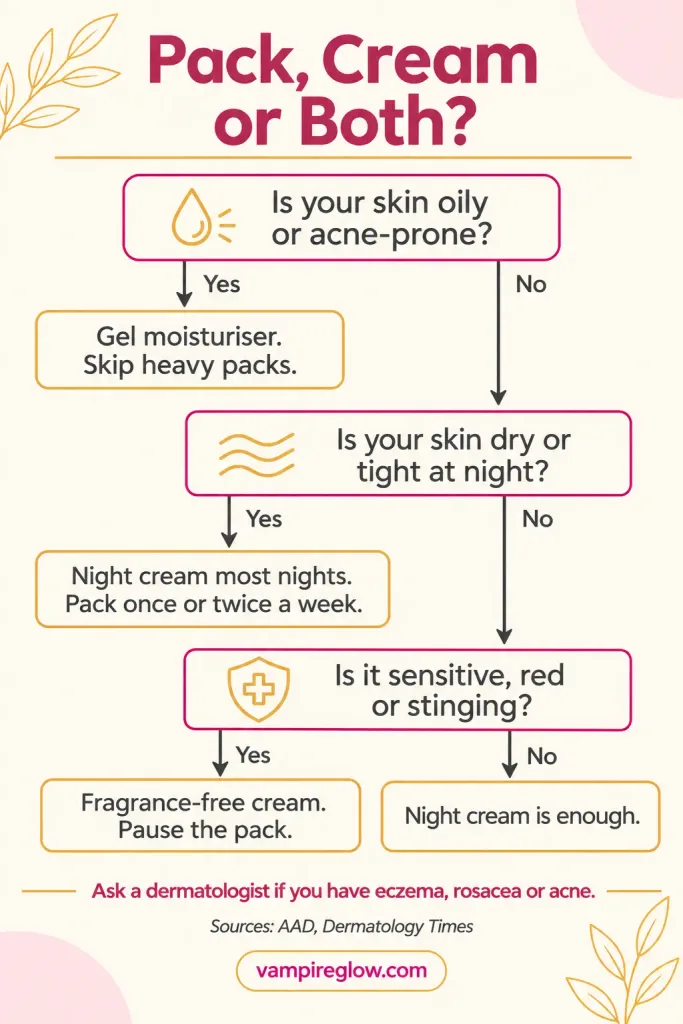
- Dry skin: use a cream or ointment, not a lotion. Creams add more moisture and preserve more water.
- Normal skin: a lotion is usually enough when you are younger. Dermatologist Rebecca Kazin says people in perimenopause and everyone 50 and older should use a cream-based moisturiser.
- Oily or acne-prone skin: too much moisturiser can clog pores. A dermatologist quoted by the AAD suggests skipping it or using a gel.
- Combination skin: moisturise the dry areas and skip the oily T-zone.
Look for ceramides and hyaluronic acid, and avoid fragrance, alcohol and AHAs if your skin is dry or sensitive. Apply on damp skin, such as right after washing, so the moisturiser traps water.
You also do not strictly need a separate “night cream”. Cleveland Clinic’s Dr. Shilpi Khetarpal describes a simple night routine of cleanser, optional toner and a vitamin A-based product, with a ceramide or hyaluronic acid moisturiser on top if it dries your skin. A night cream is an option, not a requirement.
Can I Use Both a Sleeping Pack and a Night Cream
You can, but you do not need to do it every night, and you should not pile them on by default. The reason is occlusion: Dermatology Times notes that prolonged occlusion boosts penetration, which matters if your products contain fragrance, alcohol, essential oils or strong acids.
Here are three sensible ways to handle sleeping pack vs night cream on the same shelf:
- Swap, do not stack. Use your night cream most nights, and replace it with the sleeping pack on one or two nights. A Glow Recipe blog suggests the same idea, though it is a brand source, not a clinical one.
- Stack only if the label allows it. On very dry nights, a thin moisturiser under a pack may work, but only if the pack says so.
- Keep active nights simple. If you use retinol or exfoliating acids, skip the pack that night. The AAD warns that repeating active ingredients can trigger dryness and irritation.
Can You Use a Sleeping Mask Every Night, and How Often
You can if your skin tolerates it, but the sources we read do not recommend a set number of nights. The Dermatology Times review gives no frequency for sleeping masks, and the AAD says using a mask too often can cause irritation. Glow Recipe, a brand, says a few times a week or every night depending on what your skin can handle.
A cautious plan, which is my judgement, not a clinical rule:
- Start with one or two nights a week.
- Review after two weeks. If skin feels comfortable, you can add a night.
- Cut back at the first sign of stinging, redness, itching or new breakouts.
- Follow the label’s instructions on how long to leave it on and whether to rinse.
If you are acne-prone, Dermatology Times points out that the warm, moist environment under a mask can worsen breakouts, and suggests a non-comedogenic sleeping mask or overnight hydrating gel.
Can You Skip Moisturizer and Use Night Cream
At night, yes. A night cream is a moisturiser, so you do not need a second one on top unless your skin is extremely dry.
During the day, no. You still need hydration and sunscreen. Cleveland Clinic’s Dr. Khetarpal says SPF in a moisturiser or foundation is not enough and recommends a separate facial sunscreen with an SPF of at least 30. A night cream also tends to feel heavy under makeup, so a lighter day moisturiser usually suits better.
If your skin is oily, you may need less than you think. The AAD’s advice for oily or acne-prone skin is to skip moisturiser or use a gel, and a rich night cream may not suit you.
Do Doctors Recommend Sleeping Masks
We did not find a source saying doctors broadly recommend them. What we found is more careful:
- Purpose-made sleeping masks are described as reasonable, but with thinner evidence than moisturisers (Dermatology Times).
- Standard sheet masks worn overnight are discouraged by the same review, noting that prolonged occlusion can cause over-hydration and redness.
- The AAD’s advice on facial masks is to follow the label, patch test a small area first, avoid fragrance, essential oils and rubbing alcohol, and wash a mask off immediately if you feel itching, burning or stinging.
So the honest answer is: some dermatologists see a place for a gentle sleeping mask, but it is not a standard recommendation, and nobody says it is essential. If you have eczema, rosacea, acne or very sensitive skin, ask a dermatologist before you try one.
Which Age Is Best for Using Night Cream
There is no best age. The sources we read tie moisturiser choice to skin type and needs, not birthdays.
- Tweens and teens: the AAD recommends a fragrance-free moisturiser daily, a gentle evening cleanse, and broad-spectrum sunscreen of SPF 30 or higher in the morning. A dedicated night cream is not on its list.
- Younger adults with normal skin: a lotion is usually enough, per the AAD’s moisturiser guidance.
- Perimenopause and age 50 and over: a cream-based moisturiser is advised, which is where a night cream earns its place.
- At any age: if your skin is dry, a richer cream helps. If it is oily, a gel or no extra moisturiser may suit you better.
Be wary of ads that say you “must” start a night cream at 25. Sunscreen and a gentle moisturiser matter earlier and more than a special night product.
Sleeping Pack vs Night Cream in Gulf Heat and Air Conditioning
The climate here pulls skin in two directions, so the sleeping pack vs night cream choice can change with the season.
- Cold, dry air conditioning at night can leave skin tight. A richer night cream suits this.
- Humid, hot nights make a heavy, occlusive sleeping pack feel suffocating, and Dermatology Times links warm, moist conditions to breakouts. A gel texture is usually more comfortable. That is my reasoning from the sources, not a study result.
- Do not stack heavy layers in summer. Fewer, lighter steps keep skin comfortable.
For more on adapting your routine, read our Korean skincare routine for Saudi summer heat and AC and the guide to morning vs night skincare.
Night-Routine Products at Vampire Glow
Our range is built around essences, eye creams and treatment oils, so check the skin care range for what is in stock. These night-friendly pieces fit around a night cream or a sleeping pack:
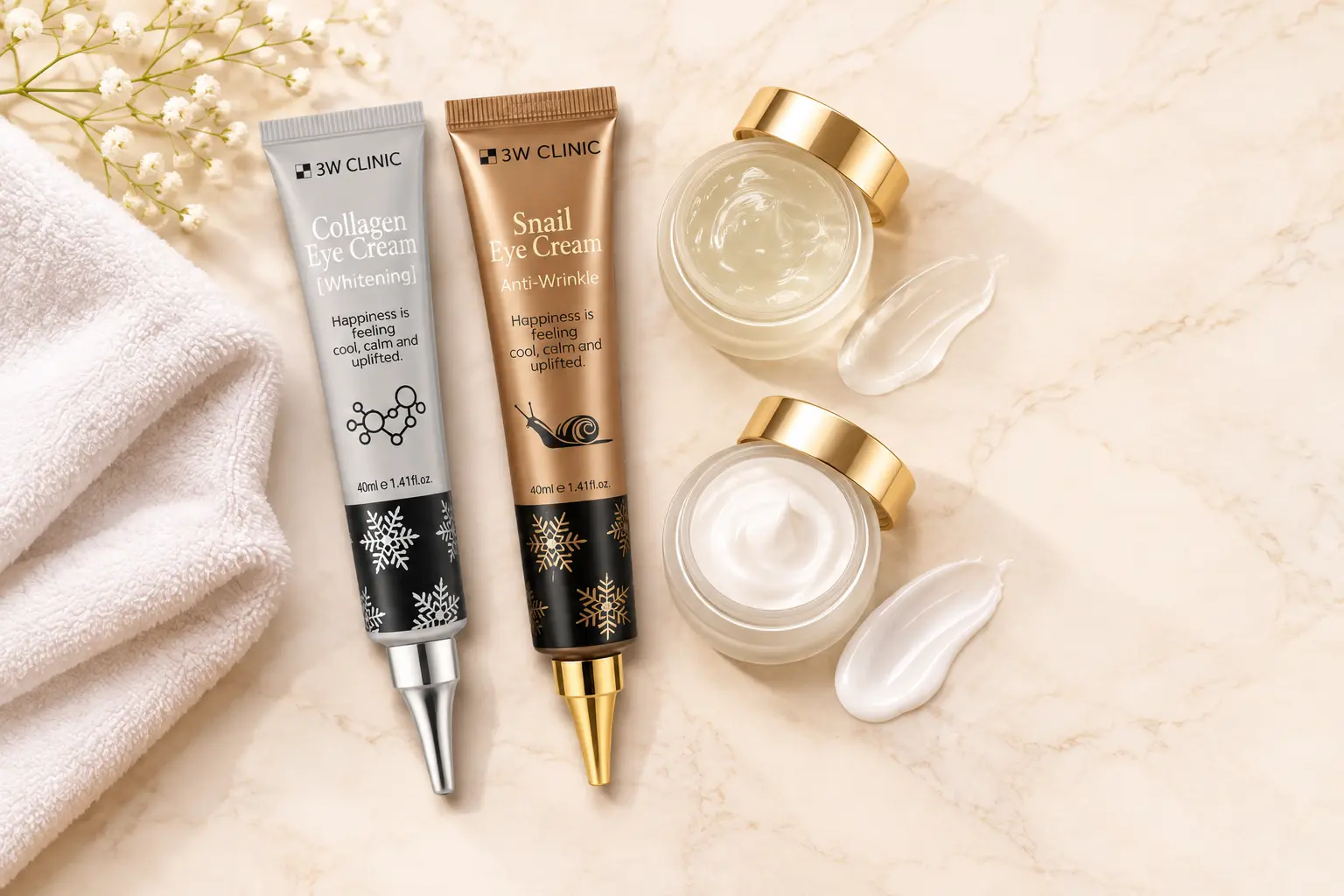
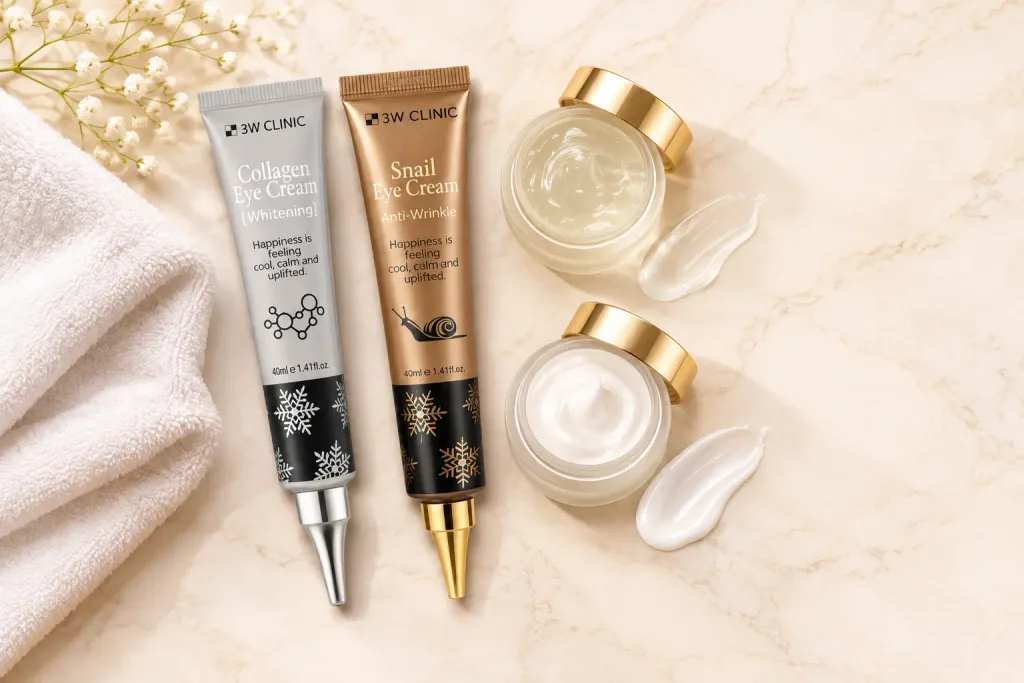
- 3W Clinic Collagen Eye Cream. Per the product page, the ingredients include hydrolysed collagen, aloe vera, vitamin E and shea butter. Apply a small amount under each eye with your ring finger and tap gently. The full ingredient list is on the pack, so check it if you have allergies.
- 3W Clinic Snail Eye Cream. The page lists snail secretion filtrate, sodium hyaluronate and hydrolysed collagen. It also lists fragrance, methylparaben and butylparaben, which may bother sensitive skin, so patch test first.
- Mixsoon Bean Essence. An exfoliating essence, used after toner, per the product page. It suits non-pack nights as a step before moisturiser. Skip it on nights you use a sleeping pack or retinol, and patch test first.
If you want a deeper dive on one ingredient, our guides on snail mucin benefits and how to repair a damaged skin barrier are good next reads.
Browse the wider skin care range at Vampire Glow, delivered across Saudi Arabia, the UAE and the wider GCC.
Precautions
Patch test any new night cream or sleeping pack on the inner arm for 24 hours before using it on your face. Skip fragrance, essential oils and alcohol if your skin is sensitive. Do not leave a mask on for longer than the label says. Wash a product off immediately and stop using it if you feel itching, burning or stinging. If you have eczema, rosacea, acne or very reactive skin, ask a dermatologist before adding a sleeping pack. Skincare does not replace medical care.
FAQs
What type of moisturizer is best at night? It depends on your skin type. The AAD suggests a cream or ointment for dry skin, a gel or less moisturiser for oily or acne-prone skin, and a cream-based product from perimenopause onwards. Look for ceramides and hyaluronic acid, and avoid fragrance, alcohol and AHAs if skin is dry or sensitive.
Can I use both a sleeping pack and a night cream? Yes, but not necessarily on the same night. A safer approach is to use your night cream most nights and swap in the sleeping pack once or twice a week. Stack them only if the pack’s label allows, and skip packs on nights you use retinol or acids.
Can I use a sleeping mask every night? How often? You can if your skin tolerates it, but no source we read sets a frequency. Start with one or two nights a week, review after two weeks, and cut back if you notice stinging, redness or breakouts. Always follow the label.
Can I skip moisturizer and use night cream? At night, yes, because a night cream is a moisturiser. In the morning you still need a day moisturiser if your skin needs one, plus a separate sunscreen of SPF 30 or higher.
Do doctors recommend sleep masks? We found no source saying doctors broadly recommend them. Dermatology Times calls purpose-made sleeping masks reasonable but less well evidenced than moisturisers, and discourages overnight standard sheet masks. Ask a dermatologist if you have sensitive or acne-prone skin.
Which age is best for using night cream? There is no best age. The AAD advises a fragrance-free moisturiser daily for tweens and teens, says a lotion is usually enough for younger adults with normal skin, and recommends a cream-based moisturiser from perimenopause onwards.
Is a night cream necessary? No. Cleveland Clinic’s night routine example does not include a separate night cream. A good moisturiser that suits your skin type does the job.
Does a sleeping pack replace a night cream? Most sources treat it as an extra, not a replacement. Brand guidance, such as Glow Recipe’s, suggests swapping it in for your night cream on some nights.
Can I use a sleeping pack with retinol? Be careful. The AAD warns that doubling up on active ingredients can cause dryness and irritation, and occlusion can increase penetration. Keep retinol nights simple and ask a dermatologist if unsure.
Can oily or acne-prone skin use a sleeping pack? It can, but choose carefully. Dermatology Times notes warm, moist conditions can worsen breakouts, and suggests a non-comedogenic sleeping mask or an overnight hydrating gel.
What ingredients should I look for in a night moisturiser? Ceramides and hyaluronic acid are the AAD’s suggestions. Avoid fragrance, alcohol and AHAs if your skin is dry or sensitive, and check the label for non-comedogenic if you are acne-prone.
Choose Your Night, Not Both Every Night
Sleeping pack vs night cream is not a contest. Use a night cream as your base, treat a sleeping pack as an occasional extra, and let your skin’s reaction decide how often.
Explore the skin care range, available now at Vampire Glow and delivered across Saudi Arabia, the UAE and the wider GCC.
About author