What Is PDRN Serum? Benefits, Side Effects & How to Use It
PDRN has been a staple in Korean aesthetic clinics for years, used in professional treatments for skin regeneration and wound repair. What changed recently is that the ingredient made its way into topical skincare, and K-beauty brands started building it into serums that sit inside an everyday routine rather than behind a clinic appointment. The result is one of the more talked-about ingredients in Korean skincare right now, and also one of the most misunderstood.
Table of Contents
- What Is PDRN Serum
- Who Should Consider PDRN Serum
- Benefits of PDRN Serum
- How to Use PDRN Serum: Step by Step
- How Long Does PDRN Serum Take to Show Results
- How Often to Use PDRN Serum
- Aftercare and Usage Tips
- PDRN Serum vs Hyaluronic Acid Serum
- Possible Side Effects and Precautions
- What Does PDRN Serum Cost
- Why Choose Vampire Glow
- FAQs
- Add PDRN Serum to Your Routine
If you’ve seen PDRN serum across your social feed, read conflicting things about what it actually does, or wondered whether it belongs in your routine at all, this guide answers those questions plainly. What PDRN is, what topical serums containing it can realistically do, how to use it, when to expect results, and what to watch out for.
What Is PDRN Serum
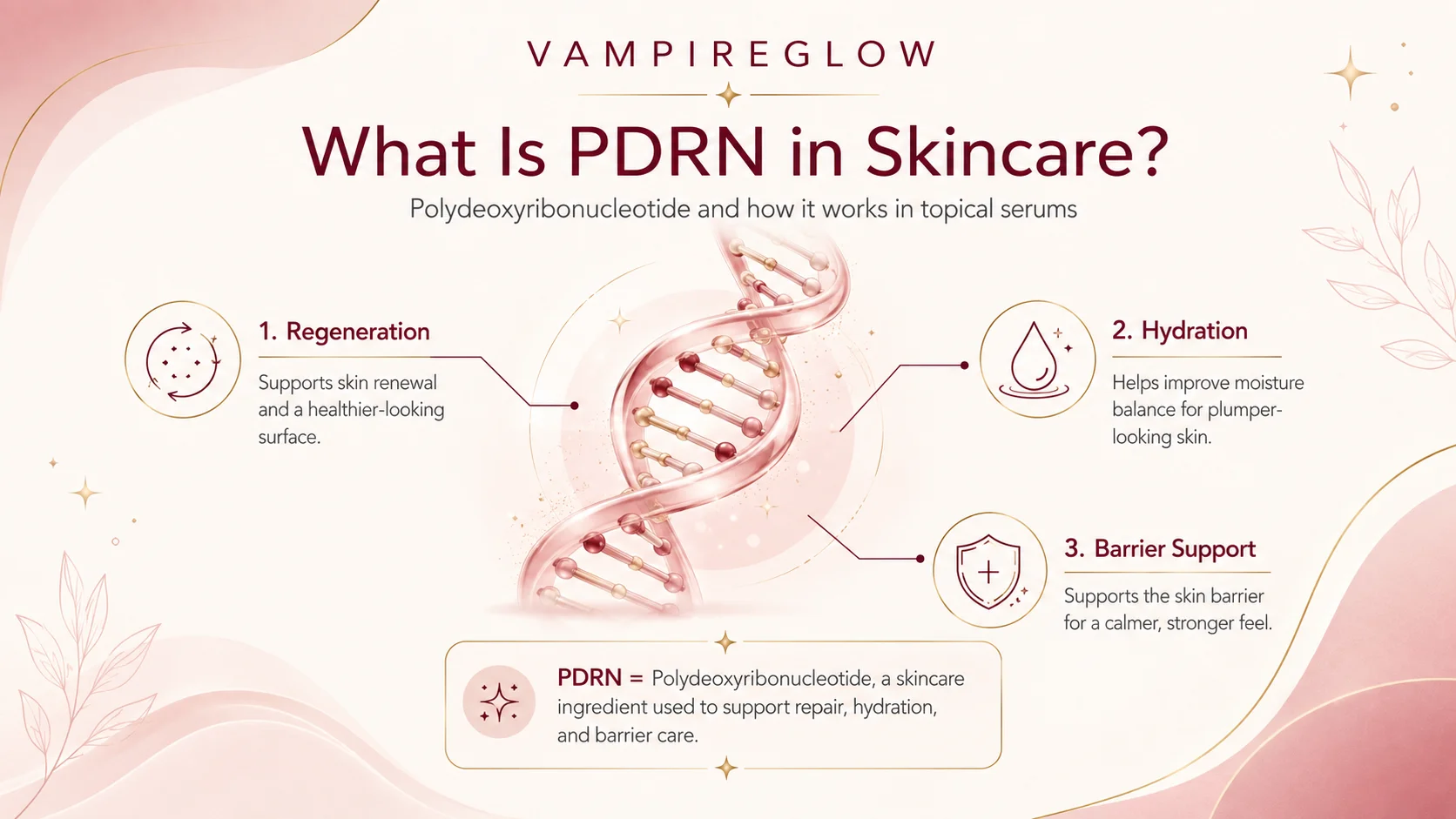
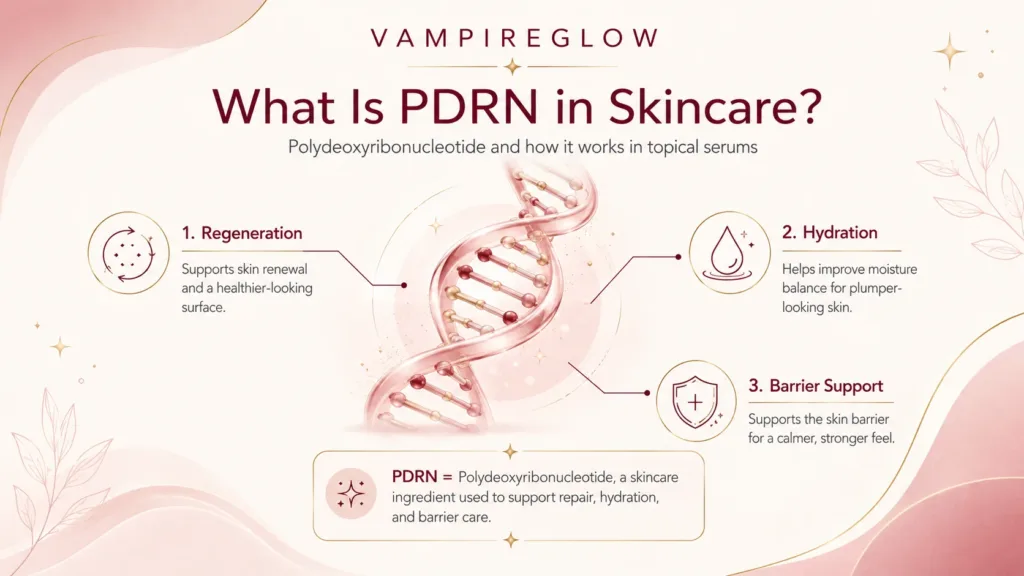
PDRN stands for polydeoxyribonucleotide. It is a fragment of DNA, typically sourced from salmon or trout sperm cells through a process that breaks longer DNA chains into smaller fragments. These fragments are then purified and used in skincare formulas designed to support the skin’s natural regeneration processes.
The ingredient has a longer clinical history than its recent K-beauty popularity suggests. PDRN has been used in wound care, tissue repair and aesthetic injections for decades, particularly in South Korea and parts of Europe. Injectable PDRN treatments are administered by licensed professionals in clinical settings and operate at concentrations and delivery depths that topical serums cannot replicate. The topical version works at the skin surface and the upper layers of the epidermis, which is a different mechanism at a different scale.
Understanding that distinction matters before you set expectations. Topical PDRN serum is not a clinical treatment. It is a well-formulated skincare active that supports the skin’s surface in specific ways, with results that build gradually and require consistent use.
Most PDRN serums in the K-beauty market also contain supporting ingredients alongside the PDRN itself. Peptides, niacinamide, hyaluronic acid, centella asiatica and EGF (epidermal growth factor) are common companions, and the combined formula is usually what drives the full effect. Explore the skin care range at Vampire Glow for current PDRN and advanced serum options.
Who Should Consider PDRN Serum
PDRN serum is most often recommended for those focused on skin texture improvement, early signs of ageing, uneven tone, or skin that feels like it needs support after stress, sun exposure or post-procedure recovery. It is not exclusively an anti-ageing product. Younger skin types use it for barrier support and surface hydration.
Most skin types can use a topical PDRN serum, though the most noticeable results are typically reported by those with dry, sensitised or recovering skin. Oily and combination skin types can use it too, since most PDRN formulas have lightweight textures that layer cleanly.
There is one important flag: PDRN is commonly derived from fish DNA, specifically salmon. Anyone with a fish or seafood allergy should check the ingredient list carefully and consult an allergist or dermatologist before using a PDRN formula, even topically.
Anyone pregnant, breastfeeding or on prescription skin medication should consult a doctor before adding a new active serum to their routine.
Benefits of PDRN Serum
Skin surface regeneration support. PDRN fragments have been studied for their role in cellular regeneration pathways. At the topical level, this may support the skin’s natural renewal cycle, helping it resurface more efficiently over time.
Improved hydration and barrier function. Many PDRN serums contain supporting hydrating actives alongside the PDRN itself. The combined effect typically includes improved moisture retention and a softer, more supple surface texture with consistent use.
Soothing for sensitised or recovering skin. PDRN has anti-inflammatory properties in clinical research. In topical form, many users find PDRN serums calming for sensitised, reactive or irritated skin. This is particularly useful after sun exposure, which is a daily reality in Saudi Arabia’s climate.
Supporting collagen and skin elasticity over time. Some research on PDRN in wound healing and tissue regeneration suggests it plays a role in supporting the body’s collagen production pathways. At the topical level, this effect is more gradual and less pronounced than injectable treatments, but it is one of the reasons PDRN is used in formulas aimed at mature or ageing skin.
Smoothing of fine surface texture. With consistent use, many people using PDRN serums report improvement in fine lines, rough texture and overall skin surface quality. Results vary by skin type and starting condition.
Well-tolerated by most skin types. Unlike retinoids or strong chemical exfoliants, PDRN serums are generally gentle enough for most skin types including sensitive skin, with a lower risk of purging or the adjustment period associated with stronger actives.
How to Use PDRN Serum: Step by Step
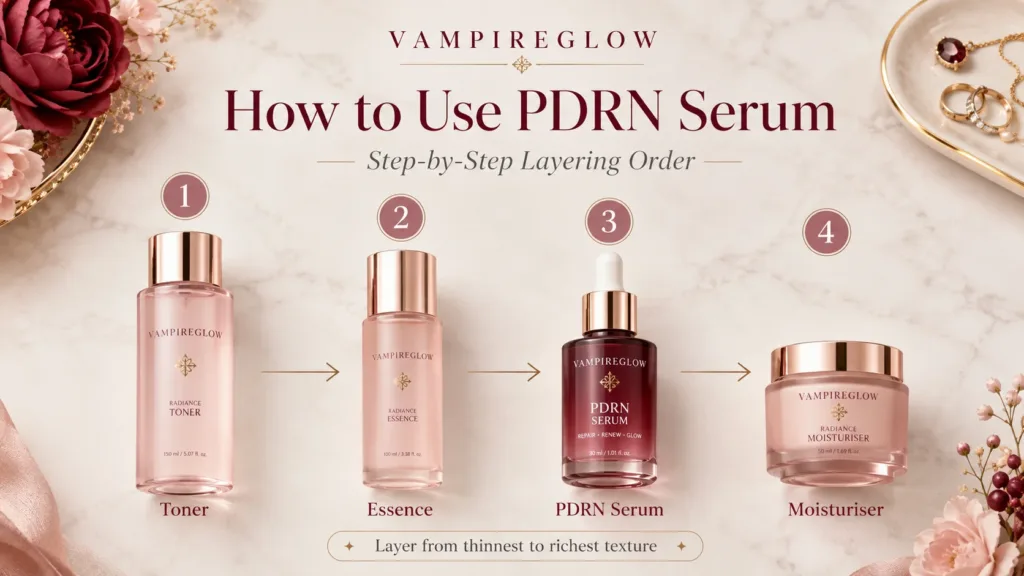
PDRN serum slots into the treatment step of a standard Korean skincare routine, applied after toner and essence and before moisturiser. The exact placement depends on the texture of the specific product, but as a serum it follows the lightest layers and comes before heavier ones.
Step 1: Cleanse. Start with a clean base. In the morning a single gentle cleanser is enough. In the evening, double cleanse to remove SPF, makeup and the day’s sebum before applying any treatment products.
Step 2: Hydrating toner. An alcohol-free, hydrating toner balances the skin after cleansing and preps it for the serum. Applying PDRN serum on hydrated skin generally supports better absorption than applying it on a completely dry surface.
Step 3: Essence (optional but recommended in a K-beauty routine). A lightweight essence adds a base hydration layer before the treatment serum. This is especially useful if the PDRN serum is a concentrated formula with a thinner texture.
Step 4: PDRN serum. Apply two to three drops to the fingertips and press gently into the skin rather than rubbing. Work across the face in light pressing motions, giving each area a moment before moving to the next. Pulling or dragging a treatment serum across the skin can reduce absorption and cause irritation in sensitive areas.
Step 5: Moisturiser. A gel or gel-cream in the morning, a slightly richer formula at night, seals the serum in and supports the skin barrier. PDRN serums are not occlusive, so they need a moisturiser on top to maintain the hydration they support.
Step 6: SPF (morning only). Non-negotiable in Saudi Arabia’s UV conditions. Apply a broad-spectrum SPF50+ as the final step of your morning routine every day. Skin undergoing any active treatment is more susceptible to UV damage, and PDRN’s regeneration support is undone quickly by unprotected sun exposure.
How Long Does PDRN Serum Take to Show Results
Visible results from a topical PDRN serum take time, and setting realistic expectations matters here. Most people using a PDRN serum consistently report that the first noticeable changes, typically improved hydration, softer texture and a more settled, calmer appearance, come within two to four weeks.
More significant changes, such as improvement in fine lines, surface texture or overall tone, typically take six to eight weeks or longer of consistent daily use before they become reliably visible. This is not unique to PDRN. Most well-formulated skincare actives work on the same timeline because skin turnover itself takes time.
Individual results vary depending on skin type, age, starting condition, the specific formula being used, and how consistently the routine is followed. There is no fixed date by which results arrive, and skipping days or switching products frequently slows the process.
How Often to Use PDRN Serum
Most PDRN serums are formulated for daily use, either morning, evening or both. The product label and usage notes are the most reliable guide for the specific formula you’re using, since concentration and supporting ingredients vary between products.
For those new to PDRN serum, starting with once-daily use in the evening allows the skin to adjust before adding a morning application. Sensitive skin in particular benefits from this gradual approach. Once skin has shown no adverse reaction over one to two weeks, a morning application can be added if the formula is suited to daytime use.
Some PDRN serums contain ingredients that increase photosensitivity, such as certain peptides or EGF. If this is the case, daytime use should always be paired with SPF, and evening-only use is the safer default if you’re unsure.
Aftercare and Usage Tips
Do store PDRN serum away from direct sunlight and heat. Many advanced serums are photosensitive, and Saudi Arabia’s ambient temperatures, especially near windows or in a car, can degrade active ingredients before the bottle is finished. A cool drawer or bathroom cabinet away from the shower’s steam is usually the best spot.
Do allow the serum to absorb for 30 to 60 seconds before applying moisturiser on top. Rushing this step can prevent full absorption and reduce effectiveness.
Don’t mix PDRN serum with strong acids, high-percentage vitamin C, or retinoids in the same session without checking whether the specific formulas are compatible. Not all actives layer well, and stacking too many strong products at once can irritate rather than improve. If you’re using both retinol and a PDRN serum, using them on alternate evenings is a safer approach than layering them nightly.
Don’t skip the moisturiser step above it. PDRN serums work at the surface layer and need an occlusive or semi-occlusive layer above them to maintain the skin environment that supports their function.
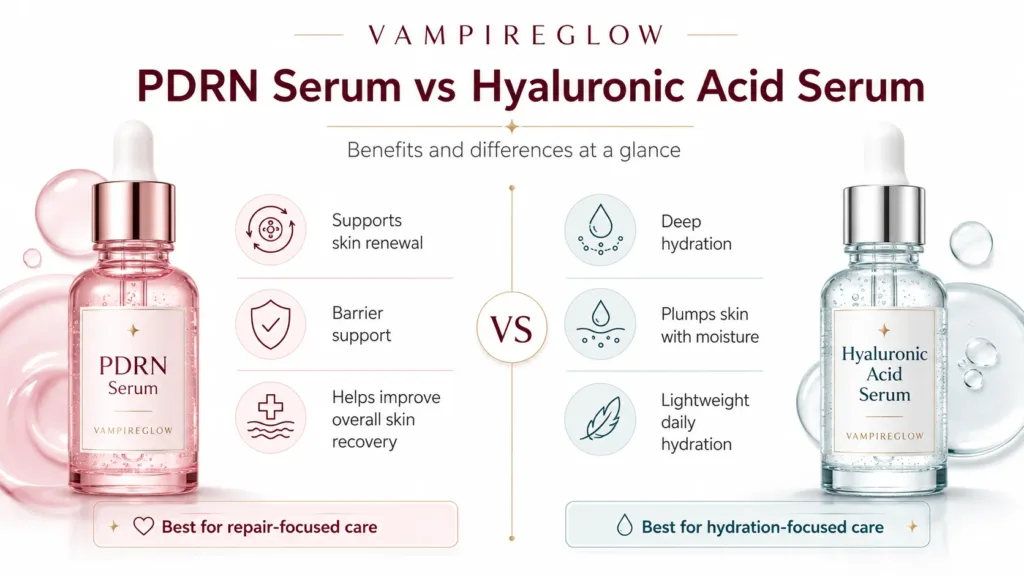
PDRN Serum vs Hyaluronic Acid Serum
| PDRN Serum | Hyaluronic Acid Serum | |
| Primary function | Regeneration support, barrier recovery, texture improvement | Surface and deep hydration, plumping effect |
| Skin benefit timeline | 4 to 8 weeks for visible results | Immediate plumping, surface hydration visible quickly |
| Best suited to | Sensitised, mature, post-procedure or texture-focused skin | All skin types, especially dehydrated or dry skin |
| Can they be layered | Yes, frequently used together | Yes, HA often appears in PDRN formulas |
| Soothing properties | Yes, anti-inflammatory properties noted in research | Minimal |
| Climate suitability | Excellent year-round in Saudi Arabia’s heat | Excellent, apply on damp skin in dry AC environments |
| Result type | Texture, regeneration, long-term tone improvement | Immediate hydration, smoother surface feel |
| Fragrance-free options | Available, check individual formulas | Widely available |
The two are not competitors. Many K-beauty PDRN formulas already include hyaluronic acid as a supporting ingredient, and layering a standalone HA serum before a PDRN serum is a common combination in the K-beauty routine. They address different aspects of skin health and work well in the same routine.
Possible Side Effects and Precautions
Fish allergy. This is the most important precaution. PDRN is most commonly derived from salmon DNA. Anyone with a documented fish or seafood allergy should consult a dermatologist before using any topical PDRN formula, regardless of how well tolerated it might be by others.
Initial sensitivity. Some people experience mild redness or a warm, flushing sensation when first introducing a PDRN serum. This typically settles within the first few applications. If it persists or worsens, discontinue use and allow the skin to calm before trying again at a lower frequency.
Fragrance and additional actives in the formula. PDRN is the headline ingredient but it’s rarely the only one. Check the full ingredient list for any known irritants, including fragrance, alcohol, or high-dose peptides that may interact with other products in your routine.
Not a replacement for clinical treatment. Topical PDRN serum is a skincare product, not a substitute for professional aesthetic treatments. Anyone seeking treatment for skin concerns such as scarring, significant pigmentation, volume loss or other clinical conditions should consult a licensed dermatologist or aesthetician for appropriate professional care.
Patch test on the inner arm before applying to the face. Anyone pregnant, breastfeeding, managing a skin condition or on prescription medication should consult a doctor before adding a new active serum to their routine.
What Does PDRN Serum Cost
The investment in a PDRN serum varies depending on several factors.
- Bottle size and daily usage amount
- Concentration of PDRN and supporting actives in the formula
- Whether the product is a standalone PDRN serum or a hybrid formula combining PDRN with peptides, EGF or other premium actives
- Currency and region: Vampire Glow shows pricing in AED for Gulf shoppers and in USD for other regions
- Delivery destination within Saudi Arabia or the wider GCC
Live pricing is visible on each product page at Vampire Glow, since it can shift and differs by region. PDRN sits in the treatment serum category, where ingredient quality and concentration genuinely affect results, making it worth comparing formulas rather than defaulting to the cheapest option.
Why Choose Vampire Glow
- Authentic Korean brands with batch codes and expiry dates verified on arrival
- An edit chosen for real skin concerns rather than trend-chasing, with advanced active serums stocked alongside core routine products
- Cruelty-free brands only
- Delivery across the UAE and the wider GCC, including Saudi Arabia, confirmed at checkout
- Detailed ingredient lists and usage guidance on every product page so there are no surprises when the order arrives
Browse the current advanced serum and skin care range at Vampire Glow for PDRN options and supporting products.
Prefer the underlying evidence to any brand's word for it? PubMed indexes the published research on polydeoxyribonucleotide (PDRN) and skin.
Related reading
- The best PDRN serums available in Saudi Arabia
- Which Korean skincare ingredients actually work
- The signs of a damaged skin barrier and how to fix it
- The best Korean dark spot serums for hyperpigmentation
FAQs
How often should I use PDRN serum? Most PDRN serums are formulated for daily use, either once or twice a day depending on the formula. For a new user, starting with once daily in the evening is a sensible approach, giving skin time to adjust before adding a morning application. Always follow the usage guidance on the specific product, since concentration and supporting ingredients vary and some formulas are designed for evening use only.
How often should I use PDRN pink peptide serum? A pink peptide PDRN serum, which combines polydeoxyribonucleotide with targeted peptides for a synergistic regeneration effect, is typically used once daily. Evening use is most common for peptide-rich formulas, since some peptides work better without UV exposure. If the specific formula is labelled suitable for morning use, follow with SPF50+ as the final step. When starting out, once daily for the first two weeks allows you to assess how your skin responds before increasing frequency.
Can I use PDRN serum during the day? Yes, for most formulas. Check whether the specific product contains any ingredients flagged for photosensitivity, such as certain peptide combinations or EGF. If it does, evening use or a strict SPF routine on top is essential. If the formula has no photosensitive actives, morning use under SPF50+ is generally fine. PDRN itself is not known to increase photosensitivity, but the supporting ingredients in the formula may.
How long does PDRN serum take to show results? Expect four to eight weeks of consistent daily use before results become reliably visible. The first changes are usually improved hydration, softer texture and a more settled appearance of the skin. More significant improvements in fine lines, tone or regeneration effects take longer, typically six to twelve weeks. Individual results vary by skin type, the severity of the concern being addressed and how consistently the routine runs. There is no fixed timeline, and skipping days resets the process.
Which PDRN serum is the best? The best PDRN serum for your skin depends on what you’re specifically trying to address, your skin type and what other actives are already in your routine. For texture improvement and regeneration support, look for a PDRN formula with a supporting peptide complex and minimal fragrance. For sensitised or reactive skin, a PDRN formula with centella or calming actives alongside the PDRN is usually better tolerated. Browse the skin care range at Vampire Glow to compare available formulas for your specific concern.
Can PDRN serum be used alongside retinol or vitamin C? It can, but not necessarily in the same session. Retinol and PDRN are best used on alternating evenings if you want to include both in your routine, since layering multiple strong actives nightly increases irritation risk. Vitamin C (ascorbic acid) and PDRN can generally be used together, but apply vitamin C in the morning and PDRN in the evening to avoid over-layering. Always introduce new products one at a time so you can identify what’s working and what isn’t.
Add PDRN Serum to Your Routine
PDRN serum represents one of Korean skincare’s more substantive ingredient innovations, a well-researched active that has moved from clinic to routine without losing its relevance. Used consistently, layered correctly and given the time it needs to work, it earns its place as a treatment step for skin focused on regeneration, texture and long-term barrier health. Shop the full skin care range at Vampire Glow to find current PDRN serum options, or browse the complete shop to build your routine around it.


About author